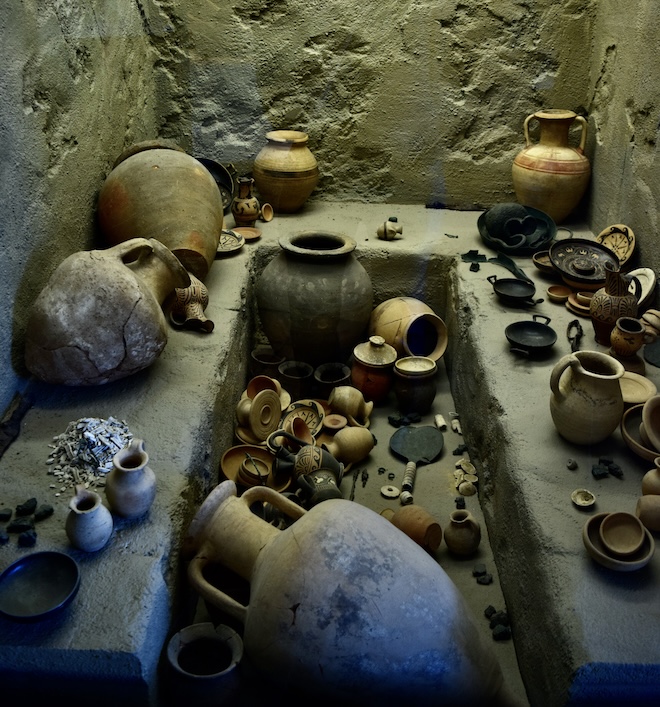
Archaeology often makes the smallest objects appear to be of great significance. A piece of broken pottery, several animal bones, or a tool unearthed from the incorrect depth of earth may lead to inquiries about the lifestyle of people from hundreds of years ago. However, simply unearthing an item is just the first step. For archaeologists to interpret the information provided by the object, they must compare it to previous finds, laboratory analysis, and interpretations of earlier researchers. At times, these comparisons will reinforce current theories; however, at other times, they will complicate the narrative significantly.
In addition to providing students with an opportunity to see how other archaeologists have approached questions, writing a literature review can also provide them with opportunities to develop arguments on topics that may be less clear-cut than others. This will be very important for those studying archaeology as they begin to explore and understand what researchers currently “know” about the past, while understanding that all conclusions in literature are not necessarily set in stone.
Why Literature Reviews Matter in Archaeology
In most cases, an archaeological find does not make much sense without being viewed within the context of other finds. For example, a sample of imported pottery could indicate trade over great distances; however, where the pottery was found, how old it is, and what else was found with it can completely alter this view. Also, the same data can provide support for multiple theories depending upon the types of questions archaeologists are trying to answer.
Students can find differences in interpretation by reading multiple studies about a single finding. For example, if an archaeologist interprets a group of items as being evidence of commerce, then another archaeologist may interpret them as being used in religious rituals. Instead of selecting the interpretation that seems most plausible, students should examine the evidence supporting each interpretation and identify potential limitations of the evidence.
This is one of the primary reasons for conducting a literature review. A literature review brings together existing research, determines what researchers agree upon and disagree upon, and demonstrates how existing interpretations have evolved over time. The systematic review method, described in a 2016 article published in Systematic Reviews, also emphasizes the use of transparent approaches to evaluating published evidence as well as establishing clear selection criteria. Both of these principles apply to archaeology because a convincing interpretation of archaeological data is dependent on being able to understand the results and the methods used to produce those results.
A useful review is more than just a list of the authors’ works. Rather, it explains the relationships among the authors’ ideas and explains why some conclusions are better supported than others.
Finding and Organizing the Right Research
The most challenging part of any research project is usually figuring out how to start. For example, if you search for “ancient Egyptian trade,” you will find a lot of information in many forms. These include excavation reports, journal articles, museum catalogs, histories of the period, and studies of various areas and time periods. It isn’t possible (or even necessary) to read everything.
A more focused problem can make the investigation simpler. Instead of examining all trade throughout ancient Egypt, a student can concentrate on how the archaeological record has altered our view of exchange systems operating in the eastern Mediterranean and Egypt during a certain time frame. This allows for direction in the research process and facilitates identification of published works that relate directly to the study.
Once the question is defined, there are numerous options for where to begin searching for relevant literature. University libraries (repositories), museum collections, and established archaeological journals are all good resources to use. It is helpful to keep a record of your sources as you find them so that you do not have to waste time finding them again later. A simple spreadsheet can be used to document publication dates, excavation sites, research methodologies, key findings, and conflicting views among researchers. At first this process may appear tedious, however, once you have identified multiple studies that overlap in some way, it becomes incredibly useful.
The process of writing can be more complicated. A student may understand the research but still struggle with deciding which ideas should be grouped together and how to move from one interpretation to another. When organizing a draft becomes difficult a literature review helper may provide guidance on developing an outline and understanding academic writing conventions. It is critical that students maintain control over the research itself by verifying claims against the original publications and determining which interpretations the collected data actually supports.
After organizing the materials, the next step is to examine more than just individual summaries. For example, did multiple researchers find comparable results? Did a new discovery contradict a prior theory? Are the inconsistencies due to the use of varying methodologies or because there is an absence of relevant data? These types of questions transform a collection of reading notes into a cohesive review.
Reading Archaeological Evidence With a Critical Eye
It’s easy to lose focus on the facts after a big discovery. Headlines often make it seem as though archaeologists have finally unraveled an old puzzle, but the initial research may present multiple ways to solve the problem. Students who read the published studies will have a clearer idea of exactly what has been found and what researchers believe about the findings.
What evidence was used by the investigators? How did the investigators come to the conclusion they reached? What limitations of the study were acknowledged?
The answer will determine what is being learned about the finding. Organic remains will degrade as time passes, the site where the digging occurred may have changed since it was first excavated, and artifacts can often be located in areas that are not close to where they were originally utilized. Dating techniques have their own constraints that researchers must explain when determining how old an artifact or settlement is.
Uncertainty is not always a problem. Actually, uncertainty is often one of the most exciting aspects of archaeological research. When there are multiple explanations possible, the researcher will look at all of them instead of forcing the data to fit into only one explanation. An individual object rarely demonstrates that a broad idea applies to an entire civilization.
Students will also be able to differentiate between established findings and reasonable hypotheses here. This is important because the revision of interpretations that appeared correct at one time could occur due to subsequent research.
Technology Is Changing the Evidence Archaeologists Can Examine
Archaeologists are currently able to gather data on the same scale as was previously impossible. Radiocarbon dating provides estimates for the ages of relevant organic material, geographic information systems (GIS) provide a means of examining patterns across large geographic areas, and remote sensing technology allows archaeologists to determine possible locations of archaeological sites prior to excavation.
Students are also benefiting from digital collections. They can now look up articles, maps, pictures, and other types of data for archaeological sites in various locations around the world by using the internet. As a result of this increased access to information, they may find relationships among sites that they would not have been able to discover prior to the availability of digital collections.
However, more data does not necessarily provide a clearer understanding of what happened. For example, while a map can indicate that settlements were located close to a river, it does not explain why individuals selected these particular sites. Additionally, there could be disparities in the amount of archaeological data available due to differing levels of archaeological investigation in different regions.
There are still questions regarding reproducibility and access to data. If the authors provide clear explanations of their methodology, it makes the research much simpler to review. In addition, providing access to the underlying evidence allows readers to verify if they could independently arrive at the same conclusions. If some crucial details are omitted from the publication, it may be difficult for readers to decide whether or not the findings can be verified.
The lesson for students is quite simple: Technology can help us see patterns, however, those patterns must be interpreted. The historical context, the methods used to conduct research, and how we compare our work to that of others in the field are all important.
Cover Image, Top: PixelLabs, Pixabay
__________________________