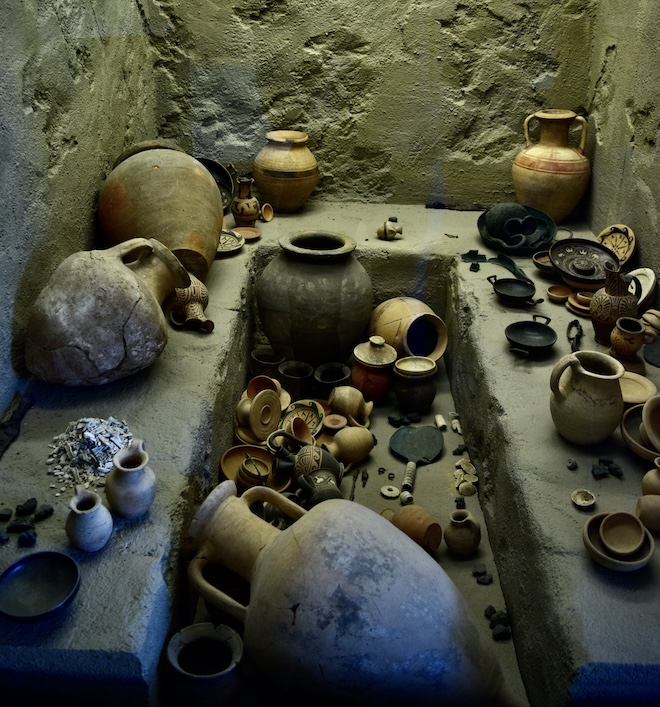
The study focused on the Novilara necropolis, one of the largest burial grounds of the Picene culture (a pre-Roman culture in central Italy that was contemporaneous with the Tartessian societies on the Iberian Peninsula, among others), and combined bioarchaeological and multi-isotopic analyses.
Specifically, the research team analyzed the stable isotopes of carbon, nitrogen, and sulfur, “chemical footprints” of diets, recorded in bones, teeth, hair, and nails that can be preserved for thousands of years. “As they form, bones and teeth absorb the isotopic composition of the food and water consumed. As a result, analyzing them can provide information about diet, mobility, and the environment in which people lived,” explained Zita Laffranchi, a researcher in the Prehistory Department at the University of Córdoba.
While isotopes provide information about diet, food offers clues about social behavior. In this regard, the study revealed a diet that differed by sex (men had greater access to animal protein compared to women), and a society in which between 1.4% and 6.4% of the people came from other areas, suggesting mobility and contact with other populations, including some that were even distant.
Their diet, primarily based on cereals and meat rather than fish — despite the proximity of the Adriatic Sea, just 6 kilometers away — suggests that the prestige reflected in some tombs wasn’t always accompanied by noticeable differences in the living conditions of those who were buried.
“The study shows that social inequality cannot be interpreted solely based on the objects placed in graves,” Laffranchi explained. Individuals buried with valuable objects, such as amber ornaments or weapons, showed no isotopic evidence of eating better than those buried more modestly. This suggests that the social status conveyed by the grave was a symbolic construct that did not necessarily reflect the deceased’s position or living conditions. Instead, it likely stemmed, at least in part, from the decisions and traditions of the community’s survivors.
The study, published in the Journal of Archaeological Science, provides new evidence about the lifestyles of pre-Roman Iron Age societies and helps us understand the extent to which social differences, gender, and mobility were reflected in daily life. “The study demonstrates the potential of bioarchaeological approaches to understand how people experienced identity, mobility, and social differences in the past,” said Marco Milella, a researcher at the University of Pisa.
___________________________
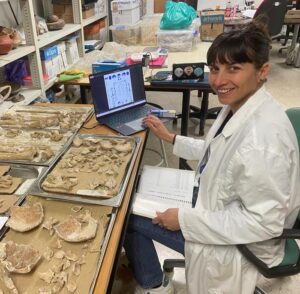
Zita Laffranchi, researcher of the Universyity of Cordoba. Credit: Zita Laffranchi, researcher of the Universyity of Cordoba
___________________________
Article Source: University of Córdoba news release.
*Laffranchi, Z., Beck De Lotto, M.A., Delpino, C., Lösch, S., Milella, M. (2026). Multi-isotopic insights into diet, mobility, and status in the Picene necropolis of Novilara, Italy (8th–7th centuries BCE). Journal of Archaeological Science 192, 106633. DOI: https://doi.org/10.1016/j.jas.2026.106633
___________________________
POPULAR ARCHAEOLOGY ON INSTAGRAM

___________________________