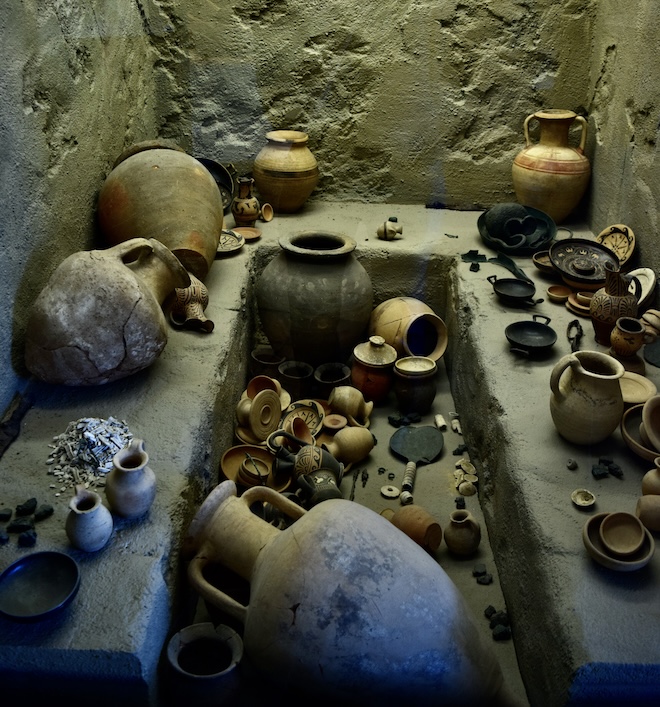
Walk through almost any archaeology gallery and you will see the same scene repeated case after case. A bronze sickle lies on a grey plinth. A loom weight sits next to a spindle whorl. A small oil lamp is turned slightly so the light catches its spout. Each object has a label with a date, a findspot, and a line or two about its purpose, and most visitors glance at it for a few seconds before moving on.
The problem is not the objects. It is that they were never meant to be still. A sickle was swung through barley, a loom weight pulled threads tight for hours, and a lamp was filled, lit, carried, and refilled night after night. Museums have always tried to restore that sense of use with drawings, dioramas, and costumed demonstrations. AI video generation now gives curators and educators another way to do it: short clips that show an object back in the hands of the people who used it.
In this article, you’ll learn why movement helps visitors understand ancient objects, how museums and teachers can turn collection photographs and research notes into short animated scenes, which everyday activities work best on screen, and how to keep these clips honest about what the evidence does and does not show.
Why Objects Make More Sense When They Move
Archaeologists often work out what an object did by studying wear marks, residues, and the places where it was found. That reasoning is careful and convincing, but it rarely survives the trip to a gallery label. A visitor reading that a stone was “probably used as a quern” still has to imagine how it was used, how long the work took, and who did it.
The Limits of the Glass Case
Display cases protect fragile material, but they also separate objects from the bodies and places that gave them meaning. A comb without hair, a cooking pot without a fire, and a writing tablet without a hand holding a stylus all lose part of their story.
Gestures Tell Their Own Story
Many ancient tools only make sense once you see the movement behind them. Grinding grain on a saddle quern is a rocking, full-body motion. A drop spindle is set spinning and allowed to fall while fibre is drawn out by hand. Seeing these actions, even for ten seconds, helps visitors grasp the effort and skill involved in daily life far better than a description of the tool’s shape.
From Collection Photograph to Short Clip
Most museums already hold the raw material for this kind of work. Collection databases contain clear photographs of objects from several angles, conservation records describe materials and damage, and curators often have reference images from excavation archives or experimental archaeology projects.
Starting With What the Evidence Supports
The strongest clips begin with a short written brief rather than a prompt typed from memory. A curator might note who is likely to have used the object, in what kind of building or landscape, what clothing and light would be plausible, and which details remain uncertain. That brief becomes the script for the video and a record of the choices made along the way.
Bringing References Together
Modern AI video tools can work from more than a text description. Newer models such as seedance 3.0 can combine images, short video clips, audio, and written instructions as references, and interpret them together when building a scene. In practice, a museum team could supply photographs of a real lamp from its collection, a short clip of a modern potter’s hand movements, and a description of a dim domestic room, then ask for a scene in which the lamp is lit and carried through it.
The same tool can also generate ambient sound alongside the picture and keep props, clothing, and settings consistent across connected shots. That matters for museum work. If a short sequence follows a cooking pot from the hearth to the table, the pot should look like the same object in every shot, and the crackle of a fire or the scrape of a ladle can make the moment feel lived in without adding narration.
Everyday Scenes That Work Well on Screen
Not every subject benefits from animation. The most useful scenes are usually simple, repetitive activities that ordinary people performed every day, because these are the parts of the past that leave plenty of objects but very few images. Good starting points include:
- Grinding grain on a quern and shaping dough for baking near a domestic hearth.
- Spinning thread with a drop spindle and weaving on a warp-weighted loom.
- Lighting, carrying, and refilling an oil lamp in a small room after dark.
- Writing on a wax tablet or ostracon, and smoothing the surface to start again.
- Fetching water with a ceramic jar and storing food in large jars or pits.
- Children playing with knucklebones, small figurines, or other toys found on excavations.
Scenes like these also suit school groups. Pupils can compare a clip with the real object in front of them, then discuss which parts of the scene come from evidence and which are reasonable guesses.
Getting the Details Right
An animated scene can be persuasive in a way that a drawing is not. Because moving images look natural, viewers may assume everything they see has been confirmed. That puts extra responsibility on the people making them.
Let the Research Lead the Prompt
Every visual choice in a clip, from hairstyles to the colour of a wall, is an interpretation. Before generating anything, it helps to check those choices with a specialist and to avoid filling gaps with familiar film clichés. If nobody knows how a room was lit or furnished, a simpler scene is better than an invented one.
Label Clips Clearly
Visitors should never have to guess whether they are watching real footage or a reconstruction. A brief caption such as “AI-generated reconstruction based on objects in this case” sets the right expectation. Keeping a short note on the sources behind each scene also helps.
Know When Not to Animate
Some material should stay still. Human remains, burial goods, and objects tied to living religious or cultural traditions call for consultation with descendant communities before anyone considers turning them into a video. A respectful decision not to animate something can be as much a part of good practice as a well-made clip.
Conclusion
Ancient objects were made to be handled, worn, carried, and used. Short AI-generated videos give museums and educators a practical way to show that side of the past, helping visitors see the work, routines, and small moments that sit behind every object in a case. The technology is most useful when it starts from real collections and careful research, keeps its scenes modest, and tells viewers plainly what is evidence and what is interpretation. Used that way, a few seconds of motion can send people back to the original object with fresh eyes and a better sense of the lives it once belonged to.
Image, Top: Arian van der Pijl, CC BY-SA 4.0, Wikimedia Commons
____________________________
Advertisement