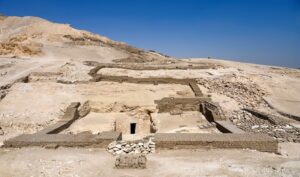
The preservation of the ritual importance of Egyptian burial practices over centuries of reuse has been uncovered in an ancient tomb. The archeological finds at Thebes offer a unique glimpse into the burial customs of several dynasties by revealing shifting placements of mummies, caskets, and grave goods.
Archaeologists Examine a Tomb Reused Across Centuries
Researchers have found evidence of shifting burial practices in the first millennium BCE by analyzing Tomb TT 209 in the Theban Necropolis, which is located on the western bank of the Nile, close to Luxor.
Researchers from Spain’s University of La Laguna studied the tomb’s third chamber and traced its use from the Twenty-fifth Dynasty to the Ptolemaic era. The chamber was not left sealed after the first interments, but was opened again and again to make room for further graves.
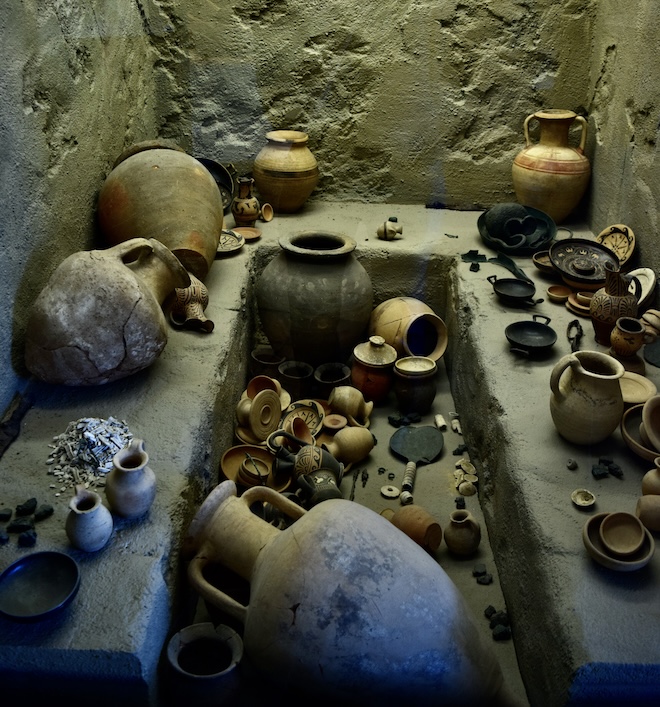
A total of sixteen mummified bodies were found throughout the inquiry, along with a mummified dog and the disturbed remains of four other humans. Researchers discovered nine funerary deposits, including both single and multiple interments.
These findings suggest the tomb may not have served as a burial place for a single historical period, but rather as a dynamic funerary setting.
Early Burials Reflected Individual Status and Wealth
People were laid to rest in coffins with funerary artifacts in the first interments in the room, which were relatively isolated.
Items connected to the amphorae of the Phoenicians were among the imported commodities, amulets, and funeral nets that were found alongside them. These objects suggest that considerable resources were devoted to the earliest burials.
Objects of protection and material belongings might have religious meaning in ancient Egyptian funeral rituals. A strong belief in the afterlife drove the use of amulets for protection, as well as the maintenance of the body.
Coffins helped identify certain areas within the chamber, as shown by the layout of these early graves.
Later Generations Changed the Arrangement of the Dead
Burial practices became more concentrated as the tomb continued to be used.
Afterward, particularly during the Persian period, more dead were interred in areas that had previously been used for burials. A few mummies were stacked on top of one another, forming a vertical pattern in the deposits.
The limb arrangement also evolved. Those buried later in life occasionally had their arms crossed, while earlier ones were typically discovered with their arms outstretched. On rare occasions, the Osirian funeral pose, crossed arms over the chest, was used.
Rather than a complete break with religious traditions, these variations point to a slow but steady shift in burial practices.
The research shows that later interments followed recognizable spatial patterns, even as the room became more crowded.
A Mummified Dog Offers Clues to Funerary Beliefs
Surprisingly, one find had a mummified dog resting on top of two human mummies.
Interred with the animal were four human mummies in an overlapping configuration, which had been discovered in a series of subsequent graves.
Researchers offered several potential explanations. Although the evidence cannot establish a definitive connection, the dog’s position suggests a possible association with the deceased individuals.
Another explanation might be the animal’s symbolic significance in beliefs about the hereafter. Psychopomp was a name used by several ancient societies to denote creatures that were believed to guide the dead.
The finding emphasizes how difficult it is to decipher funeral deposits. Archaeological context remains crucial for evaluating potential explanations, even when an object’s or animal’s placement might imply ritual significance.
What Burial Objects Reveal About Ancient Egyptian Society
Concerns about shifting societal norms have been raised by the shift from individual coffined burials to denser arrangements.
Despite signs of meticulous mummification, later interments sometimes lacked coffins, whereas earlier ones had expensive funeral furnishings.
A person’s lack of a coffin does not always indicate a lower social rank. Possible factors that impacted the preparation and positioning of the dead included shifting religious tastes, burial plans, and available space.
Therefore, the study casts doubt on theories that see overcrowding in tomb chambers as a sign of disarray or a decline in burial practices.
Instead, archaeologists consider how the burial site’s symbolic significance and organization changed through repeated use.
Understanding the Historical Context of Egyptian Burial Traditions
It is also possible to place the results of TT 209 into the larger context of Egyptian burial practices and beliefs.
Over several dynasties, burial rites evolved in response to shifting social customs and religious beliefs. Although their shapes and configurations changed over time, mummification, funeral artifacts, and tomb architecture remained significant.
The findings can also be understood within the wider historical context of ancient Egyptian civilization. Readers exploring topics such as pharaohs, monuments and funerary traditions can try this quiz from Aurelius: Learn History to review general historical knowledge. However, archaeological research remains essential for understanding specific burial practices and excavation findings.
While these broader historical sources set the stage, archaeological investigations provide the primary evidence for determining specific burial locations and customs.
Archaeological Evidence and the Challenges of Interpretation
It is not easy to piece together the past of a tomb that has been utilized several times.
Disruptions caused by floods, fires, and humans were felt in the TT 209 chamber. The original sequence can be difficult to identify because later burials occasionally displaced earlier deposits.
The researchers meticulously recorded the mummies’ placements, orientations, and connections to the things they were kept with. Patterns that could have looked strange without this method were able to be located.
These results show that spatial linkages and depositional context matter more than individual artifacts when interpreting archaeological data.
By examining how different generations used and interacted with preexisting graves, researchers can better understand the evolving connection between burial sites, rituals, and cultural memory.
Tomb TT 209 shows that ancient Egyptian burial practices were dynamic and subject to change. While rituals related to the deceased remained, repeated interments transformed the chamber. The artifacts unearthed there link shifting funerary traditions to concepts of memory, location, and continuity throughout history.
Image, Top: Tomb TT 209 panoramic view. K. Harzbecher Spezzia, CC BY 4.0, Wikimedia Commons
_______________________________