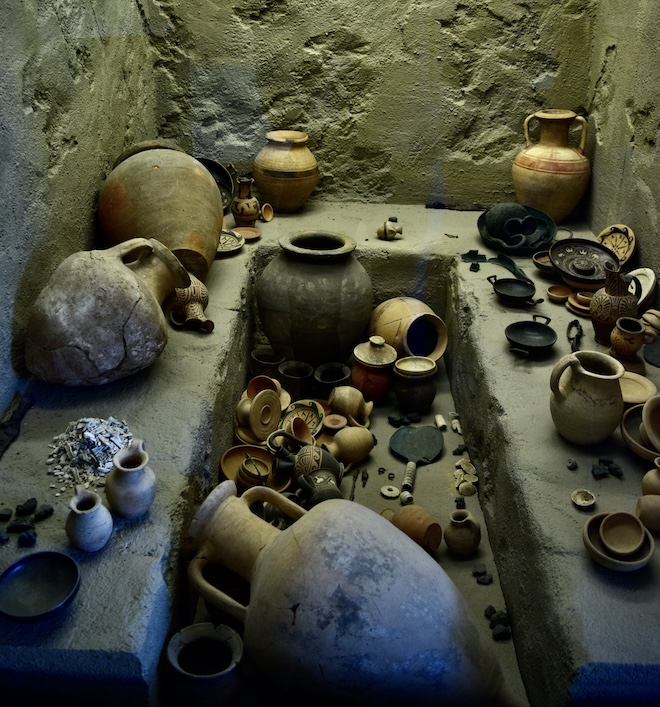
Standing in the dust of Çatalhöyük—a 9,000-year-old Neolithic site known to archaeology since the 1960s, yet virtually non-existent in discussions about political science and law—a question haunted me: “How come no one told us about it?”
My training at Ankara University’s Faculty of Political Science (Mülkiye) was defined by a dominant doctrinal paradigm: that wherever households and private property exist, equality is a structural impossibility and hierarchy the absolute rule.
Perhaps the founding fathers of the 19th century had the luxury of such grand claims in the absence of data, but we no longer do. Staring at the silence of a society that possessed both property and privacy, yet flourished for 1,500 years with no state, no great houses, and no trace of warfare, I realized our education resulted in a form of systemic blindness. As I highlighted in my previous discussion on the collapse of modern political science, we had ignored 99 percent of human experiences as if they had no relevance to order or law.
At that moment, I knew I had to integrate these findings into my own academic world. While archaeology had long ago unearthed these findings, they remained buried in the silence of political science and law. This was a crucial moment for Arkeopolitics, which set the stage for a double-edged shift: an effort to liberate political theory from its modernist and state-centric limits, while challenging archaeology to engage with fundamental social questions about governance, power, order, and law. It was a necessary way out of the narratives that had reached their dead ends.
The 3D Shift: Reconstructing Law and Politics
From this newfound clarity, I began revisiting the legal and political knowledge that had shaped me—from my foundational years at Mülkiye to my PhD at Cardiff Law School—through this expansive lens. This transition required more than just a new perspective. It demanded a new kind of literacy. I found myself immersed in archaeological reports, where every architectural remain, every object, and every finding began to speak to me like a legal text, carrying within them the very codes of social order.
It was like seeing a 3D image hidden within a flat surface. This shift allowed me to reexamine the core pillars of our social existence from the ground up.
To briefly illustrate this awakening, I began by rethinking the public sphere not as a marble forum but as a 700,000-year-old campfire—the foundational site where the controlled use of fire brought with it institutionalized practices of collective action, socialization, and shared sustenance. In this setting, the essence of democracy was rooted in absolute direct participation—a natural outcome of living in groups that, as we know through the work of Robin Dunbar and other experts, averaged between 35 and 50 individuals. Within this deep-time perspective, redistribution revealed itself not as a “modern market mechanism,” but as a fundamental survival mechanism of collective pooling; a system where the productive components (men and women) shared resources with non-productive components like the elderly and children, in recognition of their vital past and future roles. This prompted me to recognize that such social cohesion was the product of a historic bloc between men and women, whose tens of thousands of years of equality evolved from a pragmatic, symbiotic cooperation.
The radical rupture that eventually shattered this equilibrium has thus become much clearer as a cumulative process unfolding over four to five millennia—from the dawn of the Neolithic to its systemic conclusion. It was the result of the convergence of climate change, sedentarization, and the advent of the plow and irrigation. This long-term transition triggered the surplus accumulation and the invention of warfare technology, which in turn led to the near-simultaneous rise of the state, systemic warfare, patriarchy, and organized religion.
I began to view these not as separate accidents, but as a coevolutionary “package of power” that fundamentally reshaped the human experience—marking the exact turning point when warfare shifted from a rare occurrence to a standard, structural method of problem-solving.
Building the Future: An Academic and Public Platform
While I continue to reexamine these core pillars through the lens of new data, I am simultaneously focused on transforming this intellectual journey into a collective resonance. I have set out to broaden my reach, learning through shared insights and incorporating the valuable feedback of a wider community.
Within this scope, I took the first step in 2021 by publishing a concise overview, where I attempted to build the preliminary framework for a holistic, 50,000-year perspective on world order. Since then, my focus has shifted toward catalyzing collaboration and public engagement.
I have been organizing monthly online talks, which have an annual keynote by professor Mehmet Özdoğan, the preeminent archaeologist whose visionary support was instrumental in the founding of Arkeopolitics and the subsequent training programs. A cornerstone of this effort is the Arkeopolitics summer school, operating since 2024 within the Erasmus+ framework. In 2026, the program is expected to significantly expand its horizons: adding a Budapest session to our established base in Bodrum and bringing together law and political science students from Hungary, Greece, Slovakia, and Austria. I know from personal experience that persuading and recruiting young researchers to commit to this interdisciplinary field is remarkably difficult without formal educational structures and viable career paths. Therefore, this growing network marks a strategic trajectory toward a joint master’s degree, solidifying Arkeopolitics not just as an intellectual pursuit but also as an international academic reality. By institutionalizing this curriculum through our Erasmus+ partnerships, the next generation will hopefully have the necessary tools and formal recognition to navigate the complex intersections of archaeology, law, and politics.
The impact has been satisfactory so far: Participants highlighted how discovering a deep history far older than modern national narratives allowed them to see underlying historical patterns for the first time. This perspective provided a transformative depth, enabling a comparative analysis of law and order that transcends today’s era-specific silos —patterns that are often missing in modern curricula. This momentum is yielding structural results nationally. The concept has officially entered the undergraduate curriculum at TOBB ETÜ University in Ankara—the first time this lens has been integrated into formal degree programs in Turkey.
Beyond the ivory tower, I have sought to ground this theory in the physical reality of the landscape. This mission led me to become a licensed professional guide, transforming ancient mounds into mobile classrooms through specialized, niche Neolithic tours. Much like my community talks, those who join these tours are well-educated individuals who, having reached a certain stage in life, have begun to sense a profound gap between their traditional education and the increasingly unearthed realities of deep history. Through such public engagements, I translate complex archaeological data into a shared, lived experience, testing my theoretical frameworks against the very soil where these ancient orders once flourished. This direct engagement forms the agenda for my AI-augmented social media content, YouTube series, and podcasts, where I aim to reveal the unseen background of our daily lives—arguing that shifting conditions, rather than static ideals, are what truly forge our values.
An Intellectual Restoration: Transcending Disciplinary Walls
I am aware that some still whisper that I have “strayed from my field”—or even abandoned it— while others dismiss my work as a mere hobby. But let me be clear: I view this not as a departure, but as a long-overdue intellectual restoration: a structural deepening of legal and political reasoning by anchoring them in the foundational realities of deep time.
We are facing a multi-layered pan-crisis. The last two centuries have offered no historical precedent for the radical shifts—seen today in examples like climate change or AI—that are reshaping our world. However, the deep history of humanity contains the very survival experiences we need to consider. Arkeopolitics, therefore, is a call to unearth the structural conditions under which order emerges and collapses; by bridging the order beneath with our modern order above, we expand our collective vocabulary to navigate the dense fog of this uncertain era.
This is the second part of a two-part series on Arkeopolitics and its importance in addressing the pan-crisis. You can read the first part here.
_____________________________
This article was produced by Human Bridges.
Cover Image, Top Left: Çatalhöyük after the first excavations. Omar hoftun, CC BY-SA 3.0, Wikimedia Commons
_____________________________