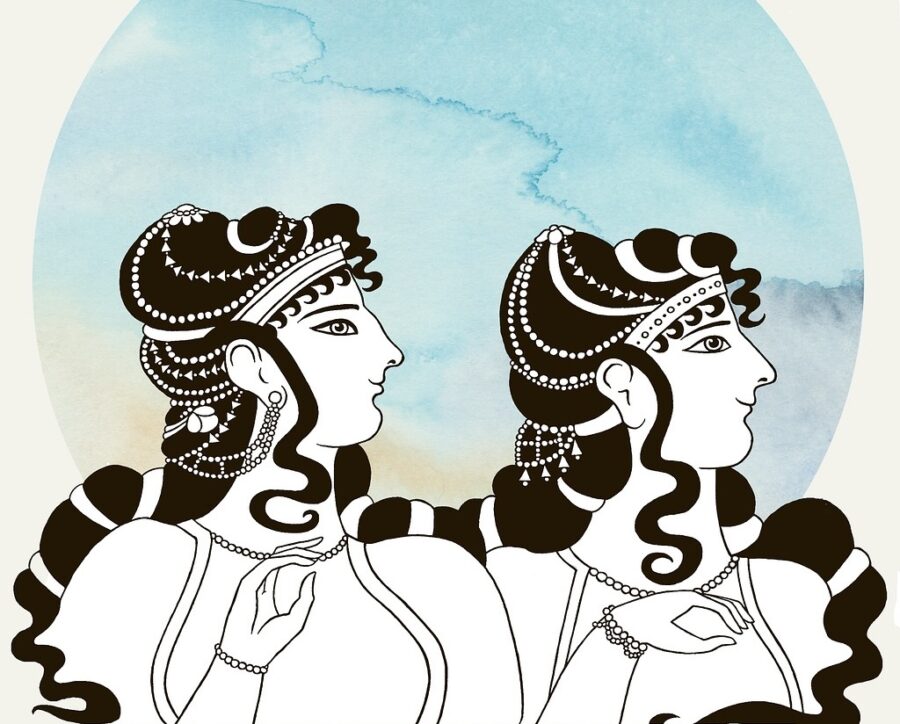
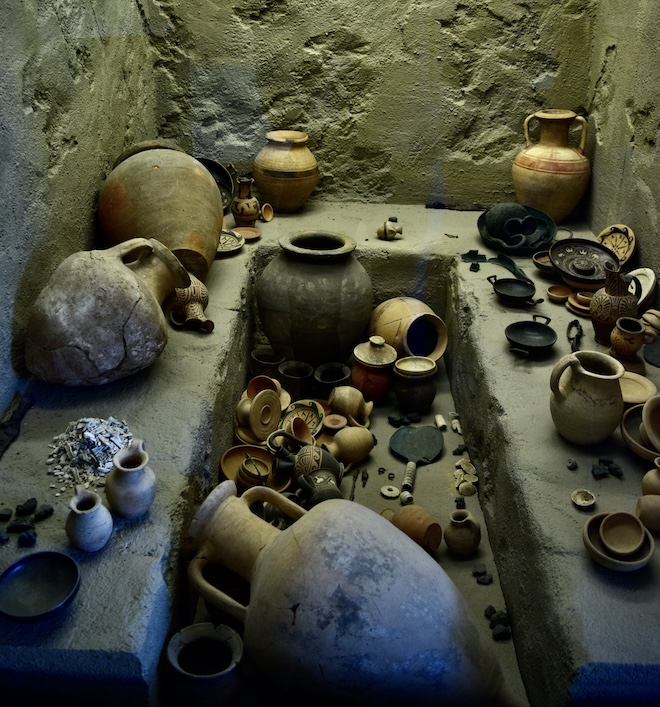
When most people think of “fashion,” they imagine glossy magazines, runways, and designer labels. But the truth is, the concept of fashion — personal adornment, style, and identity — is far older than the modern clothing industry. Long before the first boutiques or sewing machines, humans were already using jewelry, textiles, and body art to express who they were. Through archaeology, we can piece together how ancient societies dressed, decorated, and defined themselves through what they wore. Each necklace, bead, or woven textile unearthed from the earth reveals not just a sense of beauty, but also the complex social, spiritual, and cultural worlds of our ancestors.
The First Threads: Clothing in Prehistoric Times
Clothing did not begin as fashion — it began as necessity. Early humans used animal skins, leaves, and plant fibers to protect themselves from the cold or sun. But even in the Paleolithic period (over 30,000 years ago), archaeologists have found evidence that people were thinking about more than just survival.
Bone needles discovered in sites such as Kostenki in Russia and Dzudzuana Cave in Georgia suggest that prehistoric humans were sewing garments from animal hides. These early clothes were practical, yet also decorated with fringes, shells, and ochre — natural pigments used to color fabrics. This indicates that humans were already experimenting with appearance, marking the dawn of style.
By around 28,000 BCE, the Venus figurines — small statues representing women — often depict elaborate hairstyles, belts, or woven skirts. These carvings are among the earliest artistic records of clothing, showing how fashion was intertwined with fertility, identity, and ritual.
Ancient Egypt: The Art of Elegance
Few ancient cultures expressed fashion and beauty as elegantly as the Egyptians. The hot, arid climate shaped their lightweight clothing, made from fine linen spun from flax plants. Archaeological discoveries in tombs have preserved linen garments so well that we can still see their intricate pleats and weaving patterns thousands of years later.
Men typically wore shendyts (linen kilts) while women wore sheath dresses. Wealth and status were displayed through the quality of fabric — the richer the person, the finer and more transparent their linen. Both men and women used cosmetics and adorned themselves with jewelry made from gold, lapis lazuli, turquoise, and carnelian.
The jewelry wasn’t merely decorative; it had spiritual meaning. Amulets in the shape of scarabs, ankhs, and the Eye of Horus were believed to provide protection and power. For example, the treasures found in Tutankhamun’s tomb — collars of gold and semi-precious stones, diadems, bracelets, and pectorals — reveal the Egyptians’ sophisticated understanding of both design and symbolism.
Fashion in ancient Egypt was not fleeting; it was eternal. Clothing and jewelry were prepared for the afterlife because beauty was a reflection of divine order.
Mesopotamia: Drapes, Status, and Symbolism
In Mesopotamia — the land between the Tigris and Euphrates Rivers — fashion reflected social order and craftsmanship. Archaeological reliefs and statues show men wearing fringed skirts called kaunakes, while women wore long dresses fastened at one shoulder. The texture and patterns of these garments indicated class and rank.
Jewelry was another key marker of status. Excavations at the Royal Cemetery of Ur (dating back to around 2600 BCE) uncovered magnificent treasures: headdresses made of gold leaves, lapis beads, and silver combs. Queen Puabi’s tomb, one of the most famous discoveries, revealed layers of jewelry that speak to both wealth and aesthetic sophistication.
Interestingly, Mesopotamian artisans were among the first to create cylinder seals — small carved stones rolled onto clay to leave an impression. These seals, often worn as necklaces, were both practical (for sealing documents) and ornamental, merging beauty with function.
The Indus Valley Civilization: Subtle Sophistication
In the Indus Valley (modern-day India and Pakistan), fashion was refined yet understated. Excavations at Mohenjo-Daro and Harappa reveal statuettes adorned with intricate jewelry, headdresses, and patterned fabrics.
The famous “Dancing Girl” statue, cast in bronze around 2500 BCE, wears a series of bangles stacked up her arm — a timeless symbol of elegance that persists in South Asian culture today. Bead-making was an advanced craft; artisans used carnelian, agate, and faience to create colorful ornaments.
Textiles, though rarely preserved due to climate, have been inferred from tools like spindle whorls and dye residues, suggesting cotton weaving and natural dyeing processes. The people of the Indus Valley clearly valued appearance and personal expression, long before written fashion records existed.
Ancient Greece and Rome: Draped Ideals of Beauty
When we think of ancient fashion, the flowing garments of Greece and Rome immediately come to mind. In Greece, simplicity and elegance defined style. The chiton (a tunic) and himation (a cloak) were made from wool or linen, secured with pins or brooches called fibulae. The Greeks valued symmetry and proportion in both architecture and dress — clothing was designed to complement the body’s natural lines.
Jewelry was also central to Greek identity. Archaeologists have found earrings, necklaces, and diadems crafted in gold with motifs inspired by mythology — laurel wreaths, serpents, and the gods. These items often had symbolic meaning, connecting wearers to divine protection or social prestige.
The Romans adopted and expanded on Greek fashion, introducing new materials and dyes. Roman togas, made from fine wool, represented citizenship and class. Wealthy Romans indulged in silk imports from China, reflecting the early beginnings of global trade and luxury fashion. Cosmetics, perfumes, and hairstyles were essential aspects of daily grooming, particularly for women of the upper class.
China and the Silk Revolution
Archaeological discoveries from ancient China, especially from the Han Dynasty (206 BCE–220 CE), reveal the transformative impact of silk on fashion and trade. The invention of sericulture — silk production — revolutionized clothing across Asia and Europe.
Silk garments symbolized refinement, wealth, and cultural identity. Tombs such as those at Mawangdui have preserved delicate silk robes with embroidery still intact. These textiles demonstrate incredible artistry, using natural dyes and patterns inspired by nature and mythology.
Beyond beauty, silk became a diplomatic tool. Through the Silk Road, Chinese fashion influenced regions as far as Rome, Persia, and India, making ancient fashion one of humanity’s first truly global industries.
The Power of Adornment: Jewelry Across Civilizations
Jewelry has always been a universal language — one that communicates status, spirituality, and identity. Across cultures, archaeologists have unearthed evidence of how adornment shaped social and cultural life.
- In Egypt, amulets and gold collars symbolized divine protection.
- In Mesopotamia, gemstone necklaces represented power and prosperity.
- In Greece, gold wreaths celebrated victory and heroism.
- In the Indus Valley, beads and bangles expressed everyday beauty.
- In the Americas, ancient civilizations like the Maya and Inca used jade, turquoise, and feathers to show rank and spiritual connection.
Each civilization interpreted beauty differently, but all saw adornment as a form of communication — a way to tell the world who they were.
What Archaeology Reveals About Human Expression
Archaeology does more than uncover old objects; it uncovers human stories. Every textile fiber, bead, and tool represents creativity, identity, and connection. Ancient fashion tells us that style has always been about more than decoration — it’s about meaning.
Through clothing and jewelry, our ancestors expressed love, faith, hierarchy, and belonging. They used color, texture, and form to reflect both individuality and community. Even today, we echo these same instincts — dressing not only for function but also for expression.
Fashion as a Timeless Language
The story of fashion didn’t begin in Paris or Milan — it began in caves, temples, and royal tombs. Archaeology shows us that humans have always been artists of the self. Whether through the shimmering gold of Egypt, the woven silks of China, or the carved beads of the Indus Valley, style has long been a dialogue between the body and the world.
Ancient fashion reminds us that to adorn oneself is to declare existence — to say, “I am here, I belong, and I matter.” In that sense, fashion truly is timeless.
_____________________________
Cover Image, Top Left: Hansuan_Fabregas, Pixabay