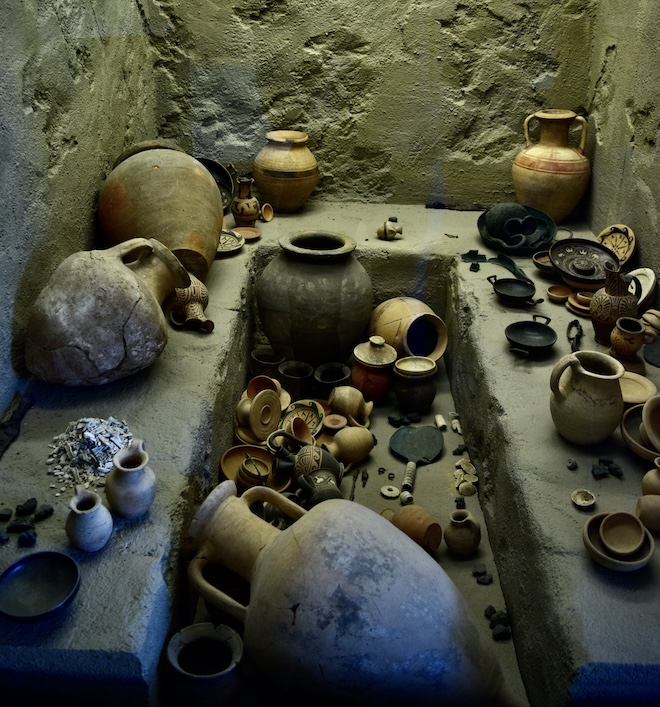
Most people who think of archaeology picture workers gently removing dirt from artifacts at a dig site. Although excavation is a core method of archaeological research, the topic of modern archaeology encompasses much more than digging. Archaeologists today depend on a plethora of advanced technologies for discovering, documenting, analyzing, preserving and sharing the past.
Archaeology in turn has become an incredibly interdisciplinary discipline due to technological innovations. Wrapped in layers of 3D scanning, artificial intelligence until its last surface is explored and virtual reality, the ancient space exploratories are tracked by historic satellite imagery so that it can be latched away to future generations whilst preserving their cultural legacy. Integration of technology has become an unavoidable necessity for almost all skills as the tons of data churned out from archaeological projects grows bigger in size and better accuracy.
The Digital Transformation of Archaeology
This sentence will be paraphrased to: Archaeology has seen major change with the advent of digital technology in the last few decades. Classic approaches like paper mapping, handwritten records and manual indexing are often being replaced by stronger digital systems.
Digital technologies help archaeologists document information as it is being recorded, share their findings with international research teams and even create permanent archives that can be accessed for future study. Such a transformation has led to better research but also offers an increase in transparency and collaboration across the archaeological community.
Gis And Site Mapping
Another critical technology of modern archaeology is GIS (Geographic Information Systems). GIS allows scholars to obtain, input, examine, and display geographic data about archaeological sites.
GIS enables archaeologists to map excavation areas, monitor the find-spots of artifacts and analyse the relationships between ancient settlements and their surrounding environments. Researchers who layer various types of information including topography, vegetation and historical maps to find patterns that might otherwise evade detection.
GIS is used for long-term preservation by documenting archaeological sites digitally in detail. Records can be used in future research, conservation planning and education.
Lidar: Revealing Hidden Landscapes
LiDAR or Light Detection and Ranging has changed the game of archaeological surveying. This technology captures very low-resolution surface contour maps using laser pulses.
The ability of LiDAR to penetrate dense canopies is one of this technology’s greatest strengths. Ancient structures, roads and other settlements can remain invisible from the ground or regular aerial photography in deep forested areas. These features may be still hidden, but LiDAR shows us them wonderfully well.
LiDAR (Light Detection and Ranging) is a technique Archaeologists used to see the ground without disturbing the landscape that has helped identify previously unknown cities, ceremonial complexes, and transportation networks – greatly expanding our understanding of ancient civilizations.
3D Scanning and Digital Reconstruction
Three-dimensional scanning technologies have high prosperments as archaeologists or architectural historians of site managers by documenting structures. These scanners can take accurate measurements and generate detailed digital models that allow fragile objects to be examined without handling them.
Digital reconstruction gives an opportunity for researchers to recreate damaged monuments, buildings and artifacts from archaeological data. These reconstructions make historians imagine how the structures might have looked like if in place then providing them new grounds on interpretation.
Now, with 3D models being increasingly used by museums and educational institutions to build interactive exhibits, archaeological finds are becoming more open to the general public.
Remote Sensing and Satellite Imagery
Remote sensing techniques allow archaeologists to explore landscapes from new heights. Satellite imagery, aerial photography, and drone surveys can uncover subtle changes in the landscape pointing to potential archaeological features.
Such methods are broadly useful for detecting areas where excavations might be undertaken or monitoring regions that may now be under threat from urban expansion, agriculture, and environmental changes.
Since remote sensing is a non-destructive way of obtaining information, it enables researchers to gather rich metadata while causing minimal disturbance to culturally significant sites.
Digital Documentation and Collection Management
The need for accurate documentation in archaeological research. Noting every artifact, feature and observation would have to be done so as not to lose the scientific value of its absence.
Today, archaeological materials are documented more by digital databases in modern collection management systems. They are used by proponents of museums, research institutions and heritage organizations to keep accurate records and increase accessibility for researchers.
Numerous institutions also utilize identification tools, visitor credentials and collection management workflows to further promote operational efficiency. The availability of identification solutions by organizations like 4inlanyards reflects modern institutional traumas of dependence on regimented management systems for educational and cultural settings.
And we can up those preservation efforts by having cloud-based archives to ensure key records are not lost if the physical documents degrade.
Artificial Intelligence and Data Analysis
Artificial intelligence has started to become an important interface with archaeology. In addition, AI can sift through massive amounts of data, helping researchers find patterns to help process data faster.
Machine learning can classify artifacts, identify architectural features, and pinpoint likely archaeological sites from satellite imagery. These technologies allow the archaeologists to parse through billions of data points which can not be manually processed.
With new technology comes excitement; however, human expertise is irreplaceable. Archaeology demands interpretative cultural knowledge, context sensitivity that is beyond what technology alone can offer.
Virtual Reality and Augmented Reality
Public archaeology: how Virtual Reality (VR) and Augmented Reality (AR) are changing the way people experience archaeology (Kiki van Fousek Meta Koiliou). They enable users to traverse reconstructed historical spaces and engage with digital replicas of archaeological sites.
They allow people to experience a cultural heritage site they may never have the chance to visit. Educational programs utilizing immersive experiences to allow students perspective on ancient societies and historical events.
Both VR and AR contribute to the public appreciation of cultural heritage by making archaeological discoveries more engaging and accessible.
Technology and Cultural Heritage Preservation
One of the biggest challenges worldwide today is preservation of archaeological sites and artifacts. Modern technologies integral vital function to conserve cultural heritage against environmental deterioration, natural catastrophes and directly human influences.
Environmental monitoring systems are capable of tracking temperature, humidity and other variables related to artifact preservation. Physical sites can be damaged, and digital documentation ensures that records are detailed enough and remain so.
Technology also plays a role in the response to emergency events by enabling conservation teams to assess risks and prioritise preservation approaches for vulnerable heritage.
Challenges and Future Considerations
While technology has its benefits it poses some threats to archaeology too. However, some equipment is expensive and sometimes hard to come by when it comes to regions where researchers work in resource-poor situations.
Data management is another concern. Over years, archaeological projects produce massive quantities of information that then has to be archived, safeguarded and saved. Digital ownership, cultural sensitivity and access to heritage data in the public domain are also ethical aspects.
Technology will continue to grow and change, leaving archaeologists to innovate responsibly.
Final Thoughts
Modern archaeology is not just about digging. Geographic information systems (GIS), LiDAR, 3D scanning, satellite imagery, artificial intelligence and even virtual reality are some of the technologies that have opened up ways for researchers to research or preserve the past. They allow archaeologists to get information more accurately, protect cultural heritage and send discoveries to audiences around the world.
The potential of such technological innovation when combined with archaeological expertise means that researchers hope to continue uncovering our past whilst ensuring cultural resources are protected for future generations.
____________________________