Taman, Russia, 31 August 2026, — Oleg Deripaska’s Volnoe Delo Foundation has announced a major new discovery by the Phanagoria Archaeological Expedition: a winemaking district dating from the early centuries AD. It produced thousands of tonnes of wine a year, making Phanagoria the largest winemaking centre in the ancient Black Sea region.
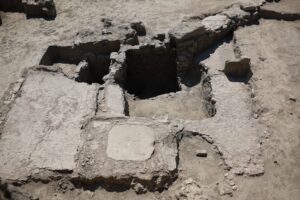
The district uncovered by archaeologists consists of several blocks containing the remains of five wineries. Located in the heart of the city beside the seaport, it was likely one of the busiest and most crowded parts of ancient Phanagoria, where wineries stood alongside shops and warehouses. The largest winery could produce up to 30 tonnes of wine a year. Archaeologists believe there may have been more than a hundred winemaking sites across Phanagoria.
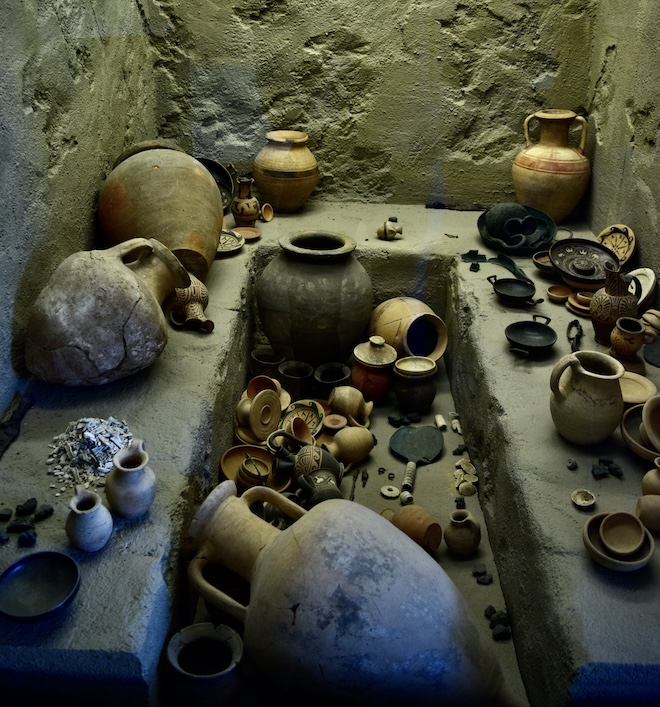
The discoveries give a detailed picture of the winemaking process. Grapes were crushed underfoot on platforms coated with a water-resistant mixture of sand, lime, shells and crushed ceramics. The juice was then poured into large clay vessels known as pithoi and left to ferment. Archaeologists have uncovered around 60 pithoi, each holding 600–800 litres. Some have survived almost intact, while others are preserved only as outlines in the ground.
The finished wine was poured into amphorae for sale. Before filling, the vessels were disinfected by burning sulphur, traces of which can still be seen on the bottoms of some of them. Phanagoria produced both red and white wine, sold locally and exported to Greek colonies across the northern Black Sea region. Hundreds of gold and copper coins found in the winemaking district attest to the scale of this trade.
Along with bread and olive oil, wine was a staple of the diet in Phanagoria and held an important place in religious practice. It featured prominently in the mysteries of Dionysus, one of the city’s most revered gods. Images of Dionysus and his companions, satyrs and maenads, as well as grape motifs associated with his cult, appear frequently on coins, amphorae and figurines found at the site.
________________________
Photo from Oleg Deripaska’s Volnoe Delo foundation.
________________________
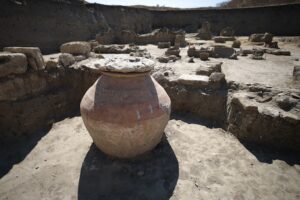
Photo from Oleg Deripaska’s Volnoe Delo foundation.
________________________
About the Phanagoria Archaeological Expedition
The ancient city of Phanagoria, studied with the support of Oleg Deripaska’s Volnoe Delo Foundation, existed for over 1,500 years, and served as the capital of the Asian part of the Bosporan Kingdom, the oldest state formation on the territory of modern-day Russia. Today, it is the largest ancient monument in the country.
Among the most remarkable discoveries of the Phanagoria Expedition are the palace of King Mithridates VI, two ancient Greek temples, and a sunken ancient ship. Artifacts from Phanagoria are preserved in the Hermitage, the Pushkin State Museum of Fine Arts, and museums in the United Kingdom, Germany, and other countries.
About the Volnoe Delo Foundation
Volnoe Delo, a foundation supporting social innovation, was founded by industrialist Oleg Deripaska. Today it is one of the largest organisations in Russia operating in the field of charity, philanthropy and volunteering. The foundation helps solve socially significant problems, supports education and science and contributes to the preservation of Russia’s cultural and historical heritage. The foundation has supported 500 projects in 50 Russian regions, benefiting 90,000 pupils, 4,000 teachers, 8,000 university and school students, 4,000 scientists, and 1,200 educational, scientific, cultural, healthcare, sports and other organisations.
__________________________
Article Source: News release of the Volnoe Delo Foundation.
__________________________
Advertisement