Model shows monuments arose from numerous independent working groups.

Ancient tombs reveal the story of Chinese history
Burial site distributions illustrate how people lived and died over thousands of years.
Italians spent thousands of years perfecting grape cultivation
Ancient grape seeds show gradual domestication from Bronze Age to Medieval Period.
12,000-year old stones may be very early evidence of wheel-like technology
Stones were likely used by early human cultures as spindle whorls to turn fibers into yarn.
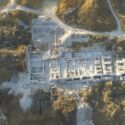
The ‘urban revolution’ was slow in Bronze Age Arabia
Ancient town of al-Natah, occupied 2400-1500BCE, was an early transitional stage between pastoralism and complex urban settlements.
International Space Station crew carries out first-ever archaeological survey in space
Study finds discrepancies between intended and actual use of certain areas aboard the space station.
Evidence for butchery of giant armadillo-like mammals in Argentina 21,000 years ago
Tool marks could be among oldest known evidence for human occupation in southern South America.
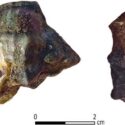
Greek Island was home to Bronze Age purple dye workshop
Tools, ceramics, and snail shells provide details of Mycenaean dye production in 16th century BC.
The first Neolithic boats in the Mediterranean
Canoes from Italy reveal early development of advanced nautical technology.
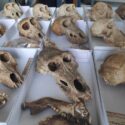
Baboons in captivity in Ancient Egypt: insights from collection of mummies
Skeletal pathologies in baboons from near Thebes indicate likely poor diet and limited sunlight.
Radiocarbon dating meets Egyptology and Biblical accounts in the city of Gezer
New dates allow testing of proposed correlations between texts and archaeological remains.
In Prehispanic Cancun, immigrants were treated just like Maya locals
Families moved residence across Mesoamerica and integrated into new societies.
Prehistoric people occupied upland regions of inland Spain in even the coldest periods of the last Ice Age
15,000-21,000 years ago, inland Iberia may have been more populated than traditionally thought.
Long-term history of violence in hunter-gatherer societies uncovered in the Atacama Desert
10,000 years of violent conflict revealed by skeletons, weaponry, and rock art.
Stone age artists carved detailed human and animal tracks in rock art in Namibia
Indigenous trackers could identify the prints’ species, sex and age for 90% of analyzed engravings.
Neolithic necklace from child’s grave reveals complex ancient culture
Analysis of the body ornament from Jordan identifies complex interplay of art, trade, status, and funerary practice.
The invisible plant technology of the prehistoric Philippines
Stone tools bear tell-tale markings of fiber technology going back 39,000 years.