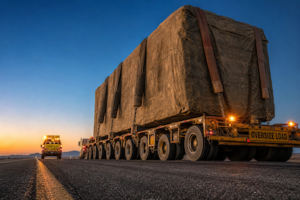
Moving ancient temples demands modern planning as much as careful digging; the spectacle of a relocated monument is downstream of logistics, not separate from it. Sacsayhuamán’s individual limestone blocks exceed 100 tonnes, and Göbekli Tepe’s T-shaped pillars stand up to 20 feet tall, predating the wheel by millennia.
Before a single block shifts, seven operational feats must be executed in sequence. Miss one, and every step that follows it collapses.
1. Survey The Site Without Disturbing Context
Ground-penetrating radar detects subsurface voids without opening a single trench. Drone-mounted LiDAR maps surface topology through dense vegetation, establishing baseline geometry before physical contact occurs.
This scanning creates a georeferenced map that governs all access decisions. Premature physical contact destroys sensitive stratigraphic data permanently.
| Quote: The seven feats form a single continuous chain: survey failures corrupt access plans, access failures prevent lift planning, and lift planning failures make stabilization irrelevant before a single block moves. |
2. Engineer Safe Access Routes
Teams deploy composite ground matting to distribute vehicle weight across uneven terrain, preventing concentrated stress on buried structures. Temporary bridging spans drainage gaps while load-spread platforms anchor equipment safely.
Staged plans sequence lighter vehicles first to verify soil bearing capacity. Heavy machinery only advances once ground strength is mathematically confirmed.
3. Plan Lifts And Move Oversized Material
Monolithic foundation elements are colossal, with individual blocks estimated to weigh well beyond 100 tonnes. Asymmetric gravity centers require precise load balancing to prevent transit fractures.
Projects require transport experts who coordinate complex permits across multiple jurisdictions. This approach aligns with the operational model behind Titan Worldwide Logistics’ specialized heavy-haul trucking in Texas, where specialized trailer geometries handle exceptional loads. Route clearance dictates the transport path based on advance bridge surveys.
| Pro Tip: For temple components up to 200 tonnes, partner with heavy-haul specialists who pre-survey routes and match trailer configurations to the load geometry. Route clearance for overhead lines and bridge limits is mandatory before any movement. |
4. Choose Compact Excavation Machinery For Controlled Work
Full-size excavators fail in heritage contexts because their intense ground pressure fractures weakened stone. Skid steers exert manageable pressure on engineered access mats, serving as the standard choice for perimeter trenching.
Interchangeable tools allow controlled material handling in tight spaces near standing structures. Field operators rely on exact-fitting parts, matching the logic of sourcing aftermarket Caterpillar skid steer attachments from HW Part Store, to avoid unplanned downtime during narrow excavation windows.
5. Stabilize Fragile Stone Before Lifting
Conservators apply penetrating acrylic resins to friable stone surfaces before any lifting straps touch the artifact. This specialized chemical application stabilizes delaminating layers without altering the historical color profile or trapping moisture inside the rock. Lime grout injection fills internal voids in monumental masonry to restore structural cohesion ahead of the primary lift sequence.
Micro-crack mapping utilizes raking light and digital photography to identify invisible failure planes. These hidden faults only reveal themselves under severe load stress, making early detection a critical survival factor for the artifact. Stabilization procedures must reach full completion before a spreader beam or mechanical hoist enters the staging zone.
Custom foam-padded cradles match the object’s exact geometry to distribute lift force evenly, avoiding concentrated stress at narrow contact points.
The Abu Simbel relocation established this technical standard when temple roofs were peeled away, and the facades were cut into massive blocks each weighing between 20 and 30 tons. Modern heritage engineering refines that methodology using software modeling to trace precise load paths through the ancient rock.
| Key Insight: The 1964 68 Abu Simbel relocation set the modern template: 20 blocks per facade weighing up to 30 tonnes each were jacketed, precision-sectioned, and moved 65 meters higher. Today, finite element analysis extends that methodology. |
6. Coordinate Permits And Public Space Closures
Permit coordination stacks multiple regulatory layers simultaneously across municipal, regional, and federal levels. National antiquities laws dictate what specific materials can move, establishing strict baseline conditions for field extraction. Regional transport authorities then mandate specific width, height, and route restrictions for all oversized loads.
Escort vehicle permits remain distinct from general transport approvals. These pilot vehicles require their own municipal sign-offs alongside detailed traffic management plans. Logistical hurdles frequently necessitate temporary road closure orders paired with mandatory advance public notice periods in local media outlets.
Permit approval across overlapping jurisdictions often demands months of lead time before a truck ever starts its engine. Compressing this administrative schedule threatens the entire timeline, since teams can easily miss their narrow dry-season transport window. Formal stakeholder engagement acts as a strict regulatory requirement to ensure indigenous communities retain legal standing in the relocation process.
7. Transfer Finds With Unbroken Documentation Trails
Provenance gaps reduce an object’s future research value and restrict its legal transfer across international borders. Every material transfer requires a signed receipt detailing the specific chain of custody from the trench to the laboratory. In-situ documentation before extraction includes coordinate tagging to centimeter precision, photographic records from multiple angles, and a comprehensive catalogue entry linking each object to its original soil layer.
The formal conservation handoff package specifies the physical condition of the item immediately before transport begins. It defines necessary foam density, vibration limits, and temperature ranges for both passive storage and active transit phases. A corresponding transport record links each artifact to a specific route, transport vehicle, registered driver, and exact timestamp.
Digital twin documentation provides conservators with a dimensional reference independent of any physical changes sustained during the journey. High-resolution laser scans generated before removal serve as an objective baseline for future restoration work. Ancient sites feature exceptional vertical elements, such as distinctive carved pillars measuring up to 5.50 meters tall, making digital modeling an essential tool for verifying structural integrity post-transit.
The Bottom Line
The seven operational phases form a rigid chain where single failures compromise the entire excavation effort. Route-surveyed transport for heavy loads and immediate access to necessary skid steer attachments function as absolute prerequisites for site survival. These specialized logistics and equipment sourcing strategies keep site timelines intact while actively protecting fragile subsurface features.
Treating heritage logistics as a secondary concern guarantees structural damage and permanent data loss. Meticulous planning protects the stratigraphic context, honors complex regulatory boundaries, and delivers monuments safely to their designated research facilities.
________________________
Advertisement