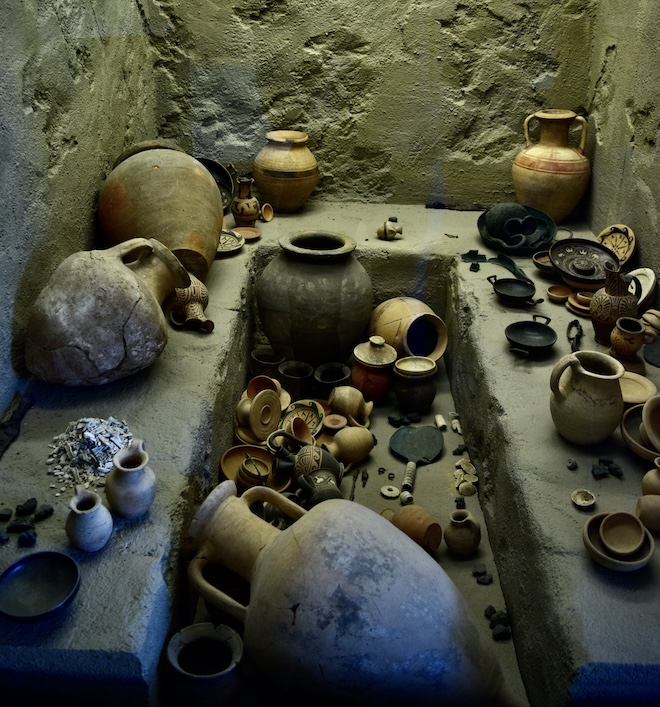
Archaeology is often imagined as the romantic search for lost cities, ancient treasures, and forgotten civilizations. In reality, it is a sophisticated scientific discipline that combines history, anthropology, geology, and technology to understand how humans lived thousands of years ago. Today, platforms like Popular Archaeology magazine help bring these discoveries from academic journals and excavation sites to the general public in accessible and engaging ways.
As one of the world’s most widely read digital archaeology publications, the site focuses on sharing major discoveries, research breakthroughs, and field reports that illuminate humanity’s past—from prehistoric hunter-gatherers to ancient empires.
But archaeology isn’t only about ancient ruins and artifacts. Increasingly, it’s also about understanding technology, infrastructure, trade networks, and the tools that shaped civilizations—some of which still echo in modern industries today.
Archaeology: A Window Into Human Origins
At its core, archaeology seeks to reconstruct human history through physical evidence. Rather than relying solely on written records, archaeologists examine material remains such as pottery, buildings, bones, tools, and environmental data.
These clues reveal patterns about how people lived, including:
- What they ate
- How they built homes and cities
- Their social structures
- Their trade networks
- Their technological capabilities
Archaeology therefore fills critical gaps in our understanding of human development—especially for prehistoric societies that left no written records.
Publications like Popular Archaeology regularly highlight discoveries that reshape our understanding of the past. For example, recent studies have examined ancient farming transitions in Europe, the scent compounds preserved in Egyptian mummies, and the role of seabird guano in the rise of pre-Inca civilizations in South America.
Each of these findings helps researchers piece together how cultures evolved, adapted to climate change, and developed increasingly complex societies.
Technology Is Transforming Archaeology
Modern archaeology is undergoing a technological revolution. While early excavations relied primarily on manual digging and observation, today’s archaeologists use advanced scientific techniques to uncover the past without even breaking ground.
Some of the most important tools include:
LiDAR Scanning
Airborne LiDAR (Light Detection and Ranging) technology uses laser pulses to map landscapes beneath dense vegetation. It has helped archaeologists discover entire lost cities in jungles that were previously invisible from the ground.
Ground-Penetrating Radar
This method allows researchers to identify buried structures before excavation begins, reducing damage to sites and improving excavation planning.
DNA Analysis
Ancient DNA studies can now reveal migration patterns, diseases, and even family relationships among ancient populations.
CT Scanning and Imaging
Non-invasive scans allow scientists to examine mummies and fossils without disturbing fragile remains.
These technologies allow archaeologists to explore historical landscapes at a scale that was unimaginable just a few decades ago.
Ancient Trade and the Birth of Global Supply Chains
One of the most fascinating areas of archaeological research involves ancient trade networks. Even thousands of years ago, civilizations maintained complex exchange systems that moved goods across vast distances.
Artifacts recovered from archaeological sites reveal trade in materials such as:
- Copper and bronze
- Obsidian tools
- Precious stones
- Grain and textiles
- Ceramics and luxury goods
For example, Mediterranean trade routes connected Egypt, Greece, Anatolia, and the Levant, enabling cultural exchange and economic growth throughout the ancient world.
Archaeologists often track these networks by analyzing the chemical composition of materials. If pottery found in Italy matches clay deposits in Greece, researchers can confirm that trade took place between those regions.
These early systems were effectively the predecessors of modern global supply chains.
Infrastructure and Industrial Development in Ancient Civilizations
Another important focus of archaeology is understanding the infrastructure that supported large civilizations. Cities such as Rome, Alexandria, and Babylon required sophisticated engineering to function.
Excavations frequently uncover:
- Water systems and aqueducts
- Roads and transport networks
- Mining and quarrying operations
- Industrial workshops
- Warehouses and trade depots
These discoveries show that ancient societies operated large-scale production systems that resemble modern industry more than many people realize.
Even the recovery of practical materials—metal tools, construction equipment, and mechanical components—can shed light on how ancient economies functioned.
In many ways, the remains of these early industries resemble the modern world’s surplus industrial parts, remnants of complex systems that once powered thriving societies but now serve as evidence for researchers reconstructing historical technology.
Climate Change and Human Adaptation
Archaeology is also increasingly important for understanding how societies respond to environmental change.
Recent studies highlighted in archaeology publications show how ancient populations adapted to drought, shifting ecosystems, and changing temperatures.
For example, evidence from North America suggests that some prehistoric hunter communities abandoned long-used hunting sites due to severe climate shifts. Instead of collapsing, they reorganized their strategies and moved to new locations better suited to changing environmental conditions.
These insights are valuable today because they show how human societies have historically responded to ecological pressures.
Why Public Archaeology Matters
For decades, archaeology was largely confined to academic journals and university research programs. But digital publications have helped make discoveries accessible to a broader audience.
Popular Archaeology and similar platforms aim to bridge the gap between academic research and public interest by presenting complex discoveries in clear, engaging language.
This approach matters for several reasons:
- Public support for heritage preservation increases when people understand archaeological significance.
- Education improves, helping readers appreciate human history beyond textbooks.
- Interdisciplinary insights emerge, connecting archaeology with science, engineering, and even economics.
By bringing discoveries directly to readers, these platforms help ensure that humanity’s shared past remains widely understood and valued.
The Future of Archaeology
The next decade promises to be one of the most exciting periods in archaeological research.
Several emerging developments will likely shape the field:
- Artificial intelligence analyzing satellite imagery to locate undiscovered sites
- Advances in ancient DNA sequencing
- Improved digital reconstruction of lost cities
- 3D modeling of artifacts and architecture
- Climate archaeology studying how ancient societies responded to environmental stress
With each new discovery, archaeologists gain a clearer understanding of how civilizations rose, evolved, and sometimes disappeared.
And as publications like Popular Archaeology continue to share these findings with the public, the stories of our past become accessible to anyone curious about where humanity came from—and where it may be heading next.
________________________________