I‘ll be honest — nobody warned me this would be uncomfortable.
When I started reading about ancient history, I imagined it would be simple. I thought I would fill in blanks: dates, names, empires, and their falls. Clean narrative. What I got instead was a slow, creeping suspicion that I didn’t actually know how to think about evidence. That took a while to sit with.
The Bronze Age Collapse is a good example. Many civilizations, like the Mycenaeans and the Hittites, vanished. This took place in a few decades around 1200 BCE. It affected much of the eastern Mediterranean. We have the evidence. We have the letters, the burned palace layers, the disrupted trade routes. And we still don’t agree on what happened. Climate? Migrations? Internal revolt? Some combination? Historians have been arguing about this for over a century, and the argument is still alive. That’s not a failure of scholarship. That’s what the past actually looks like up close.
It’s not settled. It keeps moving.
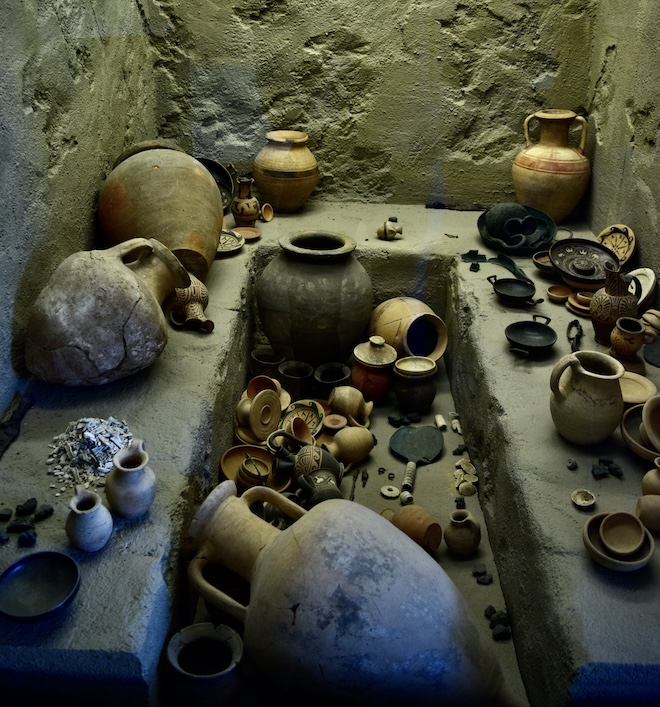
In 2022, pottery discovered at a 3,700-year-old site in Egypt showed ingredients from Southeast Asia. Resins and plant oils seemed out of place if you believed old views on Bronze Age trade networks. A study showed artifacts in museum storage for decades. Then, the map shifted suddenly.
The Antikythera mechanism is another one. Found in a shipwreck in 1901, mostly ignored, treated as corroded junk. It took more than a hundred years and new imaging tech to discover it was a very precise geared astronomical computer. Built around 100 BCE. Nothing like it should have existed for another thousand years.
I find this genuinely unsettling in a good way. It means you’re not studying a finished record. You’re watching an argument that’s still happening.
What changes in your head
Nobody picks up a book about Maya astronomy thinking “this will help me evaluate sources.” You read it because it’s strange and fascinating and the calendar system alone is worth a week of your time. But something happens along the way.
You start noticing when a source has a motive. You get annoyed by conclusions that don’t match the evidence being cited. You want to know who wrote a thing, what year, under what kind of pressure. These instincts build slowly, then they’re just there.
Ancient texts are almost cartoonishly useful for this. Caesar wrote his own battle reports. The pharaohs had their defeats literally chiseled off monuments. Historians of imperial Rome were close enough to hear emperors’ views on history. Nobody pretends these are neutral. When you spend time noticing that clear self-interest, you begin to see it in more subtle ways everywhere else.
On actually learning to write and argue
I’d like to challenge this idea: critical thinking doesn’t just come from reading interesting material. It doesn’t work like that. At least not efficiently.
You have to write. You have to build an argument and watch it fall apart and figure out where you went wrong. Early on, many students struggle to see what a strong historical argument looks like. This makes it difficult for them to aim for one.
Many students, especially at first, find it helpful to look at good examples of historical writing. This helps them understand what the standard looks like in practice. For many, the turning point comes when they stop overthinking and ask themselves a simple question — “can someone just write research paper for me so I can see what good actually looks like?” Services staffed by qualified academic specialists do exactly that, producing logically structured arguments on complex historical topics. The value isn’t having someone do your thinking for you — it’s seeing what a strong argument looks like when it’s done well.
Three things that actually stick
Physical evidence with no instructions attached. Pompeii had no labels when they started excavating it properly in the 18th century. Ash, bodies, and bread left in the ovens. Wall paintings show what people found funny, beautiful, or sacred. Every interpretation had to be built from scratch. Moving from what you see to a solid conclusion is a skill. It’s important not to act like you know more than you really do. Ancient material forces you to practice it because you have no other option.
Numbers that break your assumptions. The Roman Empire managed about 70 million people across three continents. They used horses and clay tablets for administration. The Inca built 40,000 kilometers of road through the Andes without iron tools or wheels. The Egyptian state had a strong cultural continuity. This lasted longer than any other time in recorded history since its decline. When you really let those numbers in, simple explanations start feeling embarrassing. And that’s useful. It changes how you see what human systems can do. We often don’t understand why they work or fail.
Asking who’s missing. Official history is, almost by definition, the history of people who got to write things down. The workers who built the pyramids. The enslaved people running Roman households. Women in almost all ancient societies were noted by men. These men found them worth mentioning for certain reasons. Once you’ve spent real time noticing these absences, you carry the habit forward. Into news. Into corporate narratives. Into almost everything. Who isn’t in this account? What would it look like if they were?
What transfers
Moving from incomplete, contradictory evidence to a position you can actually defend. Knowing how to weight a source based on who produced it and why. Comparing how different civilizations tackled the same basic human problems shows interesting insights. Following causes across long time spans without grabbing the nearest explanation. Changing your mind when the evidence changes, and not experiencing that as a defeat.
One last thing
The sea has submerged Roman harbor concrete for 2,000 years. It is increasing in chemical potency. Modern marine concrete degrades. The mechanism was seawater reacting with volcanic ash in the original mix. It wasn’t fully understood until 2017. There are now research programs trying to replicate it for sustainable construction.
The lesson isn’t that ancient people possessed greater advancements in secret. They weren’t, in most ways. The lesson is that knowledge doesn’t move in a straight line. Useful things get lost. Important discoveries get ignored for a century. The assumption that we’ve already found what matters keeps getting proven wrong.
Students who get this know that knowledge develops in a messy way, with setbacks. They are more ready for fields that keep changing. This applies to almost all of them.
The ancient world is useful precisely because it doesn’t cooperate. The sources lie. The evidence is missing. The experts disagree. You have to think, carefully, without a guaranteed answer at the end. That turns out to be excellent practice for almost everything else.
____________________________