Archaeology is a fascinating field for college students because it connects history, culture, science, and material evidence. One of the best ways to find those sources is through open-access archaeological databases, which provide free access to excavation reports, journal articles, site records, maps, and digital collections.
Open-access databases are different because they help you locate materials created by scholars, museums, universities, and research institutions. If you want to save time and improve the quality of your assignment, platforms like writepaper.com can support the writing process, while archaeological databases can help you collect evidence that is accurate, current, and academically useful.
Once you understand how to search strategically, evaluate what you find, and organize your evidence, open-access archaeological databases become valuable tools for building a focused and persuasive college paper.
Understand What Open-Access Archaeological Databases Offer
Before starting your search, it helps to understand what these databases usually contain. Open-access archaeological databases are digital platforms that make scholarly or research-based materials available without a paywall. Some focus on articles and book chapters, while others specialize in excavation archives, artifact catalogs, images, radiocarbon data, or geographic information.
These databases are especially useful because archaeology relies heavily on primary and technical evidence. Instead of depending only on textbook summaries, you can work with excavation findings, field reports, and peer-reviewed interpretations. This gives your research more depth and allows you to support your claims with stronger evidence.
Another advantage is topic variety. You can use these sources to research ancient Egypt, Classical Greece, Indigenous sites in the Americas, Roman Britain, Mesopotamian cities, maritime archaeology, bioarchaeology, and much more. Because archaeology is interdisciplinary, databases may also include information from anthropology, geology, art history, and environmental studies.
Start With a Clear Research Question
A common mistake in college research is searching before you define your topic. Archaeological databases are most useful when you enter them with a focused question. A vague topic like “ancient civilizations” will return too many results, many of which will not help you write a strong paper. A more specific question, such as “How did burial goods reflect social status in Mycenaean Greece?” gives your research direction.
When forming your question, think about place, time period, material type, and method of analysis. Archaeology works best when your subject is narrow enough to investigate with evidence. Instead of asking about an entire civilization over centuries, focus on one site, one category of artifact, or one social practice.
It also helps to identify alternative keywords before you search. Archaeological terminology varies across publications. For example, one author may use “mortuary practices,” while another uses “burial customs.” One database entry may say “ceramics,” while another says “pottery.” By planning related terms in advance, you improve your chances of finding relevant results.
Use Smart Search Strategies to Find Better Sources
Once you enter a database, avoid typing full questions the way you would in a search engine. Instead, combine keywords that describe your topic precisely. Good searches often include a site name, a culture, a period, and a theme. For example, a student researching trade might search “Bronze Age Mediterranean exchange ceramics” rather than “How did people trade in ancient times?”
Here are a few practical strategies to improve your search results:
- Use quotation marks for exact phrases such as “funerary archaeology”
- Try synonyms like “artifact,” “material culture,” and “object”
- Add date ranges or regions to narrow broad topics
- Filter by article type, subject area, or publication date
- Search by site name if your topic is location-based
- Read abstracts first before downloading full texts
These methods help you avoid information overload. They also make it easier to distinguish between general background reading and sources you can actually cite in your paper. If a database offers advanced search filters, use them. Limiting by language, date, or publication type can quickly remove irrelevant material.
Evaluate the Reliability and Relevance of Each Source
Not every source in a database will be equally useful for your assignment. Some materials are peer-reviewed journal articles, while others may be preliminary reports, image records, or technical datasets. That does not mean non-journal materials are bad, but it does mean you should know how each type of source fits into your research.
Start by asking who produced the material. Was it written by a recognized archaeologist, a university department, a museum, or a professional organization? Then look at the purpose of the source. Is it presenting original findings, summarizing past scholarship, or documenting a collection? Your paper may need a combination of these.
Relevance matters as much as credibility. A highly respected article on Roman roads will not help if your essay is about Maya ritual spaces. Read the abstract, conclusion, and section headings first to see whether the source directly addresses your argument. You should also note the publication date. In archaeology, older scholarship can still be valuable, but newer work may include updated interpretations, revised chronologies, or improved scientific methods.
Turn Database Research Into a Strong College Paper
The final step is transforming your database research into a clear argument. Do not simply summarize everything you found. Instead, use your sources to answer a central question. Your thesis should explain what the archaeological evidence shows and why it matters. This approach demonstrates critical thinking, which professors usually value more than basic description.
For example, if your sources discuss household artifacts from a settlement, your argument might focus on social organization, gender roles, or trade connections. If you are studying burial evidence, you might argue that grave goods reflected status differences or changing religious beliefs. The key is linking evidence to interpretation.
As you write, integrate sources carefully. Introduce each one, explain what evidence it provides, and connect it back to your thesis. Avoid filling your paper with disconnected facts. Archaeology offers rich material, but your job is to show how that material supports a specific claim.
In the end, open-access archaeological databases can significantly improve your college research. They give you access to credible materials, help you move beyond surface-level sources, and allow you to engage with real archaeological evidence. When you begin with a focused question, search strategically, evaluate sources critically, and organize your notes well, you create a solid foundation for an effective academic paper. For any student who wants stronger research and more persuasive writing, learning to use these databases is a skill worth developing.
___________________________
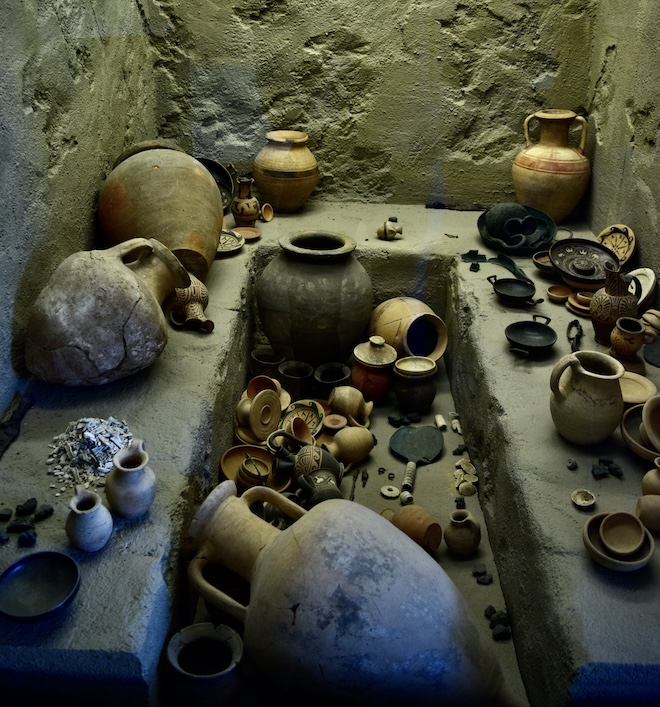
Photo, above left by Ignat Kushnarev on Unsplash
___________________________