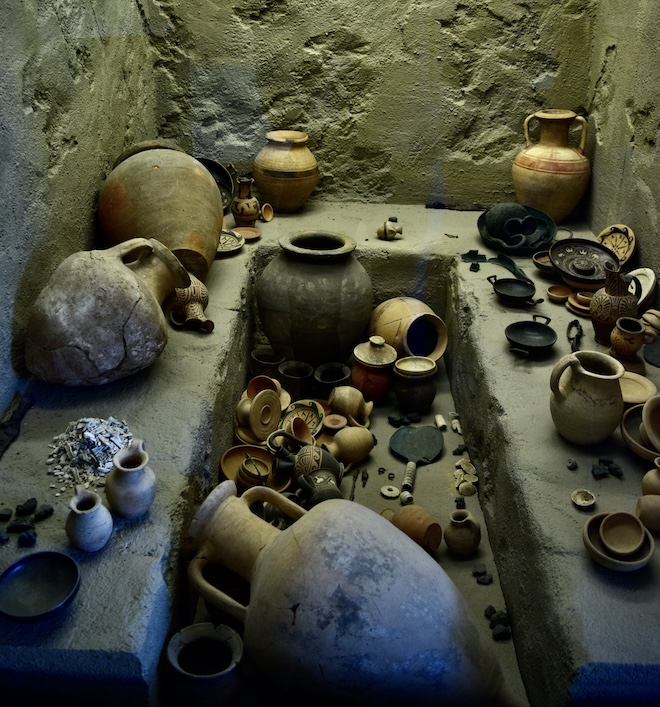
Walking the streets of New York City, one might not immediately think that the sidewalks themselves tell stories. We step daily over slabs of concrete, pavement, and granite, rarely pausing to consider what lies beneath—or what the layers beneath might reveal about the city’s deep history. But in fact, the sidewalks of NYC are portals into a palimpsest of human activity: Indigenous occupation, colonial settlement, commerce, urban renewal, and daily life across centuries.
This article explores how New York’s sidewalks are more than mere pathways—they are archaeological stages on which stories lie just beneath our feet.
The Concept of Urban Sidewalk Archaeology
Archaeology in cities is often thought of in relation to major digs—museums, historic sites, construction trenches. But urban archaeology also unfolds in subtle ways: through sidewalk cuts, utility trenches, street repairs, and building foundation work. Each time the soil beneath the street is disturbed, there is a chance to glimpse vestiges of earlier eras.
Because sidewalks often align with older street alignments, and because sidewalks get repaired, replaced, or cut for access, they serve as accessible “windows” into subsurface deposits. When archaeological teams or municipal workers open up a sidewalk, they may encounter:
- Soil horizons preserved beneath fill or pavement
- Artifacts discarded or lost over time
- Foundation stones, cellar remnants, wells, cisterns
- Historic features (old curbstones, cast-iron elements, paving blocks)
- Traces of early utility lines (gas, water, early telegraph)
- Organic traces (pollen, seeds, charcoal) in buried layers
Because sidewalks are continuous and traverse wide swaths of the city, cumulative finds create a mosaic of the past cityscape.
Historic Layers Under the Sidewalk: Selected Case Studies
1. Lower Manhattan’s Stadt Huys Block
Excavations near the old Dutch city hall revealed intact 17th- and 18th-century layers, wells, and colonial foundations. These were found beneath streets and adjacent sidewalks, proving that preserved sequences often remain hidden just under modern surfaces.
2. Remnants at Pearl Street
In the Financial District, a section of sidewalk allows people to view preserved 17th-century building foundations beneath protective glass. This demonstrates how sidewalks can also serve as exhibit spaces.
3. Wharf Remains at Burling Slip
Near John Street, redevelopment exposed portions of forgotten wharf structures, once waterfront but now hidden under pavement and pedestrian routes.
4. Small Everyday Artifacts
Countless ceramics, coins, bottles, and tools have been recovered during sidewalk replacements and street trenching. Each artifact is a piece of the city’s story, revealing how ordinary New Yorkers lived, consumed, and disposed of goods.
5. Sidewalk Clocks
Manhattan’s historic cast-iron sidewalk clocks are not buried, but they are part of sidewalk heritage, representing architectural and industrial craftsmanship that has become part of the city’s streetscape.
___________________________

___________________________
What the Sidewalk Record Reveals
When studied collectively, sidewalk discoveries tell us:
- How street grids and ground levels have shifted over centuries
- What daily consumption looked like in different neighborhoods
- The history of utilities and infrastructure beneath the pavement
- Where older features like wells, cisterns, and cellars were located
- How Indigenous traces sometimes survive below colonial and modern fill
These themes show that every sidewalk is a thin crust over layers of change.
Challenges of Sidewalk Archaeology
Urban sidewalk archaeology faces constraints:
- Excavations are usually small, temporary, and limited by safety rules
- Permits and coordination with city agencies are required
- Developers often must balance preservation with construction needs
- Public interpretation requires creative solutions like plaques, glass panels, or augmented reality
- Documentation must be precise so that even small finds are not lost to history
Despite these challenges, sidewalks remain a vital access point to the city’s hidden past.
Sidewalks and Modern Repair
Maintaining sidewalks is itself part of the city’s living archaeology. Property owners are responsible for adjacent sidewalks, and if they fail to repair violations, the city may step in. Contractors today cut, replace, and repave sidewalks constantly, creating chances for discoveries. That’s why professional crews, like sidewalk repair contractors and check NYC sidewalk repair cost, play a key role in balancing compliance, safety, and heritage awareness.
Each repair is both a civic duty and an opportunity to rediscover what lies beneath the concrete.
Reading the Pavement: An Archaeologist’s Approach
Archaeologists “read” sidewalks through:
- Historic map analysis
- Test cores and probes
- Monitoring of sidewalk and utility trenching
- Recording soil layers and artifacts
- Cataloging and integrating finds into citywide databases
Through these methods, they weave together a narrative of urban life hidden below modern pavement.
What Sidewalk Stories Teach Us
The study of NYC sidewalks reveals:
- A continuity of urban habitation from colonial times to today
- Layered modernization—from cobblestones to fiber optics
- Patterns of wealth and poverty visible in artifact distribution
- The impact of urban renewal and erasure in some neighborhoods
- How sidewalks can connect pedestrians to history beneath their feet
Ultimately, sidewalks embody both continuity and transformation.
__________________________
__________________________
The sidewalks of New York City are more than just functional paths; they are thin veils over centuries of history. Beneath them lie forgotten streets, discarded artifacts, buried wells, and layers of human life that tell the city’s story. Every sidewalk repair, every excavation, is a chance to rediscover these hidden narratives.
As New Yorkers walk the pavements of today, they tread directly over the memories of yesterday. Recognizing sidewalks as living archaeological spaces allows us to connect with the city in a deeper way—bridging daily life with centuries of heritage.
For those looking to maintain safe and compliant sidewalks while respecting this layered past, expert guidance is essential. Learn more at NYC Sidewalk Violations.