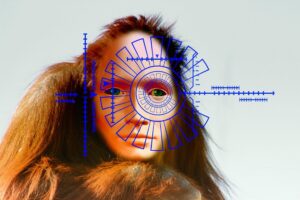
The human face is a biological record shaped by evolution, environment, and social behavior. Its structure reflects millions of years of adaptation related to movement, diet, brain growth, climate, and communication. The face has never been static. It has changed continuously as human needs evolved, leaving clear anatomical evidence that allows researchers to study how and why these changes occurred.
The Human Face as an Evolutionary Archive
From a biological perspective, the face integrates several essential functions, including sensory perception, breathing, feeding, and social interaction. Once early human ancestors adopted upright walking more than four million years ago, the skull was no longer constrained by locomotion. This allowed facial anatomy to respond more directly to ecological and functional pressures.
Researchers have observed that while the skeletal structure for bipedal movement stabilized early, the face continued to change. Paleoanthropologist William Kimbel explains that “the skull and teeth provide a rich library of changes that we can track over time, describing the history of evolution of our species.” These changes reflect both biological demands and behavioral innovation.
Dietary Shifts and Facial Remodeling
Diet has played a central role in shaping facial structure. Early hominin species consumed tough, fibrous plant foods that required strong chewing forces. As a result, their faces were broad and deep, with large jaws, thick cheekbones, and prominent muscle attachment sites.
As environments changed and food sources diversified, especially during the last two million years, early members of the genus Homo began using tools to process food. Cutting meat and breaking down plant matter mechanically reduced the need for large jaws and teeth. Over time, this led to:
- Smaller jaws and teeth
- Reduced facial depth
- A flatter facial profile
Anthropologists often summarize this relationship by noting that facial structure reflects dietary demand. As Kimbel states, “We evolved to be what we eat, literally.”
Brain Expansion and Structural Reorganization
The expansion of the human brain significantly influenced facial evolution. As cranial capacity increased, the skull reorganized to maintain balance and function. The growing braincase pushed the face downward and inward, a process known as facial retraction.
This structural shift reduced forward projection of the jaws and midface while preserving essential functions such as vision, breathing, and speech. These changes distinguish modern humans from earlier hominin species that had more projecting facial structures.
Respiratory Function and Climate Adaptation
The face also functions as part of the respiratory system. Nasal shape and airway structure adapted to different climates over time. Narrower nasal passages are more effective at warming and humidifying cold, dry air, while broader nasal openings help dissipate heat in warmer environments.
These adaptations developed gradually and contributed to regional variation in facial form. They demonstrate that facial evolution was influenced by multiple interacting factors rather than a single cause.
Social Behavior and Facial Expression
Social interaction has also shaped facial anatomy. The face is a primary tool for nonverbal communication, conveying emotion, intent, and social cues. Certain facial features likely evolved in response to changes in social behavior.
Large brow ridges, common in extinct human relatives such as Homo erectus and Neanderthals, are also present in modern great apes. Researchers suggest these structures played a role in signaling dominance or aggression. As human societies became more cooperative, these features diminished. At the same time, facial musculature evolved to support a wider range of expressions.
Kimbel notes that “the human face plays an important role in social interaction, emotion, and communication,” and that some facial changes may reflect social context rather than purely mechanical demands.
The Role of Culture in Biological Change
Cultural practices further influenced facial evolution by reducing physical demands. Tool use, cooking, and food preparation lessened the need for powerful chewing. Over many generations, these behaviors contributed to smaller jaws and teeth.
This interaction between culture and biology highlights a key feature of human evolution. Learned behavior often alters selective pressures, leading to anatomical change without direct environmental stress.
Ongoing Facial Change in Modern Populations
Facial evolution did not end in the past. Modern diets, healthcare, and living conditions continue to influence facial development, particularly during childhood. While these changes occur over shorter timescales, they follow the same biological principles that shaped faces throughout human history.
In adulthood, medical knowledge and surgical precision now allow structural changes to be approached with a detailed understanding of anatomy, tissue behavior, and long-term biological outcomes. These modern aesthetic surgery techniques reflect the same anatomical principles studied in evolutionary research, applying them in controlled clinical settings to address age-related structural shifts rather than environmental pressures.
As Kimbel observes, “We are a product of our past. Understanding the process by which we became human allows us to look at our own anatomy with perspective and insight.”
Interpreting the Human Face Through Time
The modern human face reflects cumulative evolutionary processes involving diet, brain growth, climate adaptation, and social behavior. Each anatomical feature represents a functional response to historical conditions rather than an isolated trait.
By examining how faces change over time, researchers gain insight into human biology and the evolutionary pathway that led to modern humanity. The face remains one of the most accessible and informative records of that journey.
_________________________
Cover Image, Top Left: Geralt, Pixabay
_________________________