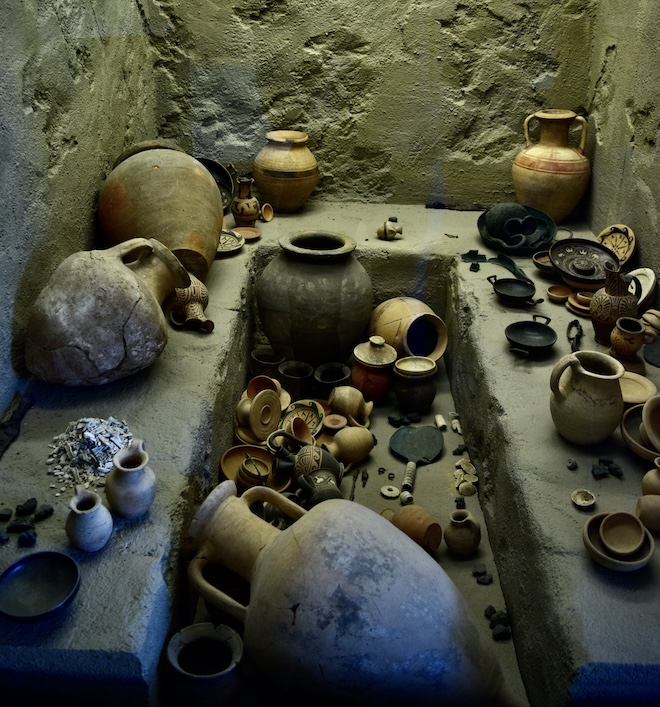
Archaeology and academic history often seem like neighboring disciplines that speak different dialects. One studies soil layers, postholes, ceramics, bones, and ruined walls. The other studies archives, manuscripts, political change, memory, and interpretation. Yet the strongest historical scholarship often appears when these two worlds meet.
For students, early-career researchers, and even seasoned scholars, the challenge is not only collecting evidence. The harder task is turning field discoveries into meaningful historical arguments. A trench can reveal a structure, a burial, or a pattern of trade. A thesis must explain why that evidence matters within a wider human story.
Why Field Archaeology and Academic History Need Each Other
Field archaeology produces direct material evidence. It brings researchers close to the physical traces of daily life, conflict, migration, ritual, and exchange. A fragment of pottery may reveal trade links. A coin deposit may suggest instability, wealth, or political control. Soil discoloration can point to forgotten buildings, fires, or repeated occupation.
Academic history adds another layer of value. It organizes evidence into chronology, social context, and interpretation. Historians ask how objects fit into broader systems such as empire, religion, labor, gender, law, and memory. Without that analytical framework, many finds remain isolated data points instead of historical insight.
What the Trench Can Reveal That Texts Cannot
Excavation often captures voices that written records ignore. Elites produced many of the documents historians inherit. Ordinary workers, women, enslaved communities, migrants, and rural populations often appear only faintly in texts. Material culture can correct that imbalance.
A cooking pot, spindle whorl, child’s toy, bead, or animal bone offers clues about everyday routines. These traces help researchers reconstruct diet, housing, craft production, domestic labor, and consumption habits. In that sense, archaeology broadens the historical record rather than simply illustrating it.
What Academic History Contributes to Excavated Evidence
Objects do not explain themselves. A wall is never just a wall. Its date, function, symbolism, and relation to power depend on careful interpretation. Historians bring methods that help connect physical remains to political structures, cultural change, and intellectual life.
That is why historiography matters so much. A student may identify a material pattern in the field, yet still struggle to position it within existing scholarship. Academic history teaches how to engage debates, test claims, and show where new evidence confirms, complicates, or challenges accepted narratives.
Balancing fieldwork responsibilities with academic deadlines can place significant pressure on students working at the intersection of archaeology and history. Long hours on excavation sites, combined with the need to produce well-structured written analysis, often leave little time for refining arguments or polishing complex ideas. In these situations, history assignment help can support the writing process by helping organize research into a clear and academically consistent format. With additional guidance, students are able to strengthen their reasoning, improve the flow of their writing, and present their findings with greater confidence. This allows them to stay focused on both practical discoveries and their interpretation without compromising the overall quality of their work.
Where the Gap Usually Appears
The gap between trench work and thesis writing often opens during interpretation. Field schools train students to record units, read stratigraphy, bag artifacts, and follow site protocols. University seminars train them to analyze sources, compare arguments, and build literature reviews. Both skill sets matter, but they are not always taught together.
The result is a familiar problem. A student may leave the field with rich notes and strong observational skills, then feel lost when asked to produce a research question. Another student may write elegant prose about the past, yet feel uncertain about excavation data, site reports, or artifact context. Bridging this divide requires deliberate practice.
Several barriers appear again and again in archaeology and history programs. They are practical, intellectual, and methodological at the same time.
- Students collect data before they define a strong research problem.
- Field notes remain descriptive instead of analytical.
- Site evidence is treated separately from textual or archival material.
- Terminology from archaeology and historiography is not always translated across disciplines.
These problems do not mean the student lacks talent. More often, they show how academic training is divided into separate boxes. Once those boxes are opened, interpretation becomes more confident, precise, and original.
Turning Excavation Into Argument
The move from fieldwork to thesis writing begins with a shift in mindset. In the trench, the priority is accuracy, context, and documentation. In academic writing, the priority is argument, relevance, and synthesis. The evidence stays important, but its role changes.
A useful thesis does not merely report what was found. It explains what the findings reveal about a settlement, period, institution, or community. That means every artifact category, context sheet, and spatial pattern must serve a larger claim. Students who understand this shift usually write stronger dissertations, articles, and seminar papers.
Questions That Create Better Historical Interpretation
A productive project usually begins with better questions rather than more material. Instead of asking only what was uncovered, students should ask what the finds allow them to investigate. This small change creates room for interpretation.
For example, a trench with imported ceramics might support questions about trade, status, or cultural contact. A cemetery may open questions about health, kinship, violence, or identity. Burn layers could point toward war, accident, climate stress, or urban redevelopment. The same evidence can support different arguments depending on context and method.
Before moving into a longer discussion, it helps to identify the kinds of questions that most often connect field archaeology with academic history.
- local context shaped the meaning of every find;
- dating methods mattered as much as description;
- spatial relationships revealed patterns no single object could show;
- comparison with written sources sharpened interpretation;
- absence of evidence also required caution.
When students learn to ask these kinds of questions, their writing becomes more than a technical summary. It starts to sound like history rather than a storage inventory.
A Simple Comparison of Both Worlds
The relationship between archaeology and history becomes clearer when their strengths are placed side by side.
| Area | Field archaeology | Academic history | Best bridge |
| evidence | artifacts, ecofacts, architecture, stratigraphy | texts, archives, chronicles, theory | combined source analysis |
| method | excavation, survey, recording, dating | interpretation, comparison, argumentation | research design |
| main risk | over-description | over-generalization | contextual synthesis |
| strongest outcome | grounded evidence | meaningful narrative | persuasive historical explanation |
This comparison shows why neither discipline should dominate the other. Good scholarship grows when material remains and historical reasoning works together.
Practical Skills That Help Students Bridge the Divide
Many students assume the bridge must be built at the final writing stage. In reality, it starts much earlier. The habits formed during fieldwork shape the quality of the later thesis. Careful observation is important, but reflective note-taking is equally valuable.
A strong researcher learns to move between recording and interpretation without confusing the two. That balance takes repetition, especially when handling large datasets, fragmented artifacts, or complicated site phases.
Several practical habits make that transition easier during both fieldwork and academic writing.
- keep a parallel notebook for interpretive thoughts, not just technical records;
- connect each context or feature to at least one historical theme;
- review excavation notes while reading secondary scholarship;
- build a glossary of key terms from both archaeology and historiography;
- map how artifacts, texts, and chronology support the same research question.
These habits save time later. They also reduce the panic many students feel when they face a blank page after an intense field season. Instead of starting from scattered observations, they begin with patterns, questions, and possible arguments.
Building a Thesis That Honors the Evidence
A good thesis should respect uncertainty without becoming vague. Archaeological evidence is often incomplete, disturbed, or ambiguous. Historical writing must acknowledge those limits. At the same time, cautious writing should still make a clear claim.
That balance is where mature scholarship begins. A student does not need to force certainty onto every interpretation. It is often stronger to explain competing possibilities, weigh the evidence, and justify the most persuasive conclusion. Examiners usually value intellectual honesty more than exaggerated confidence.
From Site Report to Scholarly Contribution
Site reports are essential, but a thesis must go further. It should engage debates about social life, state formation, migration, religion, trade, memory, or conflict. In other words, the thesis must show why the excavation matters beyond the trench itself.
That is also where academic history sharpens archaeological writing. It helps students connect a specific case study to broader patterns across time and place. A small excavation can still support a powerful argument if the analysis is precise and well framed.
Why This Bridge Matters for the Future of Historical Research
The future of historical research depends on interdisciplinary thinking. Archaeology without historical interpretation can become overly technical. History without material evidence can become too abstract or too dependent on elite voices. Together, they offer a fuller picture of the past.
Students who learn to bridge this gap gain more than a better grade. They become better researchers, clearer writers, and more flexible thinkers. They learn how to move from dirt layers to debate, from field notes to historiography, and from recovered fragments to historical meaning.
In the end, the path from trench to thesis is not a leap. It is a process of translation. When field archaeology and academic history are brought into conversation, the past becomes richer, more complex, and far more human.
_____________________________