India’s landscape is a living museum — where every stone, pillar, and ruined wall whispers tales of forgotten kingdoms, lost battles, and enduring legacies. Across the subcontinent, time stands still in the remnants of ancient forts, deserted cities, and abandoned palaces. These silent witnesses of history allow modern travelers to experience a kind of time travel — stepping into eras when kings ruled with valor, architects built with vision, and traders carried silks, spices, and stories across continents.
This journey through India’s abandoned heritage sites isn’t just about ruins; it’s about rediscovering the soul of a civilization that once flourished in unimaginable grandeur.
1. Rajasthan: The Kingdom of Ghost Cities and Silent Forts
No other region in India tells the story of lost royalty like Rajasthan. Behind its golden deserts and lavish palaces lie towns that time itself seems to have abandoned.
Kuldhara – The Cursed Village
Near Jaisalmer lies Kuldhara, a village abandoned overnight more than 200 years ago. Legend says that the entire Paliwal Brahmin community fled after a tyrannical ruler tried to marry one of their daughters by force. Before leaving, they cursed the land, declaring no one would ever live there again.
Today, the crumbling sandstone homes and empty lanes stand untouched, preserving an eerie silence. Archaeologists studying the site found evidence of advanced water channels and trade systems, suggesting Kuldhara was once prosperous — its desertion remains one of India’s enduring mysteries.
Bhangarh Fort – The Most Haunted Fort in India
Nestled between Jaipur and Alwar, Bhangarh Fort is perhaps the most famous ghost town in India. Built in the 16th century by Raja Madho Singh, the fort’s beautiful architecture hides a legend of love, sorcery, and destruction. The Archaeological Survey of India even restricts visitors after sunset, adding to its allure.
Wandering through its empty marketplaces, temples, and royal residences feels like walking through a film set frozen in time — a vivid reminder of how myth and history intertwine in Indian archaeology.
Chittorgarh Fort – Pride, Power, and Tragedy
Spread over 700 acres, Chittorgarh Fort stands as the largest fort in India and a UNESCO World Heritage Site. Though not entirely abandoned, its ruins tell stories of sacrifice and resilience. Three times, the fort faced sieges from powerful rulers — and each time, its women committed jauhar (self-immolation) to protect their honor.
The haunting ruins of the Victory Tower, Rana Kumbha’s Palace, and Padmini’s Palace speak of the indomitable spirit of Rajput pride.
Exploring Rajasthan’s ruins often ends with a peaceful evening in a desert village, where locals still cherish their traditional Tea Rituals — preparing strong, spiced chai brewed over open flames while recounting ghostly tales under the stars.
2. Madhya Pradesh: The Heart of India’s Ancient Majesty
Madhya Pradesh, known as the “Heart of India,” is rich in archaeological marvels that blend mythology, architecture, and imperial grandeur.
Mandu – The City of Joy
Perched on the Malwa Plateau, Mandu was once a pleasure resort of the Mughal era. Its grand palaces, such as the Jahaz Mahal (“Ship Palace”), look as if they float on water. In the 15th century, Mandu flourished under Sultan Ghiyas-ud-din Khilji, who built palaces for his queens and surrounded them with gardens and lakes.
Today, the remains of mosques, pavilions, and stepwells echo the laughter of a bygone era. The love story of Baz Bahadur and Rani Roopmati, immortalized in songs, gives the site a romantic charm even amid decay.
Orchha – Frozen in Time
On the banks of the Betwa River, Orchha appears as though it has been forgotten by time. Once the capital of the Bundela kings, the town boasts majestic temples and cenotaphs (chhatris). The Jahangir Mahal and Raja Mahal stand proudly despite centuries of neglect, their murals fading like memories.
The sound of temple bells still drifts through the air, blending with the chirping of birds — a hauntingly beautiful reminder that faith often outlasts empires.
3. Maharashtra: The Forgotten Fortresses of the Sahyadris
The rugged Western Ghats of Maharashtra are home to some of India’s most formidable hill forts, each echoing tales of Maratha valor.
Raigad Fort – The Throne of Shivaji Maharaj
Standing 2,700 feet above sea level, Raigad Fort was once the capital of Chhatrapati Shivaji’s empire. The ruins of the royal chambers, markets, and the coronation platform (Nagarkhana Darwaza) still inspire awe. Despite the ravages of time, Raigad remains a sacred site for Marathas, who climb its steep steps each year to honor their king.
The fort’s breathtaking view of the Sahyadris reminds visitors of Shivaji’s strategic genius and the rise of indigenous power in India’s medieval era.
Lohagad and Visapur – Twin Guardians of the Western Ghats
Near Lonavala, these twin forts stand as silent witnesses to centuries of warfare. Lohagad, meaning “Iron Fort,” dates back to the Satavahana period. The fort changed hands between the Mughals and Marathas several times, and its massive gates still bear the scars of battle.
Hiking to these forts during the monsoon is an ethereal experience — mist envelops the walls, and nature reclaims the stone. At the summit, travelers often pause for steaming cups of tea, keeping alive age-old Tea Rituals that connect moments of reflection with the aroma of Indian hospitality.
4. Karnataka: The Forgotten Empire of Vijayanagara
Hampi – The Ruined Splendor
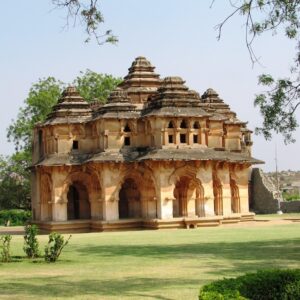
A UNESCO World Heritage Site, Hampi was once the capital of the Vijayanagara Empire, one of South India’s mightiest dynasties. In the 14th–16th centuries, it was a thriving metropolis of art, trade, and spirituality.
Today, the boulder-strewn landscape holds the ruins of palaces, bazaars, and over 1,600 monuments. The Vittala Temple, with its stone chariot and musical pillars, showcases unmatched craftsmanship. The Virupaksha Temple, still active, stands as a bridge between the past and present.
Despite being destroyed in 1565 after the Battle of Talikota, Hampi’s ruins still hum with life at sunset — when golden light spills over ancient granite and time itself feels suspended.
Bidar – The Neglected Gem
Further north, Bidar Fort in Karnataka was once the capital of the Bahmani Sultanate. Its Persian-inspired architecture, intricate stucco work, and massive bastions reveal the sophistication of Indo-Islamic design.
Though partly in ruins, Bidar’s historical aura is unmatched. Local legends say its waters once contained healing minerals, drawing travelers from faraway lands.
5. Gujarat: Echoes of Trade and Civilization
Dholavira – The Desert City of the Harappans
Located in the Rann of Kutch, Dholavira is one of the most significant archaeological discoveries in India. Dating back over 4,500 years, it was part of the Indus Valley Civilization. Excavations revealed a remarkably advanced urban system — with water reservoirs, sewage networks, and a unique script carved on sandstone.
Unlike other Harappan sites, Dholavira survived in isolation for centuries before being rediscovered in the 20th century. Walking through its geometric streets feels like traveling thousands of years into the past — a glimpse into one of the earliest organized cities in human history.
Champaner-Pavagadh – A Lost Capital
Hidden near Vadodara, Champaner-Pavagadh Archaeological Park offers a fusion of Hindu and Islamic architectural styles. Built in the 15th century by Sultan Mahmud Begada, it was once a flourishing capital before being mysteriously abandoned. The site includes mosques, stepwells, palaces, and city gates — all preserved in near-perfect symmetry.
Today, the complex stands amidst thick forests and quiet hills, reminding visitors of the fleeting nature of human ambition.
6. North India: The Lost Capitals of Power
Fatehpur Sikri – Akbar’s Dream City
Built by Emperor Akbar in 1571, Fatehpur Sikri near Agra was designed as a grand imperial city. For 14 years, it flourished as the Mughal capital, blending Persian aesthetics with Indian craftsmanship. However, due to water shortages, Akbar was forced to abandon it.
The city remains one of India’s best-preserved examples of Mughal architecture. The Buland Darwaza, Panch Mahal, and Jodha Bai’s Palace still evoke Akbar’s vision of religious tolerance and cultural unity.
Rakhigarhi – The Cradle of Civilization
Located in Haryana, Rakhigarhi is believed to be the largest Indus Valley Civilization site in India. Excavations unearthed evidence of planned streets, drainage systems, and pottery dating back to 2600 BCE. It provides valuable insights into early urban planning and social organization — reshaping our understanding of the Harappan world.
7. Eastern India: Temples and Cities Lost in Time
Konark – The Sun Temple of Stone
In Odisha, the Konark Sun Temple stands as a colossal chariot carved from black granite. Built in the 13th century by King Narasimhadeva I, it once had a giant magnet at its apex that held the iron idol of the Sun God suspended in air.
Though partially ruined, Konark’s architectural genius still dazzles scholars and travelers alike. The intricate carvings depict not just deities but daily life — an archaeological testament to the artistic brilliance of medieval India.
Sisupalgarh – India’s Ancient Urban Center
Near Bhubaneswar lies Sisupalgarh, one of the oldest fortified cities in the world, dating back over 2,500 years. Excavations revealed planned streets, moats, and gateways — indicating advanced governance long before the Mauryan Empire.
8. Rediscovering Heritage: How Archaeology Keeps Time Alive
The ruins of India are more than tourist destinations — they are classrooms without walls. Each site holds a lesson about engineering, sustainability, and artistry that continues to inspire modern architects and historians.
Archaeological efforts in India, led by the Archaeological Survey of India (ASI), use cutting-edge technologies like drone mapping, ground-penetrating radar, and carbon dating to reveal what lies beneath layers of dust and time.
Preservation, however, is an ongoing battle. Rapid urbanization, climate change, and neglect threaten many of these treasures. Awareness and responsible tourism are key to ensuring that future generations can continue to “time travel” through these ruins.
9. The Soul of Exploration: Blending Past and Present
Visiting India’s abandoned forts and cities isn’t just a historical excursion — it’s a sensory experience. The scent of rain on old stone, the echo of footsteps in empty corridors, and the taste of roadside tea brewed by locals form an emotional tapestry that connects past and present.
In Rajasthan, Gujarat, or Madhya Pradesh, explorers often pause amid ruins to enjoy simple Tea Rituals — brewing spiced chai as their ancestors might have centuries ago. This small act bridges the gap between eras, reminding us that while empires fall and cities vanish, traditions endure.
Closing Reflections
India’s abandoned forts and cities are not relics of loss — they are symbols of continuity. They remind us that civilizations may crumble, but culture survives in the stories we tell, the art we preserve, and the rituals we pass on.
To walk through these ruins is to touch eternity — to feel the heartbeat of ancient India still pulsing beneath layers of stone and silence.
So, the next time you stand before a crumbling fort wall or deserted palace courtyard, close your eyes and listen. The past isn’t gone — it’s waiting, whispering through the wind, ready to share its secrets with those who choose to listen.
___________________________
Cover Image, Top Left: Vijayanarasimha, Pixabay