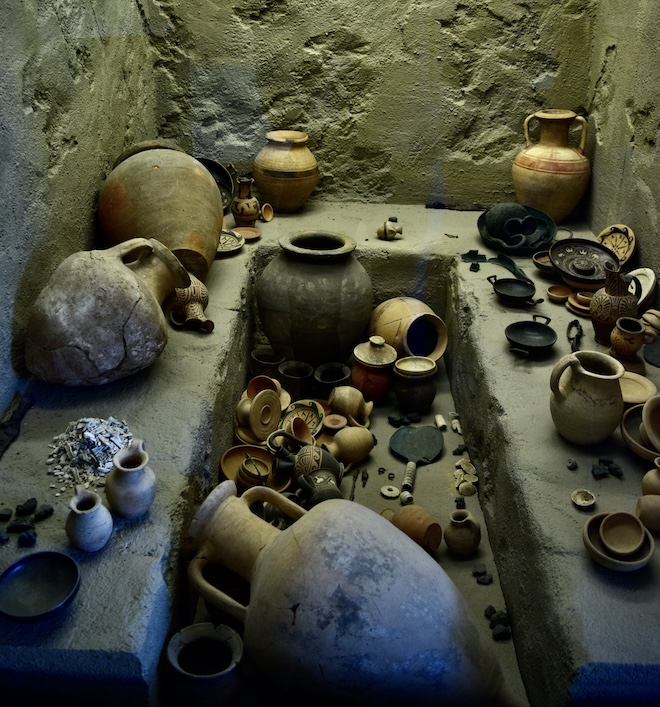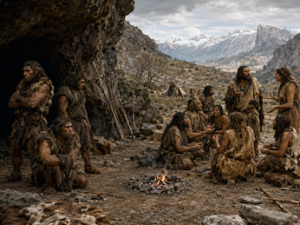
This new study, which some of you may have already read, examined Europe from up to 60,000 years ago, trying to understand more deeply what made our species survive when Neanderthals disappeared entirely. Opposing the widely accepted viewpoint that we may have been stronger in direct competition with them, the research points to something we still struggle with today: social networking.
The places where Homo sapiens lived were more connected to each other. That may have helped groups share information, move, cooperate, and survive when conditions changed. In simple terms, Homo sapiens may have done better because their communities were better connected.
Poker tournaments as a social machine
The fact that games have a significant impact on human interactions, regardless of age, is undeniable. But when Neanderthals and our species first stared into each other’s eyes, there were no games we currently know of.
So, the claim here is not that games helped us with social bonding in a modern sense, but rather that our ability to play games, although demonstrated differently, became one of the clues to how we collaborated and survived. And since 60,000 years is too far back to analyze gaming concepts directly, we can deduce some ideas based on how humans currently use their interest in gaming to build social circles around them.
And so, if you want to see grown-ups gaming fiercely, look at poker. Simply go to some of the well-regarded US poker tournaments online, and it will show off with avid gamers that are shaping American society’s expanding gaming culture in the digital age.
Poker competition is both mathematical and social
The logic of poker competition is built on layers. One layer is mathematical. Players track pot odds, stack depth, position, hand ranges, and payout pressure. Another layer is human. They ask who is patient, who protects a short stack too tightly, who bluffs missed draws, who folds to repeat pressure, and who changes style near the money.
A strong tournament player is not simply choosing cards to play. That player is building live models of other minds. Each hand becomes a test of observation. Betting patterns, speed of action, table talk, posture in live play, and even silence can all shape the next choice. Also, the short clip below shows the gaming setting in modern days. Pay attention to people’s interactions and emotions:
The game stays social even online
That is why poker tournaments still depend on human interaction, even when the table is digital. Online play removes some face-to-face clues, but it creates other clues. Players watch things like:
- how fast someone acts,
- how much they bet,
- what habits they repeat,
- how aggressive they are in late position,
- how they behave near the money bubble,
- and how they react after losing a big pot.
Regular tournament fields also create familiarity. Over time, players start to recognize names, styles, and patterns. So even without a physical table, the game still feels social. People are still reading each other, adjusting to each other, and building a kind of competitive network.
What modern game data says about connection at scale
If the study’s lesson is that resilience grows when people can reach beyond the small local group, recent game data offers a useful modern comparison. Current surveys suggest that games organize repeated contact, shared schedules, and social learning across both physical and digital settings.
|
From recent surveys |
Latest figure |
Explanation |
|
Americans who play video games |
205 million+ |
A very large base for repeated social contact |
|
U.S. adults who say games bring different types of people together |
76% |
Players see games as social bridges |
|
U.S. adults who say games teach teamwork and collaboration skills |
69% |
Shared play is tied to practical group skills |
|
Players in a 21-country survey who say games introduce new friends and relationships |
71% |
Digital play expands social reach |
|
Net positive rating of playing with others, globally |
68% in person, 68% online |
The social value holds across formats |
These figures do not prove Paleolithic play decided survival. What they do show is that games are unusually good at organizing repeated, rule-based contact at scale. They create common schedules, shared language, and durable weak ties that can later become strong ones. For archaeologists thinking about long-distance information flow, that is the interesting part. The same activity can be fun, competitive, and quietly infrastructural at the same time.
Why the study changes the Neanderthal story
The 2026 paper matters beyond one extinction story. It encourages a shift from asking which human group simply had better tools to asking which group could keep people connected when climates swung and territories changed. That question also feels current.
OECD data shows that in 21 European countries in 2022, people contacted family and friends remotely much more often than in person.
Daily remote contact was about:
- 29% with family
- 28% with friends
Daily in-person contact was much lower:
- 11% with family
- 12% with friends
So people were almost three times more likely to connect remotely than face-to-face.
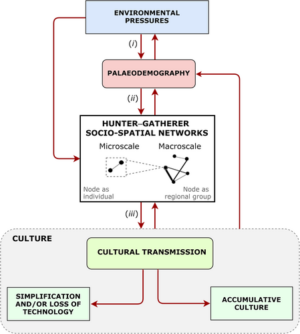
This diagram shows how ancient hunter-gatherer groups were shaped by environment, population, social networks, and culture. When groups were well connected, ideas and knowledge could grow, spread, and survive over time.
Source: https://onlinelibrary.wiley.com/doi/10.1111/brv.12599
But the numbers also show a problem. Some people still felt unsupported:
- 10% said they had no one to count on in hard times
- 8% said they had no close friends
- 6% felt lonely most or all of the time
So the way people connect may change, but the need for real, reliable relationships does not.
Social networks mattered as survival systems
Ariane Burke explained the prehistoric lesson this way: “These networks act as a safety net.” In her description, interconnected groups could share information on resources and animal movements, form partnerships, and gain temporary access to other territories during crises. It does suggest that any repeated social practice that built trust, memory, and return visits would have mattered more than older extinction stories allowed.
If play helped keep that social web active, then games were never just leisure. They were part of how humans stayed reachable to one another.
____________________________