Team sports are ancient social technologies, functioning as structured systems that cultures built to organize competition, identity, and collective effort long before modern leagues existed.
Each of the seven traditions traced here is filtered through what archaeology and written records actually confirm, separating them from the myths that grew around them. The thread connecting all seven remains consistent because clothing, rules, and shared symbols transform individual competitors into teams.
1. Mesopotamian and Greek Wrestling
The oldest confirmed wrestling artifacts are Sumerian bronze figurines dating to 2600 BCE, recovered at Tell Asmar. They show athletes locked in grip techniques easily identifiable in modern grappling. Greek black-figure vase paintings from the sixth and fifth centuries BCE highlight this history by depicting pankration holds with precise anatomical detail.
Homer’s Iliad provides the earliest narrative record of wrestling rules, establishing conduct during ancient funeral games. The Greek palaistra functioned as a proto-team structure by offering a shared training space for athletes representing the same city-state.
Identical preparation signaled allegiance before competition began. Modern programs continue this tradition, as custom wrestling singlets for modern teams from Sports Gear Swag allow athletes to personalize colors just as regional schools distinguished themselves historically.
| Key Insight: Identical preparation oiled skin, specific stance, matched conditioning signaled shared allegiance before a word was spoken. That logic never disappeared. |
2. Mesoamerican Ball Games
Organized competition appears in early ballcourt discoveries from Paso de la Amada in Chiapas, Mexico, dating to 1,400 B.C.E. Equipment artifacts push this timeline further, with archaeological rubber balls from El Manatí in Veracruz dating to 1,600 B.C.E. Stone reliefs show players wearing padded hip-yokes and helmets to create visual cohesion between teammates.
Current scholarship disputes claims that losing captains were sacrificed, suggesting such iconography depicted victors or ritual events. Physical courts instead confirm an undeniable emphasis on spatial team play. Court dimensions forced positional coordination, while stone ring goals defined legal scoring zones.
| Important: The claim that losing captains were routinely sacrificed is disputed. Current scholarship suggests sacrifice was ritual, not standard, and some iconography may depict victors. |
3. Egyptian and Greek Foot Racing
Tomb paintings at Saqqara dating to 2350 BCE show runners in formation, providing the earliest visual record of competitive racing. Greek racing receives confirmation from Pindar’s odes naming specific victors and starting sills excavated at Nemea proving regulated procedures. Athenian epigraphic records outline the lampadedromia, a relay torch race, establishing it as a formal team event.
The famous Marathon origin story lacks historical evidence, as Herodotus never describes a messenger dying in his contemporary accounts. Relay races make a stronger argument for ancient team identity. The moment one runner disconnected from the next, the team failed to advance, making shared identity mechanically necessary.
4. Martial Contests and Boxing
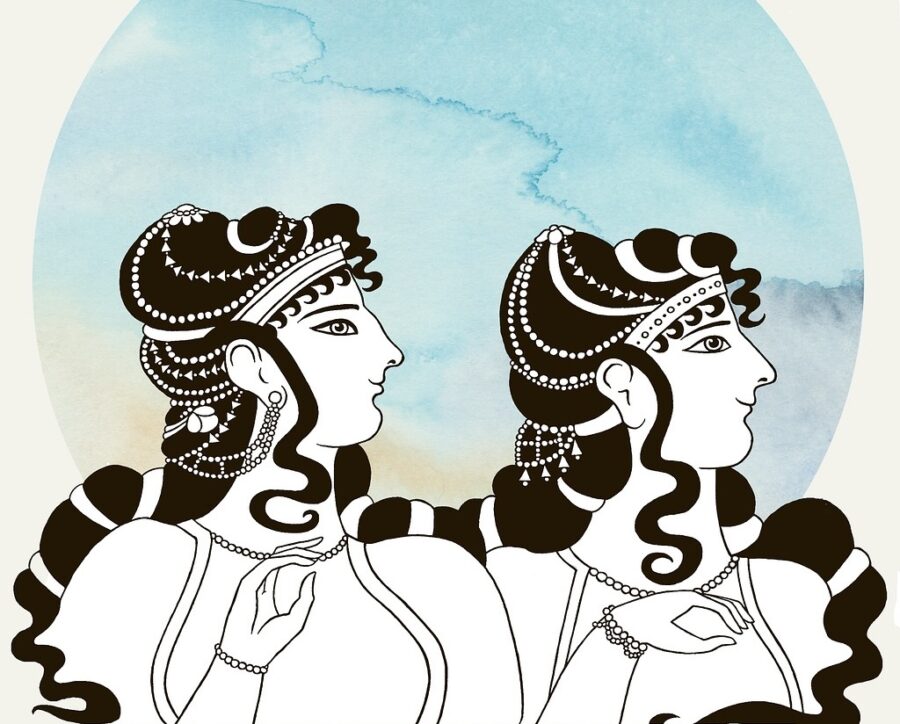
A Minoan fresco from Akrotiri shows boxers with wrapped hands, proving the equipment-governed nature of contests around 1650 BCE. The Greek Boxer at Rest bronze displays cestus wraps alongside stances consistent with rules from Homer’s Iliad.
Ancient societies documented competitive records rigorously, noting that Theagenes of Thasos won Olympic boxing in 480 B.C.E. and pankration in 476 B.C.E. to collect fourteen hundred crowns.
Regional training camps functioned as early combat teams. Members shared striking techniques, preparation cycles, and collective reputations when traveling to games. Strict rules created a shared code defining membership within a fighting tradition.
5. Chariot Racing
Roman mosaics at the Palazzo Massimo depict racing scenes with enough detail to reconstruct track layouts and team positioning. Byzantine administrative records describe four distinct circus factions operating as organized sporting bodies. These groups maintained legal standing, managed treasury accounts, and held official public functions.
Evidence contradicts the romantic image of noble charioteers, showing that drivers were enslaved professionals while faction owners held social status. Supporters who rioted during the Nika revolt of 532 CE demonstrated how team color mobilized citizens. This represents the first documented massive supporter culture organized entirely around a shared color scheme.
| Quote: The Blues and Greens supporters who rioted in the Nika revolt of 532 CE demonstrated that team color had become a genuine collective identity capable of mobilizing thousands, the direct ancestor of the modern team jersey. |
6. Rowing and Coordinated Team Events
The Lenormant relief from 410 BCE shows three tiers of oarsmen aboard an Athenian trireme. Naval accounts from the Battle of Salamis describe intricate maneuvers requiring immediate fleet-level coordination. Sea trials conducted in 1987 with a reconstructed trireme confirmed that 170 rowers needed weeks of synchronized practice to approach documented ancient speeds.
Technical texts verify trireme structures, even if ancient literary accounts exaggerated sustained speeds. Modern sea trials proved that ancient rowing team identity was physically performed rather than merely worn. No individual oar stroke succeeds in isolation, meaning collective tempo dictated crew survival.
7. Archery and Hunting Competitions
Egyptian tomb reliefs at Beni Hasan show archers in competitive formations with distinct equipment marking their battlefield roles. Assyrian palace reliefs at Nineveh depict royal hunts utilizing coordinated teams of drivers, archers, and guards to manage dangerous game. While Pharaoh Amenhotep II’s scarabs record spectacular feats, these documents served primarily as royal propaganda.
Mythology celebrates the heroic solo archer, but physical reliefs confirm that real ancient hunts relied entirely on group activity. Positional divisions meant drivers moved the quarry, archers executed the strike, and guards secured perimeters. This strict division of labor produced a collective outcome no single person could achieve.
The Bottom Line
Across all seven traditions, three structural elements consistently appear. A shared code dictates acceptable conduct, while specific clothing and equipment declare belonging before competition begins.
These ancient systems built the foundation for athletic collaboration by giving participants a common functional identity. Whether outfitting an Athenian trireme crew or issuing customized singlets to grapplers, structured uniforms serve vital organizational purposes.
| Author Profile: Sports Gear Swag is the leading online retailer of custom sports apparel and gear for teams, schools, and organizations of all sizes. Specializing in team jerseys, uniforms, and athletic apparel with a wide range of customization options. |
__________________________