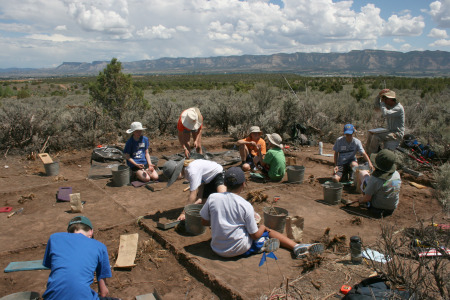
Few had ever heard of the little town of Buttermilk Creek, Texas, until it was placed on the map in early 2011 when Texas A&M University anthropologist Michael Waters made his public announcement. He and a team of archaeologists, researchers, students and volunteers had been painstakingly excavating at an archaeological site, known as the Debra L. Firiedkin site, for years. What they discovered there had generated excitement in the world of American archaeology.
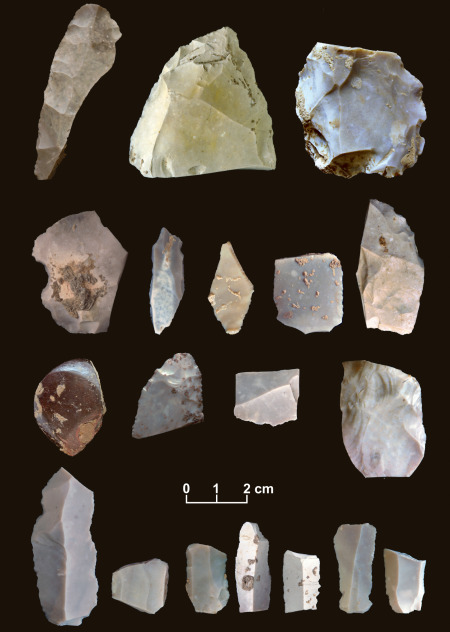
Totaling 15,528 artifacts, the Buttermilk Creek Complex, as researchers are now calling the assemblage, contained evidence of small blades, choppers and scrapers, implements made by people who had long departed the scene, long before any notion in the minds of the early European explorers that anyone had ever inhabited the North American continent.
“Most of these are chipping debris from the making and resharpening of tools,” said Waters, “but over 50 are tools. There are bifacial artifacts that tell us they were making projectile points and knives at the site. There are expediently made tools and blades that were used for cutting and scraping.”
On the face of it, his discovery could hardly eclipse any of the finds made by other archaeologists through decades of excavation and research about the early peopling of the Americas. But there were several important differences that made the site, and the finds, unique. They had to do with the sheer number of the finds, their nature, and the dating, with the most sensational difference being the dating.
“What is special about the Debra L. Friedkin site is that it has the largest number of artifacts dating to the pre-Clovis time period, that these artifacts show an array of different technologies, and that these artifacts date to a very early time,” said Waters.
_________________________________________________________________________________________
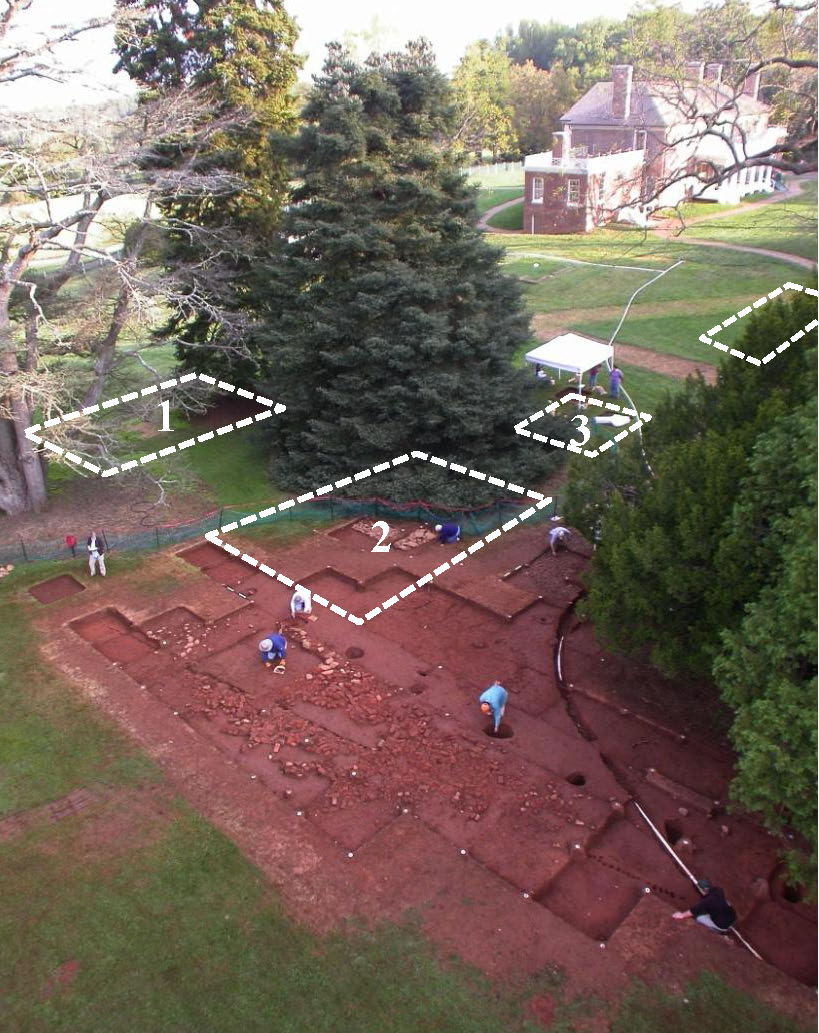
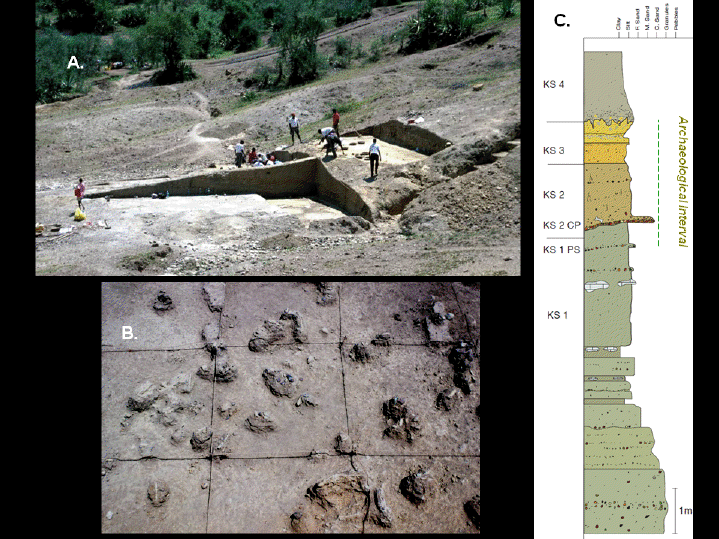
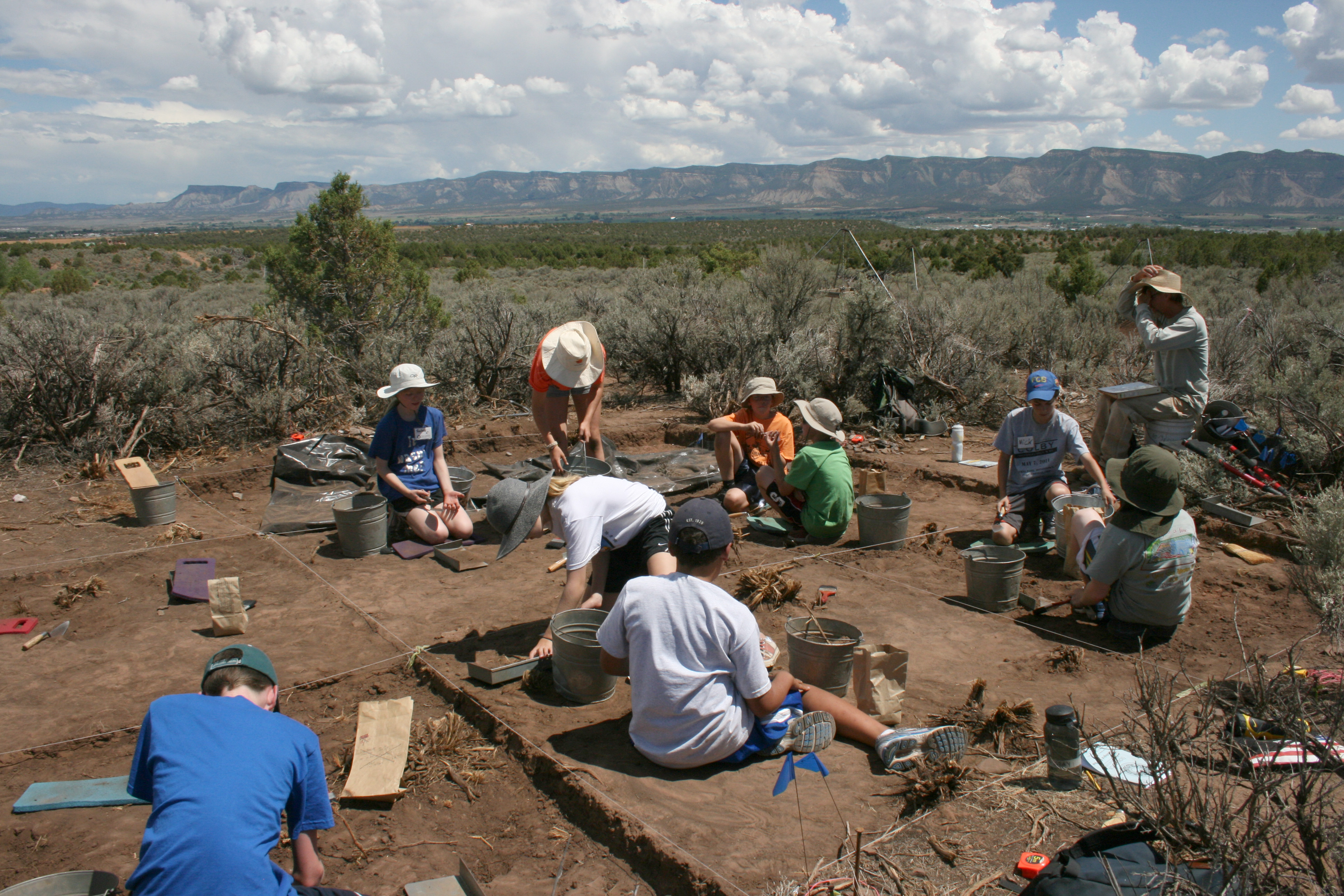
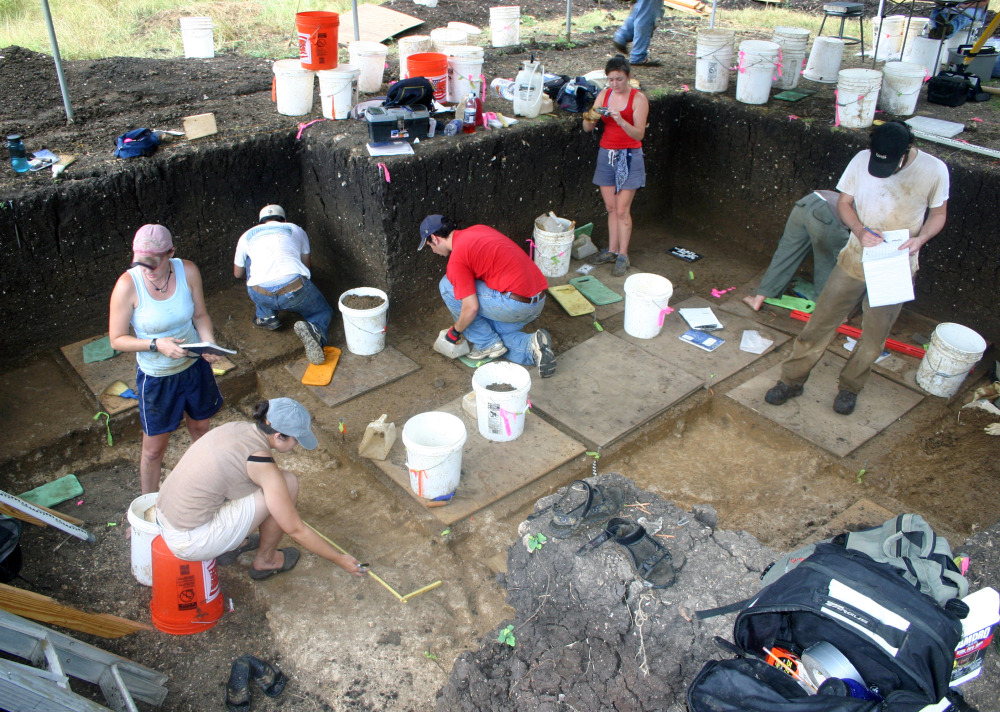 Archaeological excavation at the Debra L. Friedkin site in Texas. Image courtesy Michael R. Waters.
______________________________________________________________________________________________________________________
The Clovis time refers to a time period (about 13,500 years ago) to which, according to many scholars, the earliest known stone tools and weapons made by early ancestral Native Americans could be assigned. Best known for their medium to large fluted lanceolate projectile points and distinctive bone and ivory items, these stone artifact finds constitute the evidential basis for the widely accepted “Clovis First” hypothesis, which suggests that the people associated with the artifacts were the first inhabitants of the Americas. Clovis artifacts have been found in abundance at sites across the North American continent.
But the headline-making finds at the Friedkin site were not Clovis, and they were older than the oldest known Clovis tools by about 2,000 years.
Waters and his associates used Optically Stimulated Luminescence (OSL) dating, a technique that measures the amount of light energy trapped over thousands of years in minerals within the sediment surrounding artifacts. Professor Steven Forman of the University of Illinois at Chicago worked with Waters at the site, collecting 50 core samples from two sites at Buttermilk Creek for testing. “We found Buttermilk Creek to be about 15,500 years ago — a few thousand years before Clovis” said Forman. “We dated the sediments by a variety of optical methods. We also dated different mineral fractions as well, and we consistently got the same ages. We looked at the age structure of the sediment by many different ways and got the same answers.”
In addition to providing compelling evidence for pushing the clock back on when the earliest Americans arrived, the Friedkin site findings have provided additional credence to the suggestion that the stone tool technology of the Clovis culture was not imported into the Americas via the Bering Land Bridge (“Beringia”) in accordance with the Clovis Model, but instead evolved in North America from an earlier technology. Given the nature and characteristics of the Buttermilk Creek Complex, Waters maintains that the Complex represents a “type of assemblage from which the Clovis assemblage could emerge” with the new dating providing “ample time for people to settle into the environments of North America, colonize South America by at least ~14.1 to 14.6 ka, develop the Clovis tool kit, and create a base population through which Clovis technology could spread”.[1]
________________________________________________________________________________________
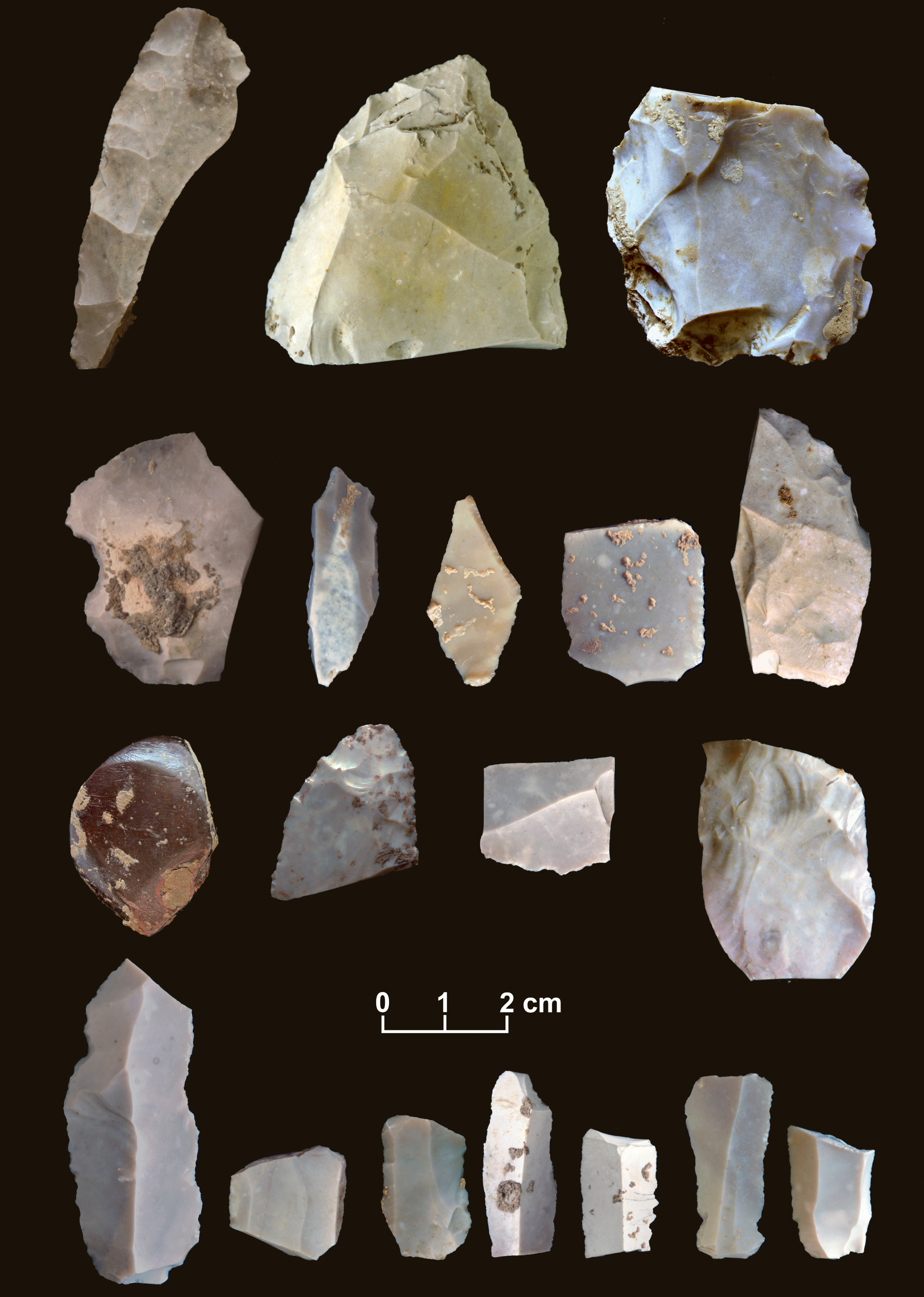
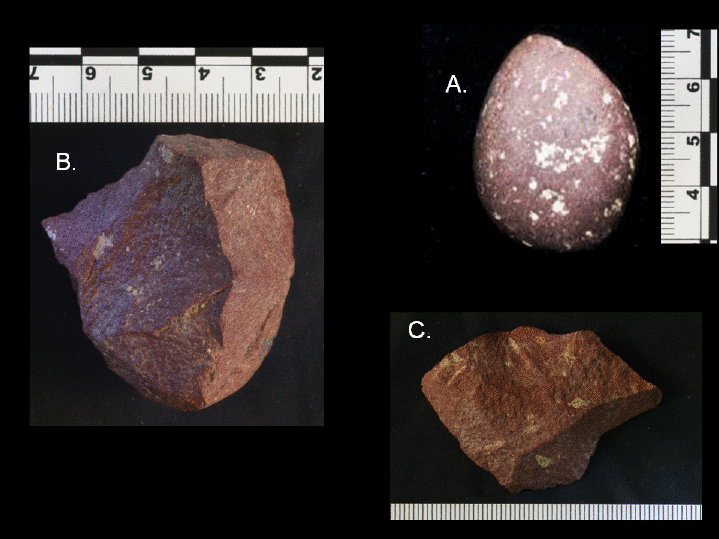
Some of the artifacts from the 15,500-year-old horizon. Image courtesy Michael R. Waters.
______________________________________________________________________________________________________________________
The Mounting Evidence
The arguments against the traditional Clovis First perspective point to the fact that no Clovis-type artifacts have been found in Northeast Asia, from where the early Americans under the Clovis Model are suggested to have migrated, and fluted stone points that are iconic for Clovis and found in Alaska are all dated too late to be assigned to the Clovis horizon. Moreover, six major sites in South America with stratigraphic layers dated to the Clovis period are devoid of Clovis period artifacts.
Nevertheless, comparing the evidence of Clovis technology dated to very early occupation of the Americas with what is available for the same time period for other technology forms has traditionally given Clovis the decided edge in the debate. But new evidence against Clovis has been mounting. The Friedkin site is not the only site that has been dated to the pre-Clovis time period. Pre-Clovis finds have been recorded at sites such as Pedra Furada in Brazil, Monte Verde in Chile, two mammoth kill sites in Wisconsin, Topper in South Carolina, Cactus Hill and Saltville in Virginia, and Meadowcroft in Pennsylvania, among others. The evidence at these sites, however, has been in dispute and is not as robust as that found at Friedkin.
________________________________________________________________________________________ 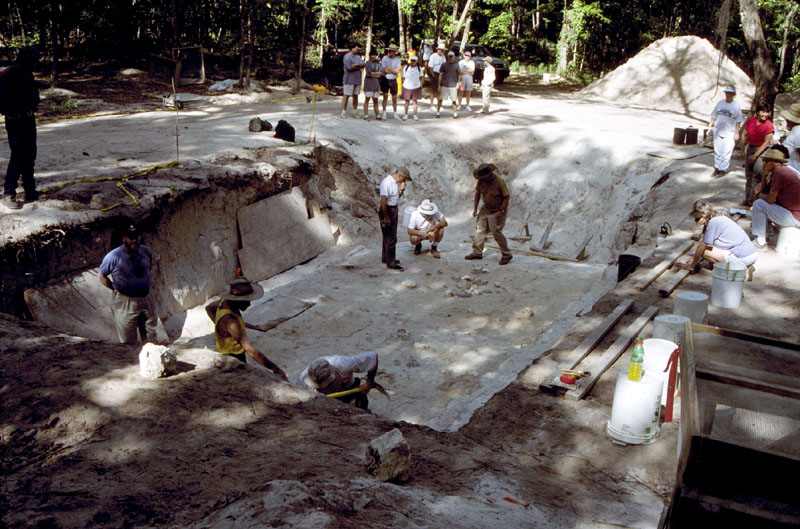
Excavators examine a cluster on the proposed pre-Clovis surface at the Topper site. Courtesy Center for the Study of the First Americans.
____________________________________________________________________________________________________________________
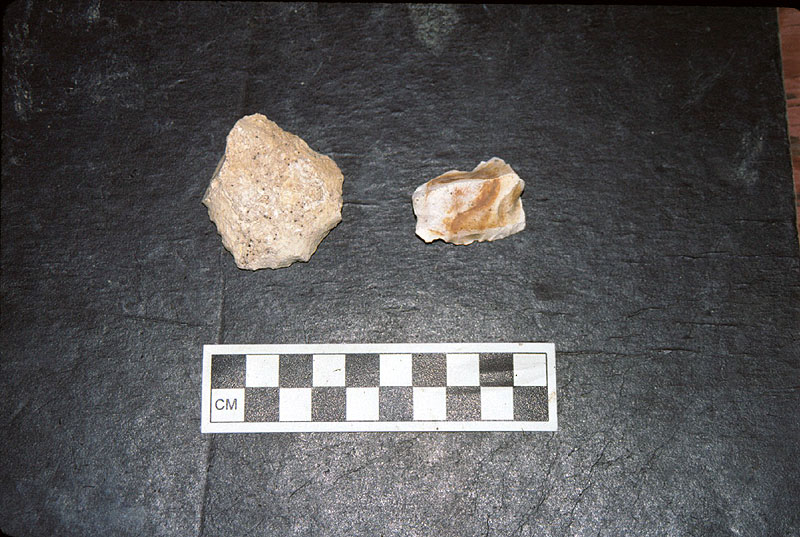
Proposed pre-Clovis artifacts found at the Topper site. Courtesy Center for the Study of the First Americans.
______________________________________________________________________________________________________________________
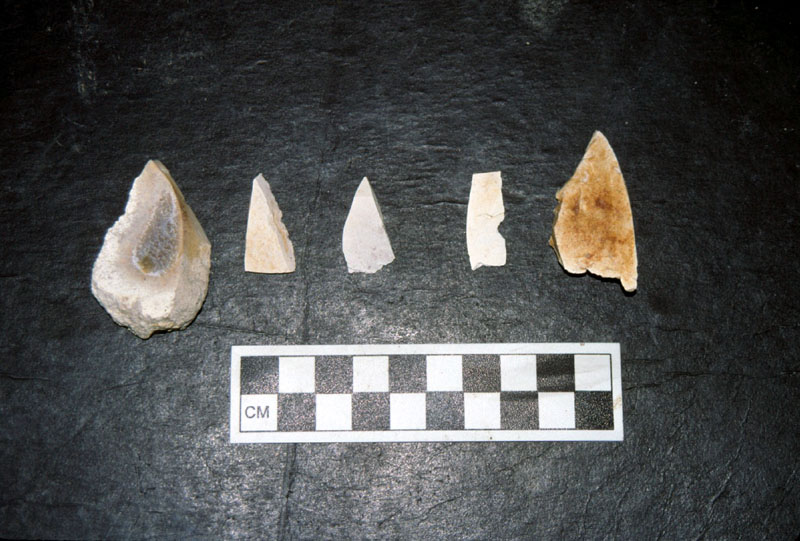
Proposed pre-Clovis bend break tools found at the Topper site. Courtesy Center for the Study of the First Americans.
_____________________________________________________________________________________________________________________
But new discoveries have emerged and joined Friedkin with stronger evidence of pre-Clovis beginnings…….
At the Paisley caves in south-central Oregon, a team of research scientists led by Dennis L. Jenkins of the University of Oregon’s Museum of Natural and Cultural History has found evidence that an early stone implement technology, known as “Western Stemmed” projectile points (darts or thrusting spearheads), were manufactured at least 11,070 to 11,340 radiocarbon years ago, making them concurrent with or possibly earlier than the Clovis culture (dated to 13,000 calendar years ago). The researchers obtained 190 radiocarbon dates on artifacts, human coprolites (dried feces), bones and sagebrush twigs within layers of silt deposited over thousands of years in the caves. The broad, concave-based, fluted Clovis projectile points often associated with early Americans who lived about 12,000 – 13,000 years ago were not found in the caves.
Past studies of the Paisley Caves have also reported very early dates from human coprolites with ancient DNA, but questions arose about whether those samples could have been contaminated, and whether they were found in true context with artifacts from the same era. So the researchers did an exhaustive examination of the stratigraphy, which is one of Davis’ specialties.
“We continued to excavate Paisley Caves from 2009 through 2011,” the authors wrote in Science. “To resolve the question of stratigraphic integrity, we acquired 121 new AMS [accelerator mass spectrometry] radiocarbon dates on samples of terrestrial plants, macrofossils from coprolites, bone collagen and water soluble extracts recovered from each of these categories. To date, a total of 190 radiocarbon dates have been produced from the Paisley Caves.”
Davis conducted microscopic analysis of the soil using a “petrographic” microscope, to eliminate any indications that liquid – such as water or urine from humans or animals – may have moved down from higher layers into the lower layers, thus “contaminating” or compromising the integrity of the dating of the soil. They also analyzed the silt where the stem points were found and bracketed above and below those layers to determine if the radiocarbon dates synchronized.
The result: “The stemmed points were in great context,” Davis said. “There is no doubt that they were in primary context, associated with excellent radiocarbon dates.” The new dating was valid and few could now argue with the results.
The significance of the Paisley finds extends from the fact that Western Stemmed points and Clovis points differ fundamentally in terms of their hafting portions, the part of the stone point that connects to a shaft. Stemmed points are narrower or constricted at their bases, whereas the hafting portions of Clovis points are not narrow, but thinned width-wise through removal of large flakes from their bases.
“These two approaches to making projectile points were really quite different,” Davis said, “and the fact that Western Stemmed point-makers fully overlap, or even pre-date Clovis point makers likely means that Clovis peoples were not the sole founding population of the Americas.”
“From our dating, it appears to be impossible to derive Western Stemmed points from a proto-Clovis tradition,” Jenkins said. “It suggests that we may have here in the Western United States a tradition that is at least as old as Clovis, and quite possibly older. We seem to have two different traditions co-existing in the United States that did not blend for a period of hundreds of years.”
It is interesting to note in this context that Clovis technology has only been found in the New World, whereas Western Stemmed technology is similar to stone technology seen in northeastern Asia.
At least three other Western sites, including Cooper’s Ferry in Idaho, Smith Creek Cave in Nevada, and Bonneville Estates Rockshelter, also in Nevada, also contain only Western Stemmed points in deposits of this early time period.
_________________________________________________________________________________________
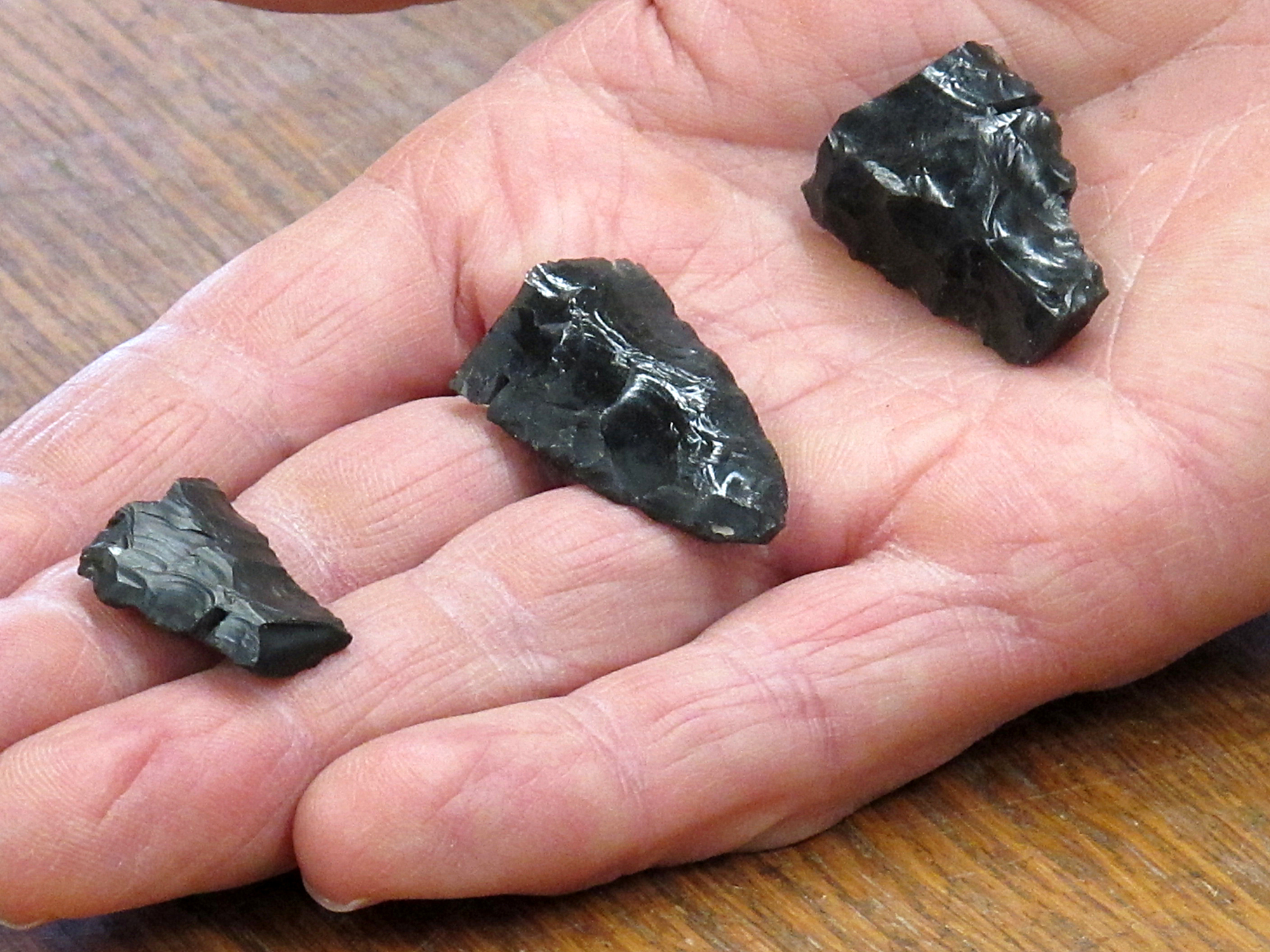 Displayed in the hand of University of Oregon archaeologist Dennis Jenkins are three bases for Western Stemmed projectiles from the Paisley Caves in Oregon. The bases date to some 13,000 years ago. [Photo by Jim Barlow]
_____________________________________________________________________________________________________________________
Enter here another site, located in Manis, Washington, where the fossil remains of a mastodon were excavated by Dr. Carl Gustafson and a team from Washington State University in the 1970’s. He concluded from radiocarbon dating of charcoal deposits around the remains that it was about 14,000 years old. It was a conclusion that had been the subject of considerable debate among scholarly critics, particularly as he maintained that a bone point found embedded in the rib bone of the mastodon was an early projectile point, similar to other bone projectile points found at other Paleo-indian sites.
The case was revisited recently when Dr. Michael Waters of Texas A & M University, the excavator of the Firiedkin site who, along with a team of colleagues, used mass spectrometry to date carbon in samples of bone from the rib, a pair of tusks found at the same site, and the embedded point. Results indicated that all of the fossils tested were about 13,800 years old. They also used high-resolution X-ray CT scanning of the embedded bone point to produce a three-dimensional visual study or image. Based on this, they determined that the point was likely at least 27 centimeters long, similar in length to those of later, Clovis-age projectile points that were used in throwing or thrusting weapons made by Paleolithic hunters of North America. Moreover, the team examined the specimen using DNA protein analysis of material from the bone point and the rib in which it was embedded. They concluded that the point itself was fashioned from mastodon bone.
Most significantly, the findings constitute more evidence that Paleo-Indians settled the Americas before 13,000 – 13,500 B.P.E., the earliest date range that has traditionally been assigned to the emergence of the “Clovis” cultural horizon.
Said Waters, “We’re looking at another pre-Clovis locality in North America where, in this case, bone weaponry was used to hunt mastodons 800 years before Clovis stone weaponry show up on the landscape.”
_________________________________________________________________________________________
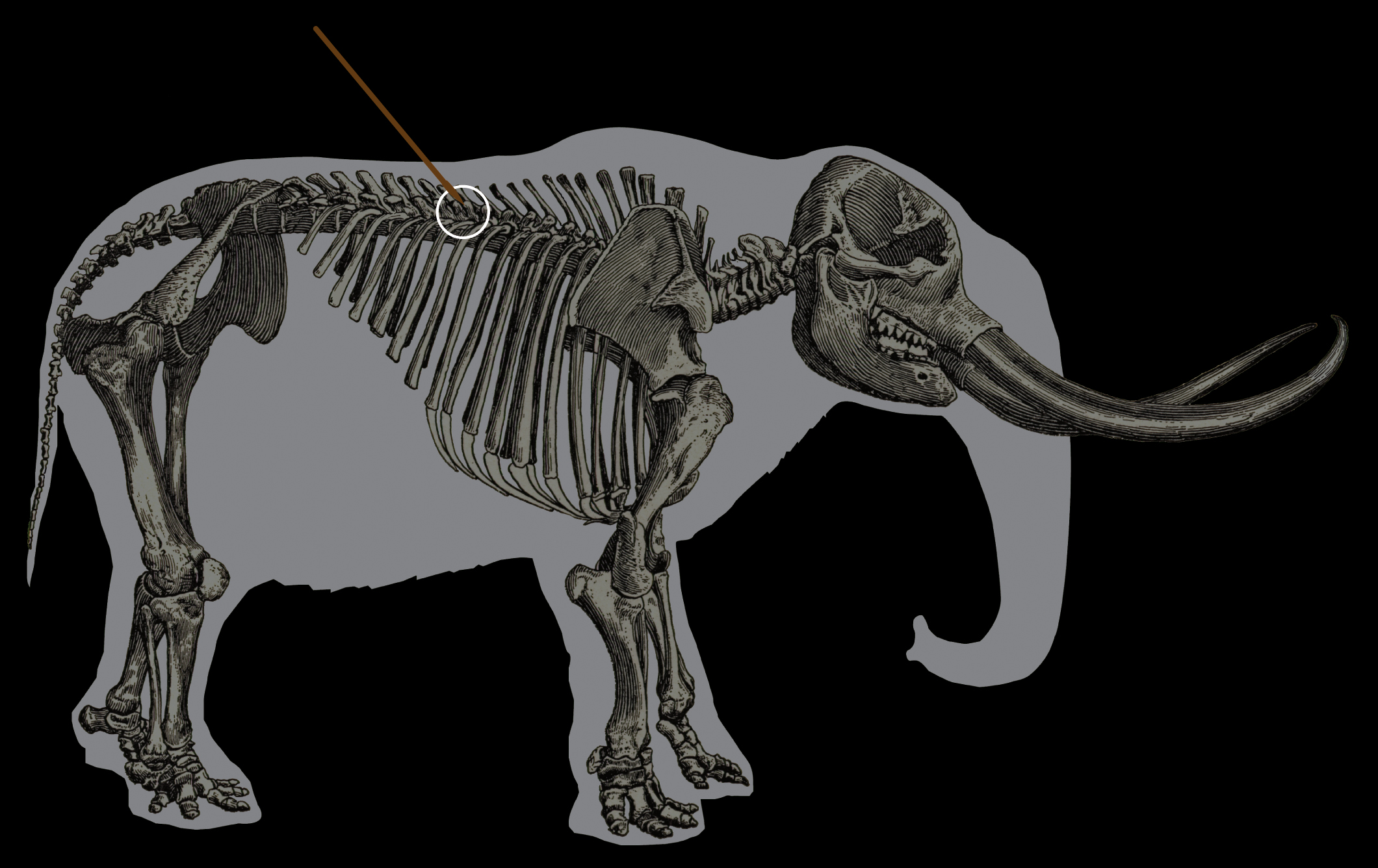 This is a mastodon skeleton and outline of a mastodon. The location of the rib and approximate angle of the spear is indicated. The point had to penetrate 25-30 cm of hide, tissue, and muscle. [Image courtesy of Center for the Study of the First Americans, Texas A&M University]
______________________________________________________________________________________________________________________
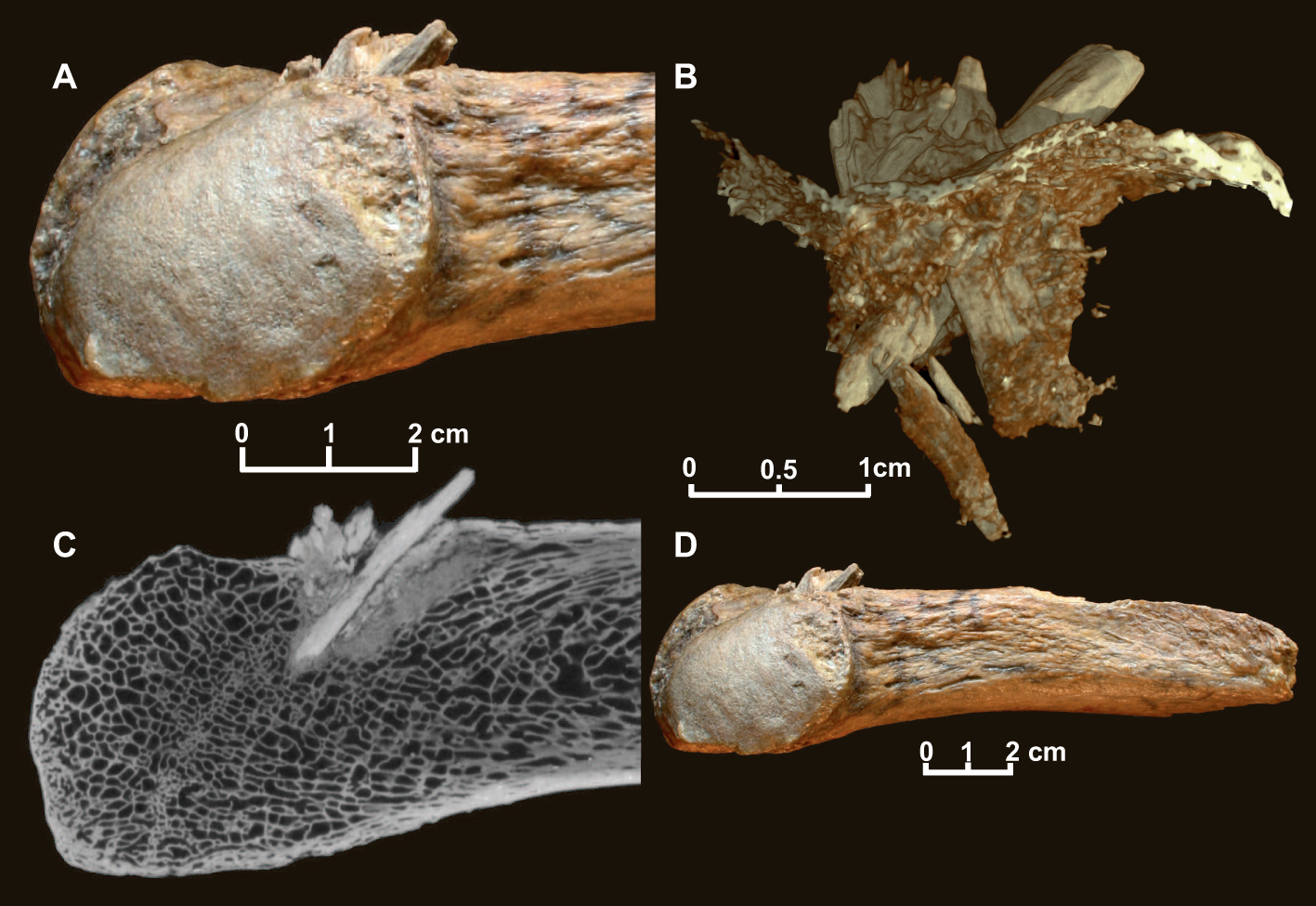
Mastodon rib with the embedded bone projectile point. (A) Closeup view. (B) Reconstruction showing the bone point with the broken tip. The thin layer represents the exterior of the rib. (C) CT x-ray showing the long shaft of the point from the exterior to the interior of the rib. (D) The entire rib fragment with the embedded bone projectile point. [Image courtesy of Science/AAAS]
______________________________________________________________________________________________________________________
But the archaeological finds are not the only body of evidence emerging in the changing picture related to who, when, and from where the first peopling of the Americas took place. New findings are developing with the application of genetic and paleoclimate studies…………
Following the DNA Trail
In a recent study published in the American Journal of Human Genetics, Theodore Schurr, an associate professor in the University of Pennsylvania’s Department of Anthropology, in collaboration with a research team that included Ludmila Osipova of the Institute of Cytology and Genetics in Novosibirsk, Russia and others, analyzed the genetics of individuals living in Russia’s Altai Republic for markers in both mitochondrial DNA and Y chromosome DNA. Mitochondrial DNA traces the maternal, or female line of descent, whereas Y chromosome DNA traces the paternal, or male, descent. They compared the samples to those that had previously been collected from individuals in southern Siberia, East Asia, Central Asia, Mongolia, and a number of different Native American groups.
After analyzing the Y chromosome DNA, the researchers found a unique mutation common to both the Native Americans and southern Altaians in a lineage dubbed as “Q”. The Altai region is located at the four corners of what is today China, Russia, Mongolia, and Kazakhstan. Says Schurr, it “is a key area because it’s a place that people have been coming and going for thousands and thousands of years. Our goal in working in this area was to better define what those founding lineages or sister lineages are to Native American populations.”
They found similar results when analyzing the mitochondrial DNA. “We find forms of haplogroups C and D in southern Altaians and D in northern Altaians that look like some of the founder types that arose in North America, although the northern Altaians appeared more distantly related to Native Americans” says Schurr.
Determining how long ago the mutations took place, the researchers concluded that the southern Altaian lineage diverged genetically from the Native American lineage about 13,000 to 14,000 years ago. This correlates with current theories that support the migration of peoples into the Americas from Siberia between roughly 15,000 and 20,000 years ago.
The large and diverse nature of the database ensured a relatively high degree of confidence among the researchers about the validity and precision of the findings. Says Schurr, “at this level of resolution we can see the connections more clearly”.
Moreover, the recently completed research at the Paisley caves has also confirmed, through additional DNA testing, that the early occupants of the caves had ancestral Siberia-East Asian origins, and that they were using the caves as far back as at least 12,450 radiocarbon years ago (about 13,500 calendar years ago).
The results of another recent study (published in the July 11, 2012 issue of the journal Nature), while supporting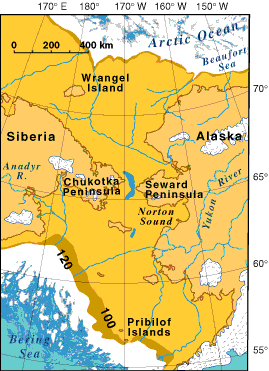 Schurr’s analysis and conclusions, paints a dramatically more complex picture of early American origins.
Led by Professor Andres Ruiz-Linares from the University College London (UCL) and Professor David Reich of the Harvard Medical School, an international team of researchers analyzed data samples from 52 Native American and 17 Siberian groups, examining more than 300,000 DNA sequences to examine patterns of genetic similarities and differences between the population groups. The study was complicated by the fact that the Americas experienced an influx of European and African immigrants since 1492, with 500 years of genetic mixing. To address this, the researchers developed a methodology to isolate genomes that were of entirely Native American origin. “We developed a method to peel back this mixture to learn about the relationships among Native Americans before Europeans and Africans arrived,” Reich said, “allowing us to study the history of many more Native American populations than we could have done otherwise.”
What they found was eye-opening.
“For years it has been contentious whether the settlement of the Americas occurred by means of a single or multiple migrations from Siberia,” said Ruiz-Linares. “But our research settles this debate: Native Americans do not stem from a single migration”.
Their results showed that Native American populations originally arose, not from one single migration of people, but at least three. The majority descended from a single original group of First American migrants, but at least two subsequent migrations also made important genetic contributions. Moreover, their origins could be genetically traced to populations traversing across the ancient Beringia land bridge (pictured above, right) that existed during the ice ages over 15,000 years ago. The second and third migrations left their imprint only in Arctic populations that speak Eskimo-Aleut languages and in the Canadian Chipewyan who speak a Na-Dene language. But even these people inherited most of their genetic makeup from the first migration. Eskimo-Aleut speakers, for example, derive more than 50% of their DNA from the first migrants, and the Chipewyan even more, about 90%. This suggests that the two later migrant groups mixed with descendants of the first migrants after they arrived in North America.
Said co-author Reich, “the Asian lineage leading to First Americans is the most anciently diverged, whereas the Asian lineages [the second and third migrations] that contributed some of the DNA to Eskimo–Aleut speakers and the Na-Dene-speaking Chipewyan from Canada are more closely related to present-day East Asian populations.”
What is more, said Ruiz-Linares, “our study also begins to cast light on patterns of human dispersal within the Americas”.
They found that people expanded southward along a route that hugged the coast. As they went southward, population groups split off along the way. After the splitting, there was little gene flow among Native American groups, especially in South America.
But the dynamics were not always this simple. They found, for example, that the first, Central American Chibchan-speakers have ancestry from both North and South America, suggesting a back-migration from South America, and that the Naukan and coastal Chukchi from north-eastern Siberia carry ‘First American’ DNA: the Eskimo-Aleut speakers migrated back to Asia, bringing with them the Native American genetic material.
Clues from a Past Climate
The broadly accepted view about when and how the first Americans entered the Americas has revolved in part around the changes in the glacial periods associated with the last glacial period of the Ice Age. Since about 40,000 B.P., the Cordilleran and Laurentide ice sheets covered much of Canada. However, during the warmer interglacial periods they retreated to create ice-free corridors along the Pacific coast and areas east of the Rocky Mountains of Canada. Scientists have long suggested that it was through these corridors that humans were likely able to cross Beringia into the Americas. Beringia was a land bridge as much as 1,000 miles wide that joined present-day Alaska and eastern Siberia at various times 110,000 to 10,000 years ago. Exactly when and how this crossing may have occurred has been a matter of debate for decades, but the most widely accepted proposal advances the suggestion that it occurred around 15,000 years ago.
Now, a new study recently published in the professional journal, Quaternary Science Reviews, has resulted in findings that differ from this prevailing hypothesis by as much as 2,000 years. Led by Nicole Misarti of Oregon State University, the study, known as the Sanak Island Biocomplexity Project and funded by the National Science Foundation, was intended to examine the abundance of ancient salmon runs in the Beringia region. They analyzed core samples taken from Sanak Island, a remote island about 700 miles from Anchorage, Alaska, and about 40 miles from the coast of the western Alaska Peninsula. As the researchers began examining core samples from Sanak Island lakes looking for evidence of salmon remains, they came up with radiocarbon dates much earlier than they had expected. The dates were based on organic material in the sediments, composed of terrestrial plant macrofossils that indicated the region was actually ice-free earlier than believed. Deglaciation there from the last Ice Age, it seemed, took place as much as 1,500 to 2,000 years earlier. Moreover, the researchers had also concluded that the maximum thickness of the ice sheet in the Sanak Island region during the last glacial maximum was actually only 70 meters – or about half that previously projected. This suggested that deglaciation could have happened more rapidly than earlier models had predicted. Given the location, this opened the door for the possibility of earlier coastal migration models for the Americas.
“It is important to note that we did not find any archaeological evidence documenting earlier entrance into the continent,” said Misarti. “But we did collect cores from widespread places on the island and determined the lake’s age of origin based on 22 radiocarbon dates that clearly document that the retreat of the Alaska Peninsula Glacier Complex was earlier than previously thought. Glaciers would have retreated sufficiently so as to not hinder the movement of humans along the southern edge of the Bering land bridge as early as almost 17,000 years ago.”
This shed new light on a long-standing question. If humans had not arrived in the Americas until about 15,000 B.P. as traditional models have suggested, then how could they have spread so quickly to inhabit areas thousands of miles southward, as evidenced archaeologically by their presence at sites such as Monte Verde, Chile, and Huaca Prieta, showing remains dating back to 14,000 to 14,200 years ago? The answer, based on the Sanak Island findings, was that they had actually arrived in the Americas up to 2,000 years earlier.
Another finding was related to the presence of pollen in the samples.
“We found a full contingent of pollen that indicated dry tundra vegetation by 16,300 years ago,” Misarti said. “That would have been a viable landscape for people to survive on, or move through. It wasn’t just bare ice and rock.”
Moreover, she added, based on the findings in the tested area, “the region wasn’t one big glacial complex. The ice was thinner and the glaciers retreated earlier.” Furthermore, previous studies have indicated warmer sea surface temperatures possibly preceding the retreat of the Alaska Peninsula Glacier Complex (APGC), creating conditions more favorable to supporting productive coastal ecosystems that humans could have exploited.
Thus, if the researchers are right, the stage for human entry into the Americas had been set earlier than long theorized. As they wrote in the published study: “While not proving that first Americans migrated along this corridor, these latest data from Sanak Island show that human migration across this portion of the coastal landscape was unimpeded by the APGC after 17 (thousand years before present), with a viable terrestrial landscape in place by 16.3 (thousand years before present), well before the earliest accepted sites in the Americas were inhabited.”
The Emerging Picture
Taken together, new discoveries and research results are thus beginning to paint a picture of a human beginning in the Americas that is considerably more complex and likely earlier than previously thought.
That genetic studies have shown that a single original population of modern humans dispersed from southern Siberia toward the Bering Land Bridge, or ancient Beringia, as early as about 30,000 years ago, and further dispersed from Beringia to the Americas by perhaps 16,500 years ago. But there was more than one migration event, and some of them traversed from the Americas back into Asia. From the paleoclimate evidence, we see indications that the environmental stage was set by at least 16,300 years ago for an accommodating passage for humans into the Americas. From archaeology, we know that humans appeared south of the Canadian ice sheets by at least 15,000 years ago, 2,000 or more years before the emergence and spread of the Clovis culture, and it is no longer clear that there is a clear linear evolutionary relationship between the Clovis culture and early technology discovered in the western regions of the North American continent. Finally, from archaeology, evidence builds to support a suggested route along the deglaciated north Pacific coastline.
To be sure, new discoveries could significantly change or challenge this developing paradigm of the peopling of the American continents, but it could also continue to strengthen it. Time and continuing research will tell. Writes a researcher at the Center of the Study for First Americans at Texas A& M University: “This is an exciting time to be studying the peopling of the Americas. We are confident that through continued empirical research and active interdisciplinary dialog, we will soon know precisely when and how humans dispersed across the New World.”[1]
________________________
[1] The Story of the First Americans, The Center for the Study of the First Americans. http://csfa.tamu.edu/who.php
______________________________________
SUPERIOR QUALITY CONTENT AT LESS COST. Read about the most fascinating discoveries with a premium subscription to Popular Archaeology Magazine. Find out what Popular Archaeology Magazine is all about.
 Emma Johnston is currently studying for a PhD in Volcanology in the Department of Earth Sciences at Bristol University (U.K). With a background in Archaeology and an interest in the natural world and its interaction with human populations, she has been able to join her passion for the two subjects focusing her research on large-scale eruptions and their effects on ancient civilisations. Emma has worked on excavations in the U.K, Greece and Indonesia, including the 2011 Tambora excavations.
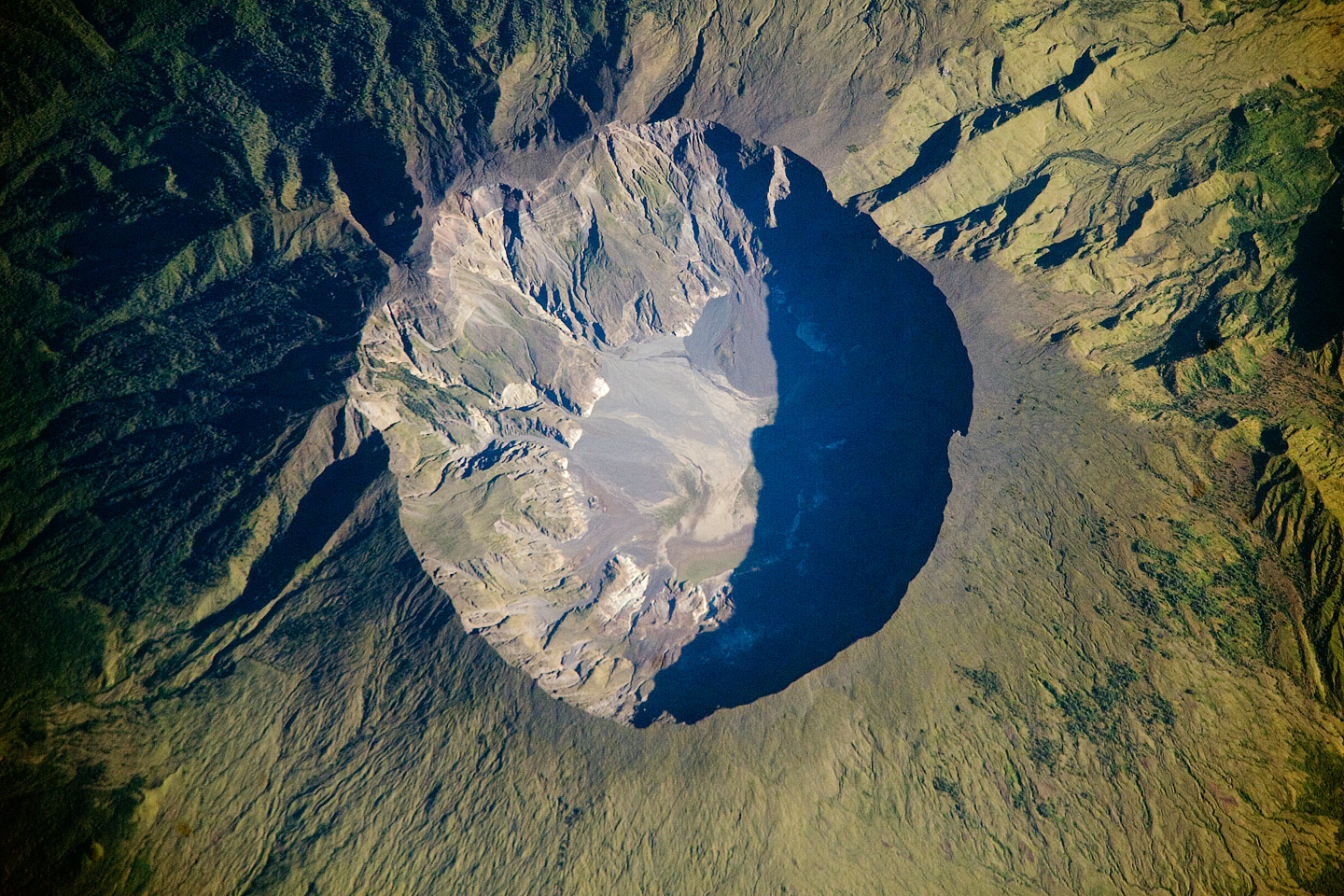

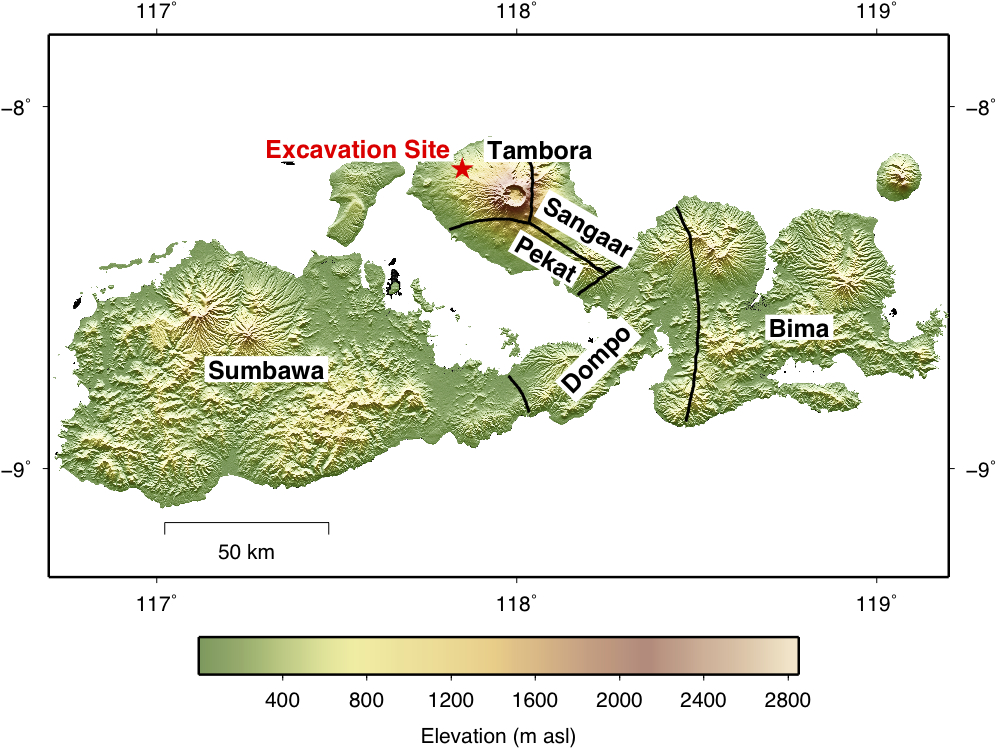
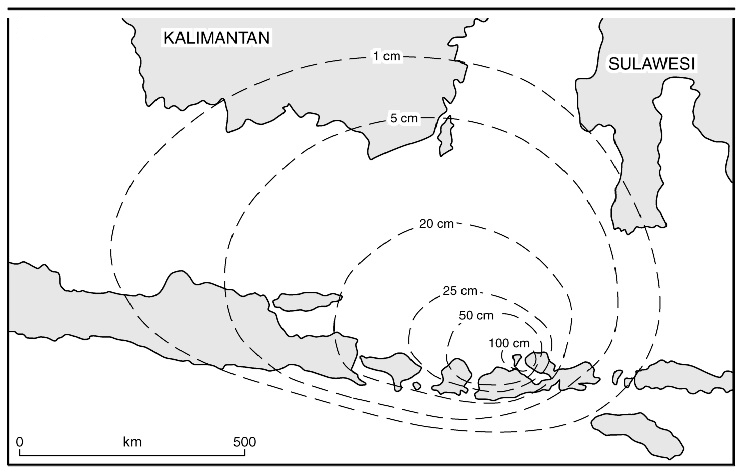
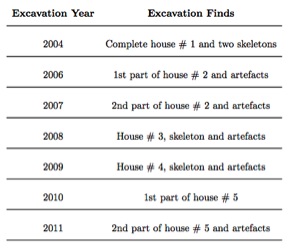 The excavations thus far have only scratched the surface. The rich finds suggest that there is much more waiting to be discovered at the site, now deservedly called ‘the Pompeii of the east’ (See table of finds, left). The excavations will continue in 2012 under the direction of Dr M. Geria of the Bali Institute for Archaeology.
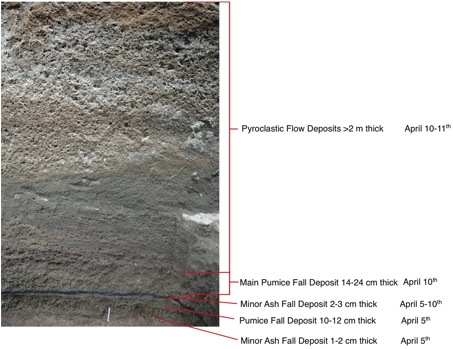 However, they would not have been aware of the impending danger, and as night fell on April 10th, the intensity of the eruption would increase and larger pieces of pumice would begin to rain down more swiftly on the kingdom.
 NOW RELEASED
 ______________________________________________________________________________________________________________________
 ____________________________________________________________________________________________________________________
 _____________________________________________________________________________________________________________________


 ______________________________________________________________________________________________________________________
 ______________________________________________________________________________________________________________________
 _________________________________________________

 Professor Donald Redford is professor of classics and ancient Mediterranean Studies at the Pennsylvania State University and the director of the Mendes expedition. He is a noted expert in the field of Egyptology and Biblical Studies and is the author of numerous books and articles, including
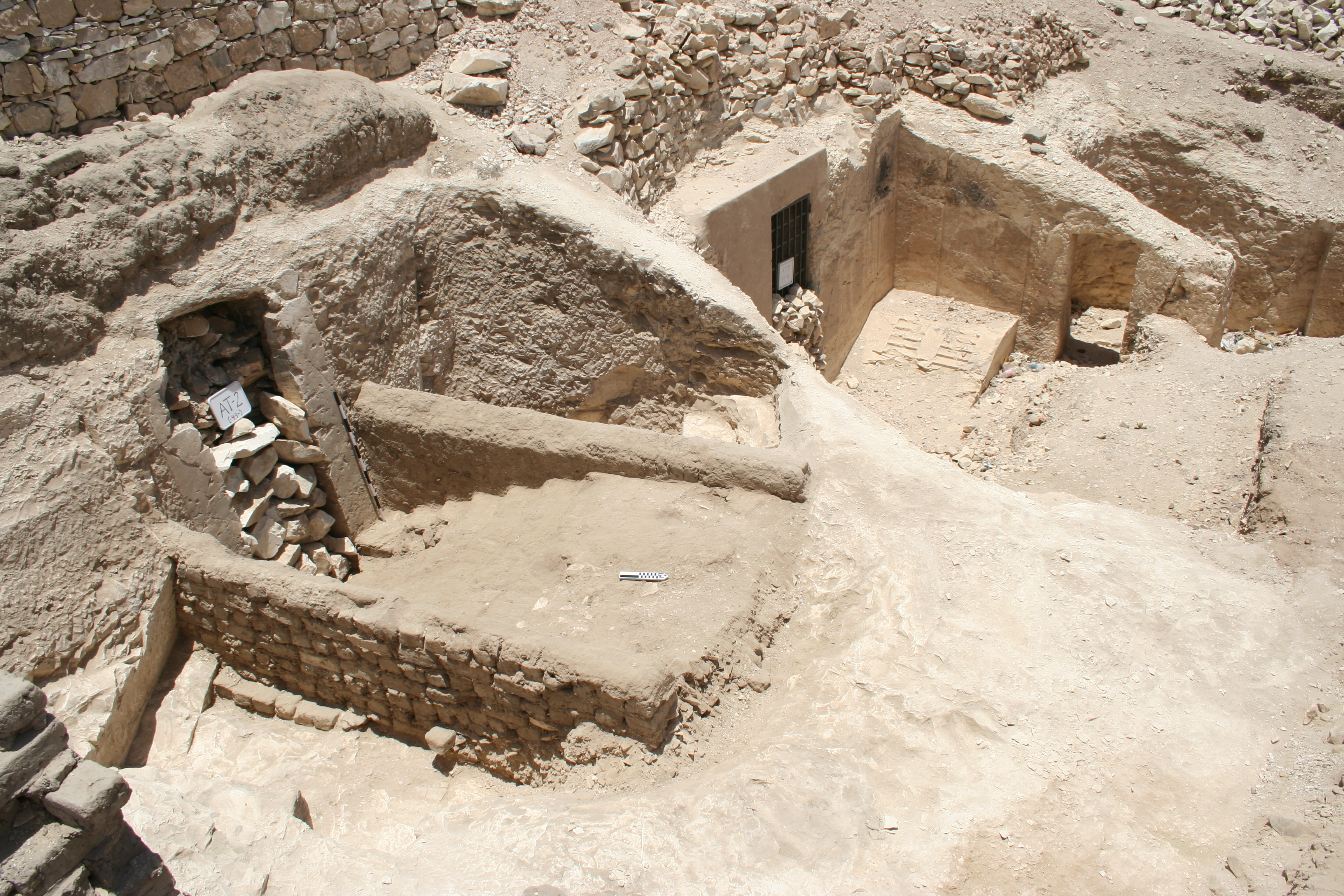
  Dr. Susan Redford is faculty lecturer in the Dept. of Classics & Ancient Mediterranean Studies at the Pennsylvania State University and the director of the Theban Tomb Survey. Dr. Redford is the author of numerous articles and
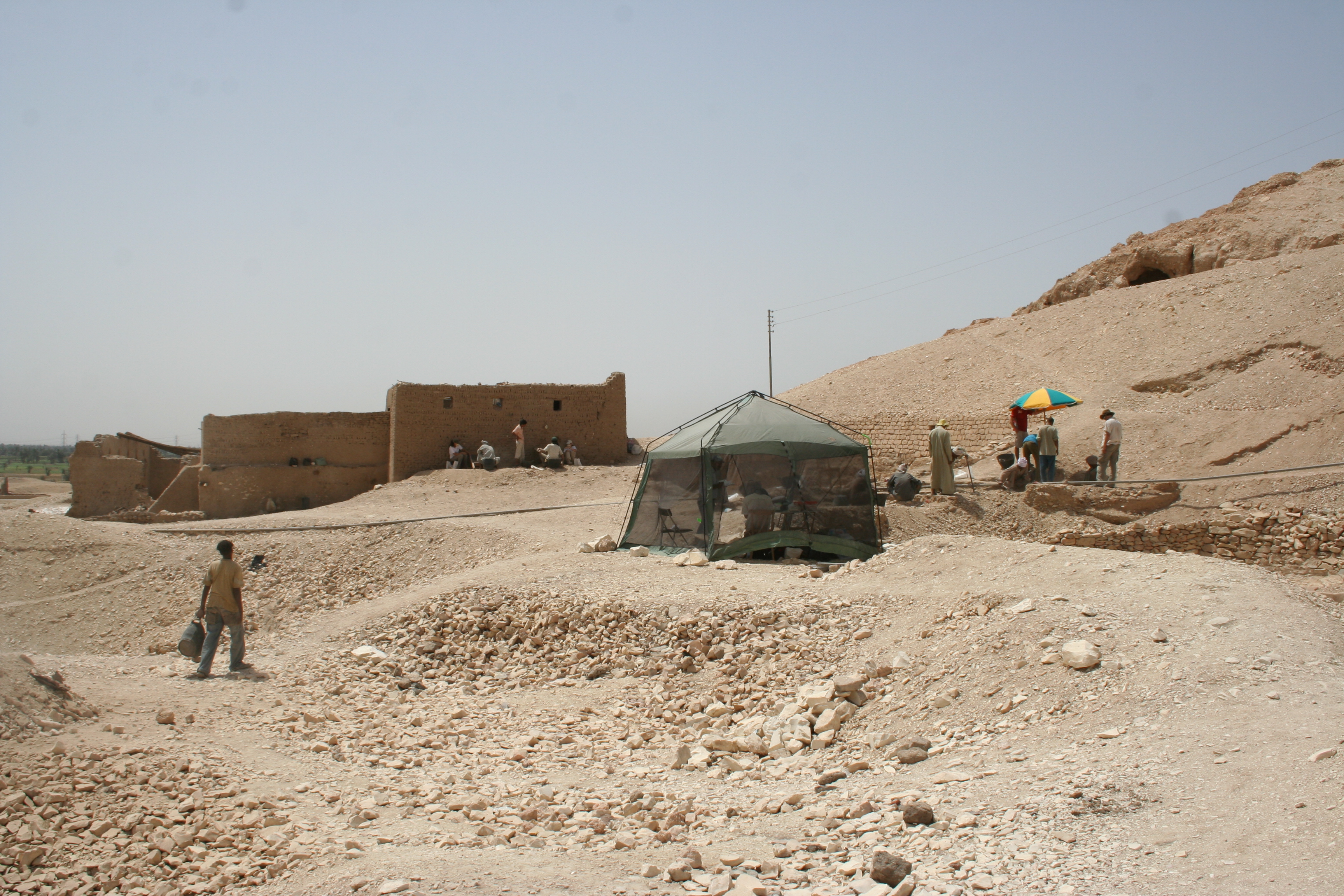
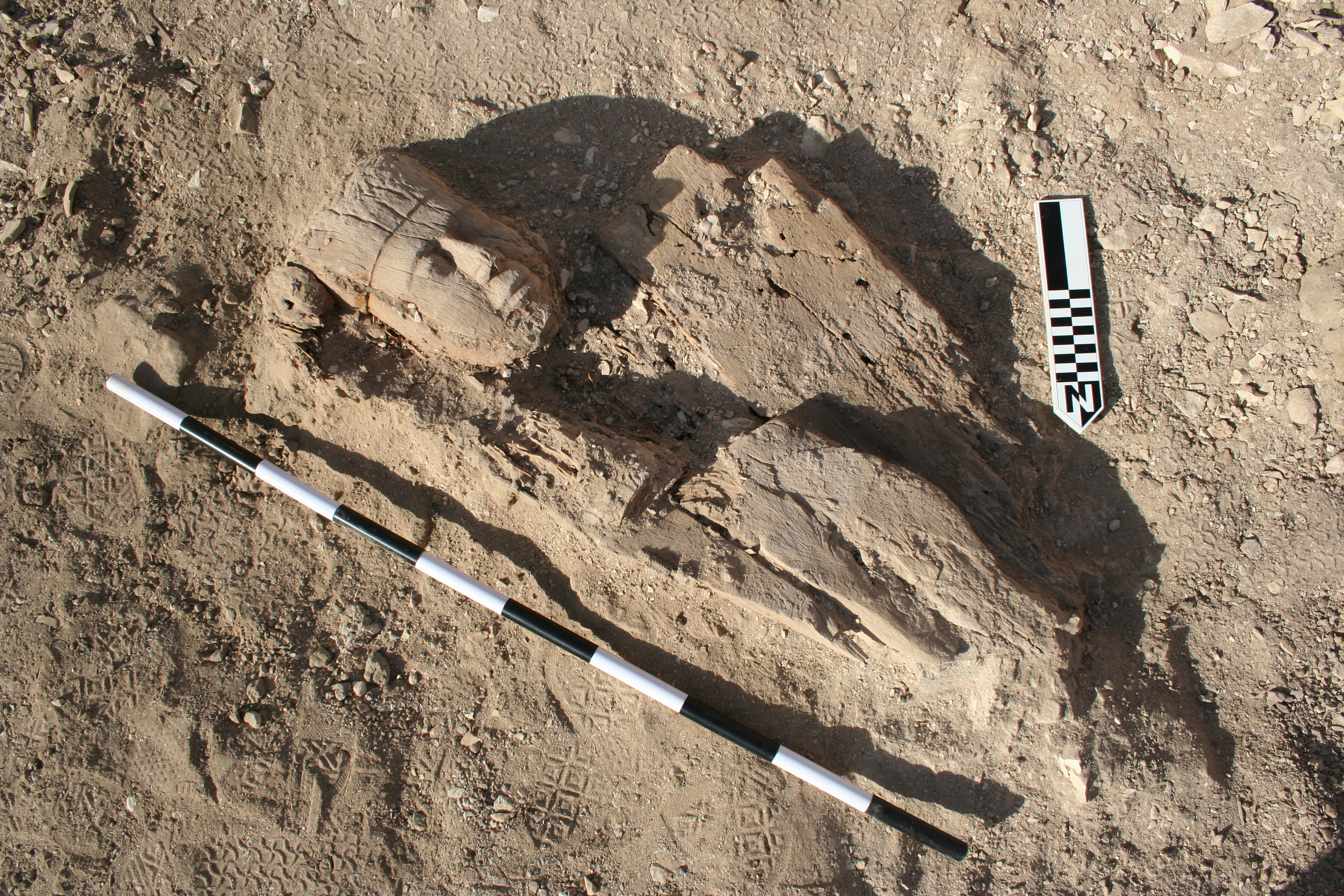
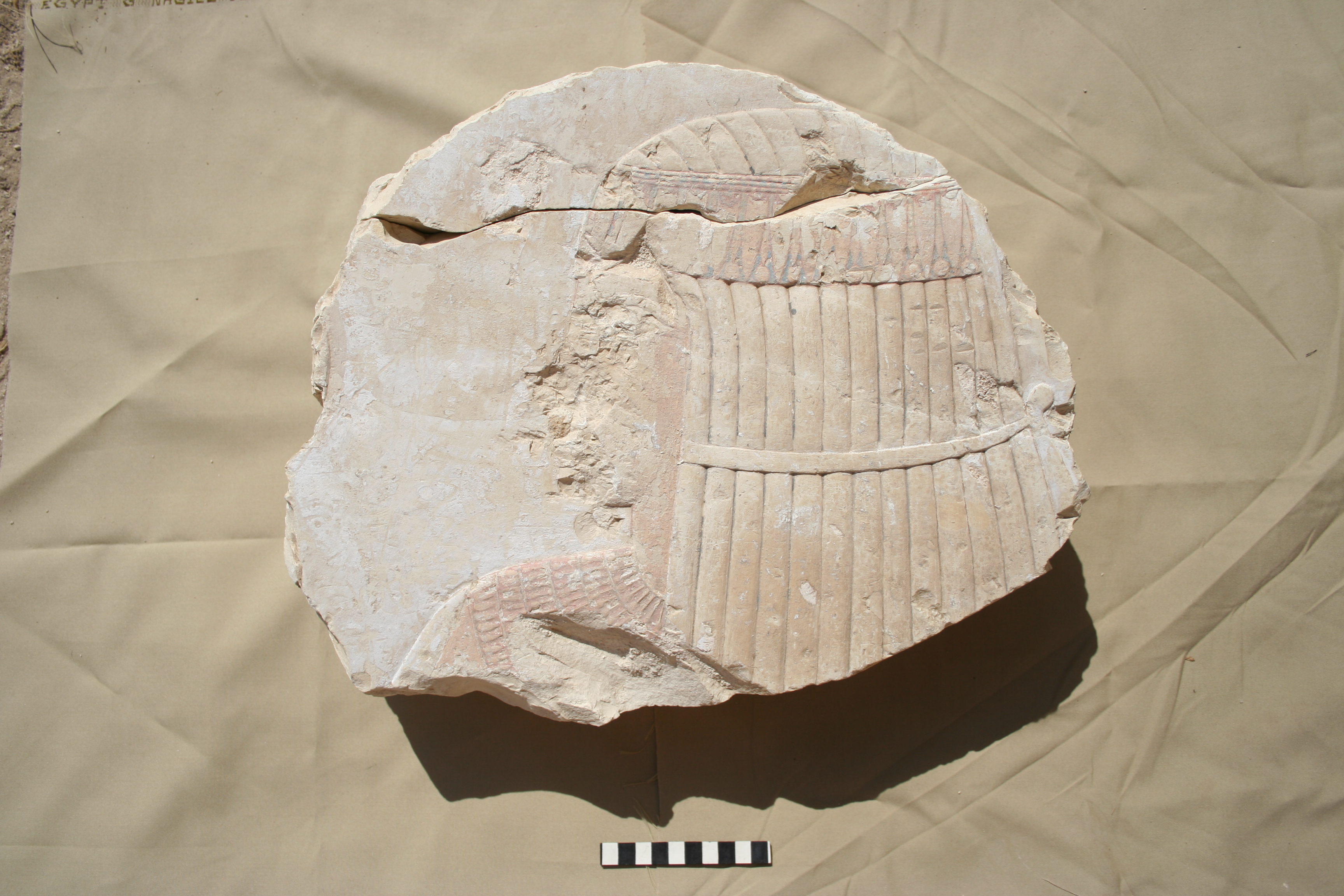
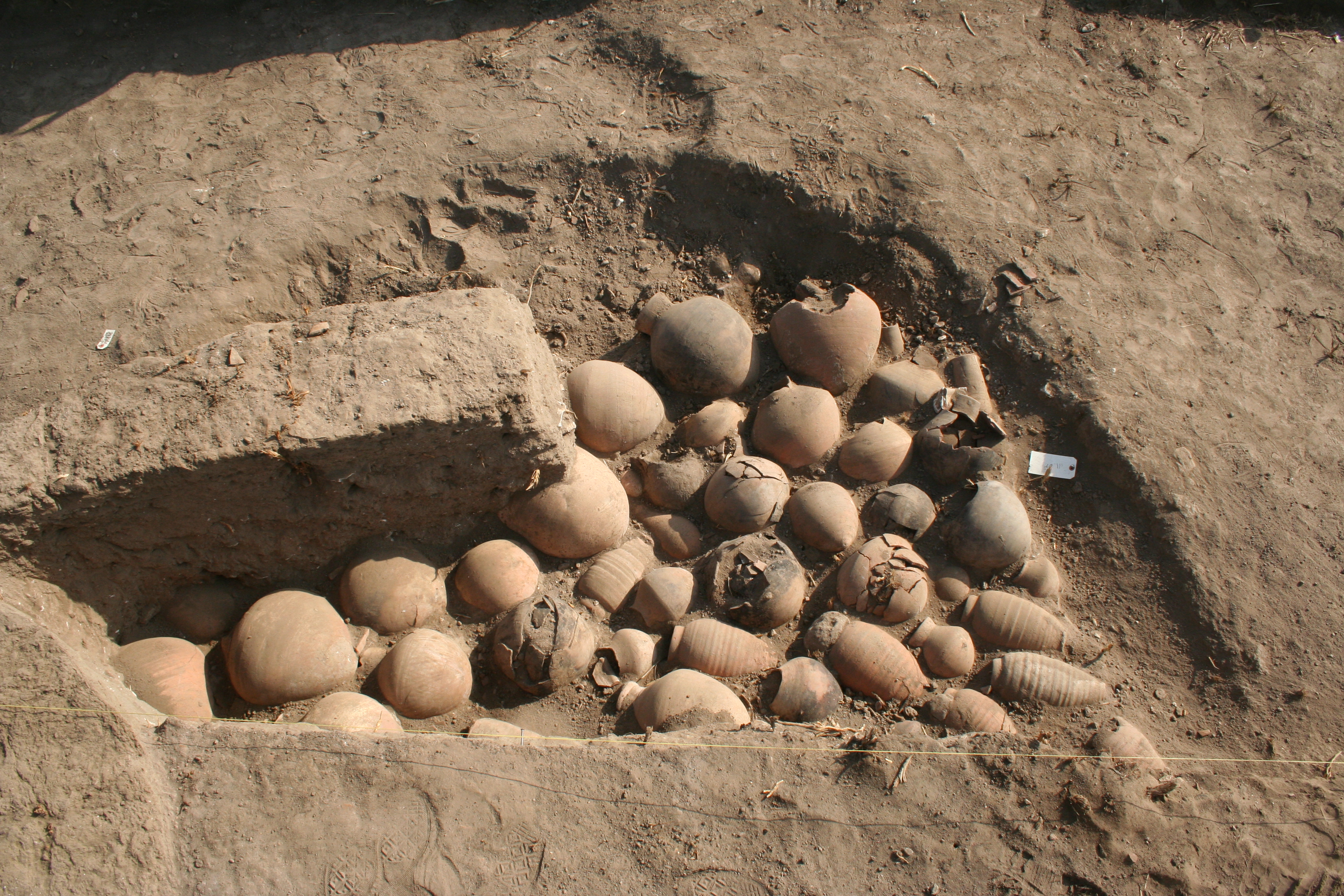
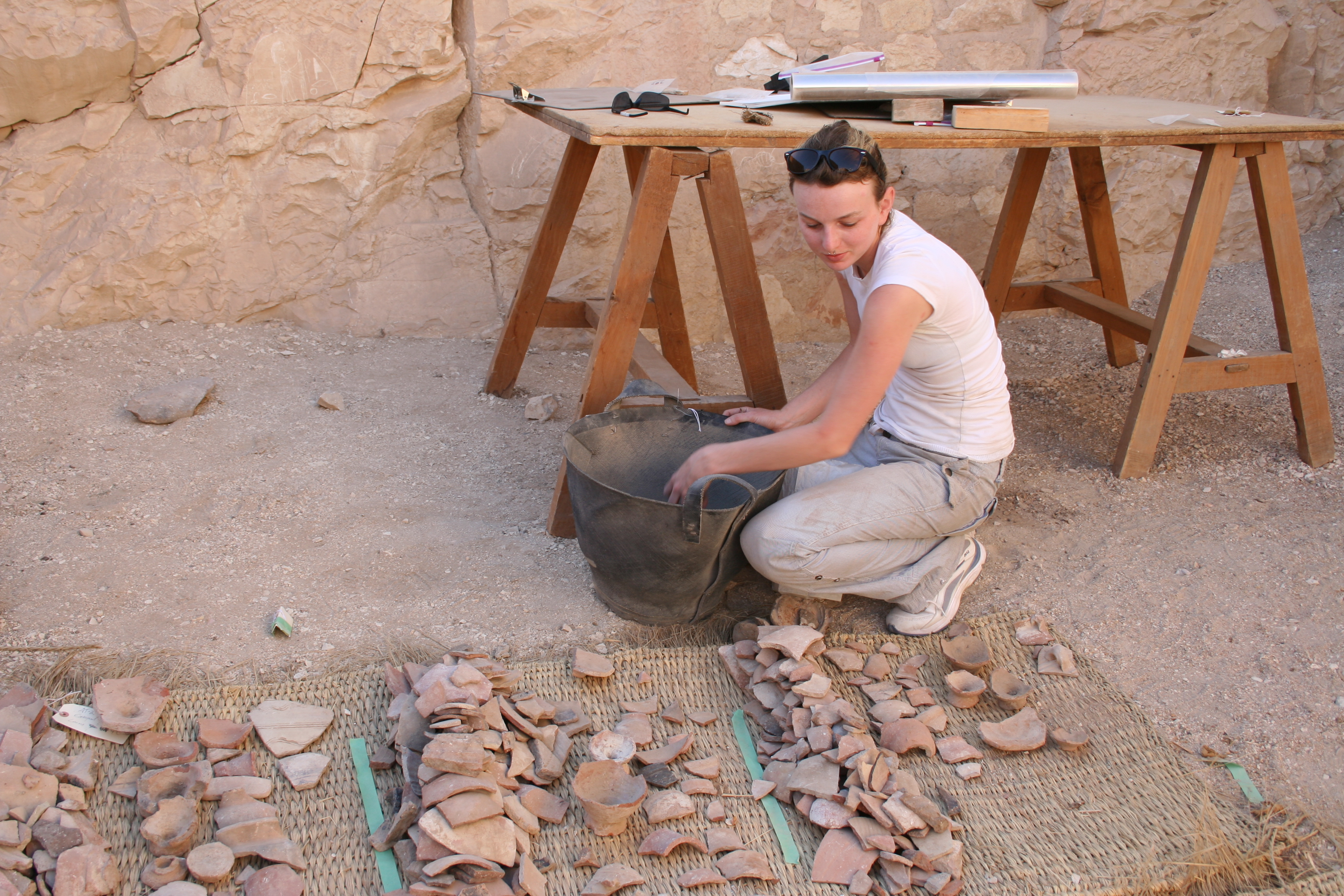 The success and important results of the Theban Tomb Survey have been very much due to a team effort that includes members of my technical staff of artists, photographers, architect, ceramicists, and osteologists,— not to mention the many students that have accompanied us! Besides the hands-on field training that these students have gained, the field school has provided the research project with productive field assistants. Students are involved in all aspects of the field work with tasks that include clearance in controlled excavation, object registration, sifting, osteological documentation, sorting and tabulation of ceramics, assistance with photography and site planning, and general site recording (fig. 5 above right, student sorting pottery “on the mats”). Over the years, students who have joined the expedition have come not only from Penn State, but from other universities across North America, including the University of Toronto, Princeton, Yale, UCLA, New York University, Boston University, University of California, and the University of Hawaii.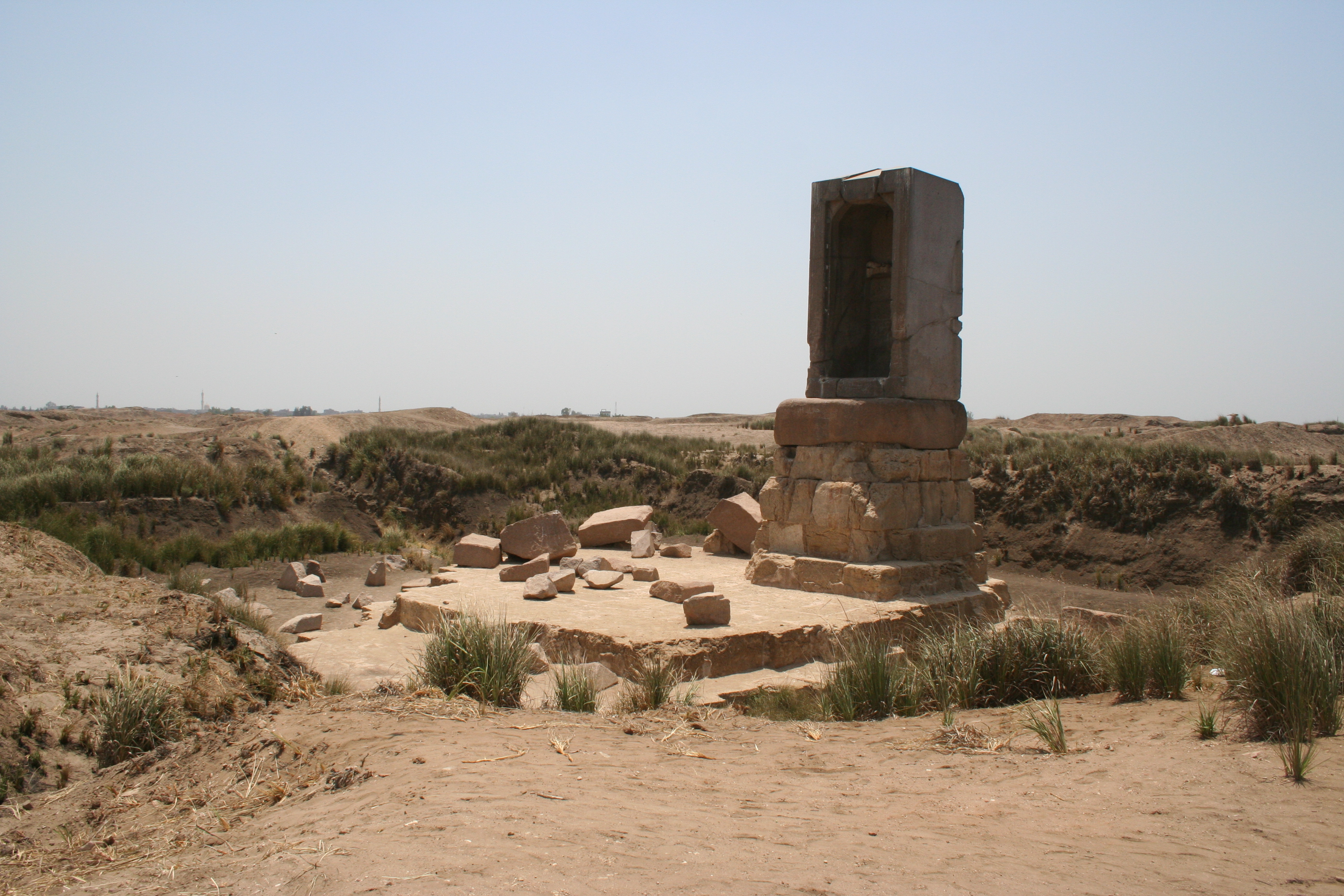
 The
The 
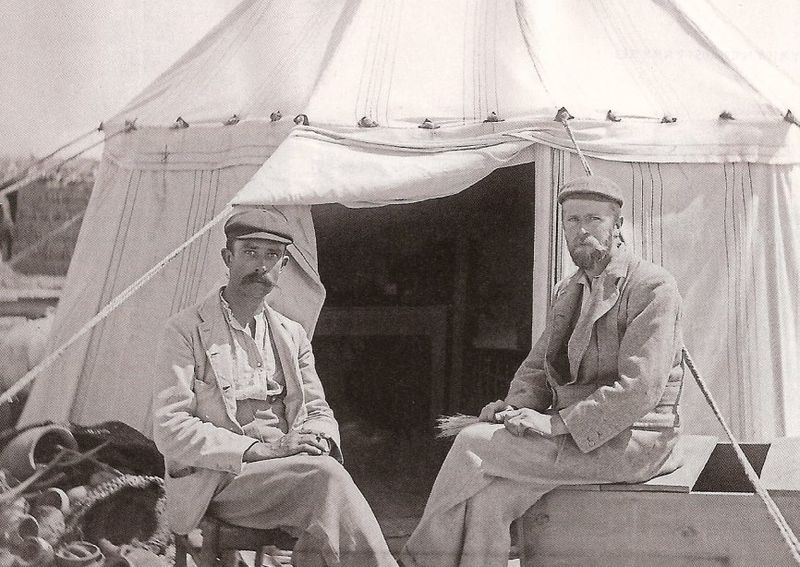 The site was nothing like the visual splendor that greeted explorers and adventurers at places like Luxor, Giza, and Abu Simbel.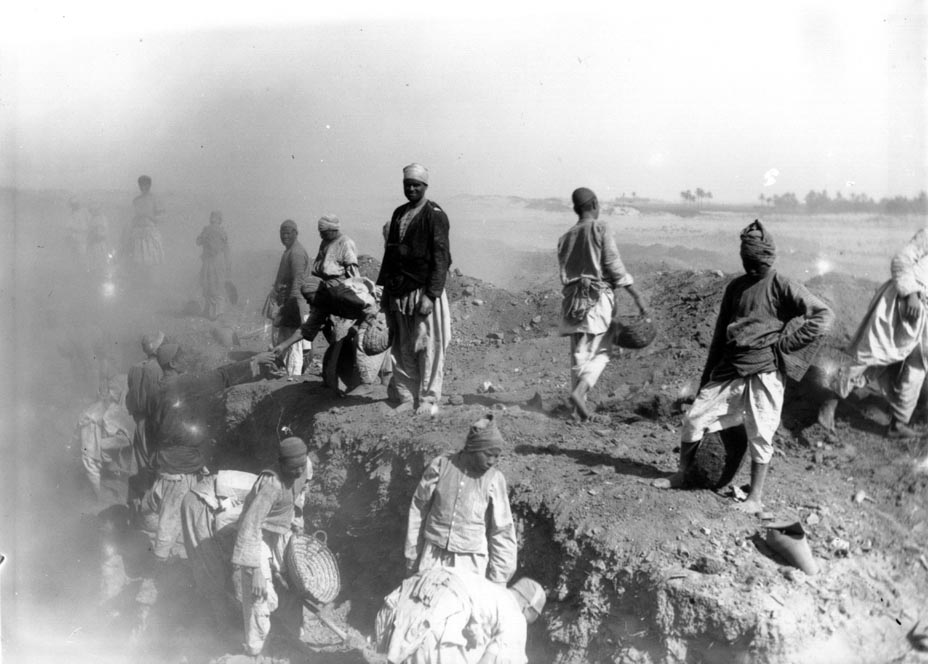


 For today’s scholars of history, anthropology, and history, and particularly for the rest of humanity living lives of little public consequence and notoriety, the papyri carry a meaning that transcends the traditional fascination or interest in the great people and events of conventional written history. This is realized in the volumes of recovered transactions, dealings, accounts and letters (example pictured right) that documented the everyday lives of the people of Oxyrhynchus Polis, lives that but for the papyri would have been lost and forgotten for posterity.
 Maggie Knapp is an Art History and Global Studies double major studying at UC Santa Barbara, currently working for the nonprofit ESP~Maya under the direction of Dr.


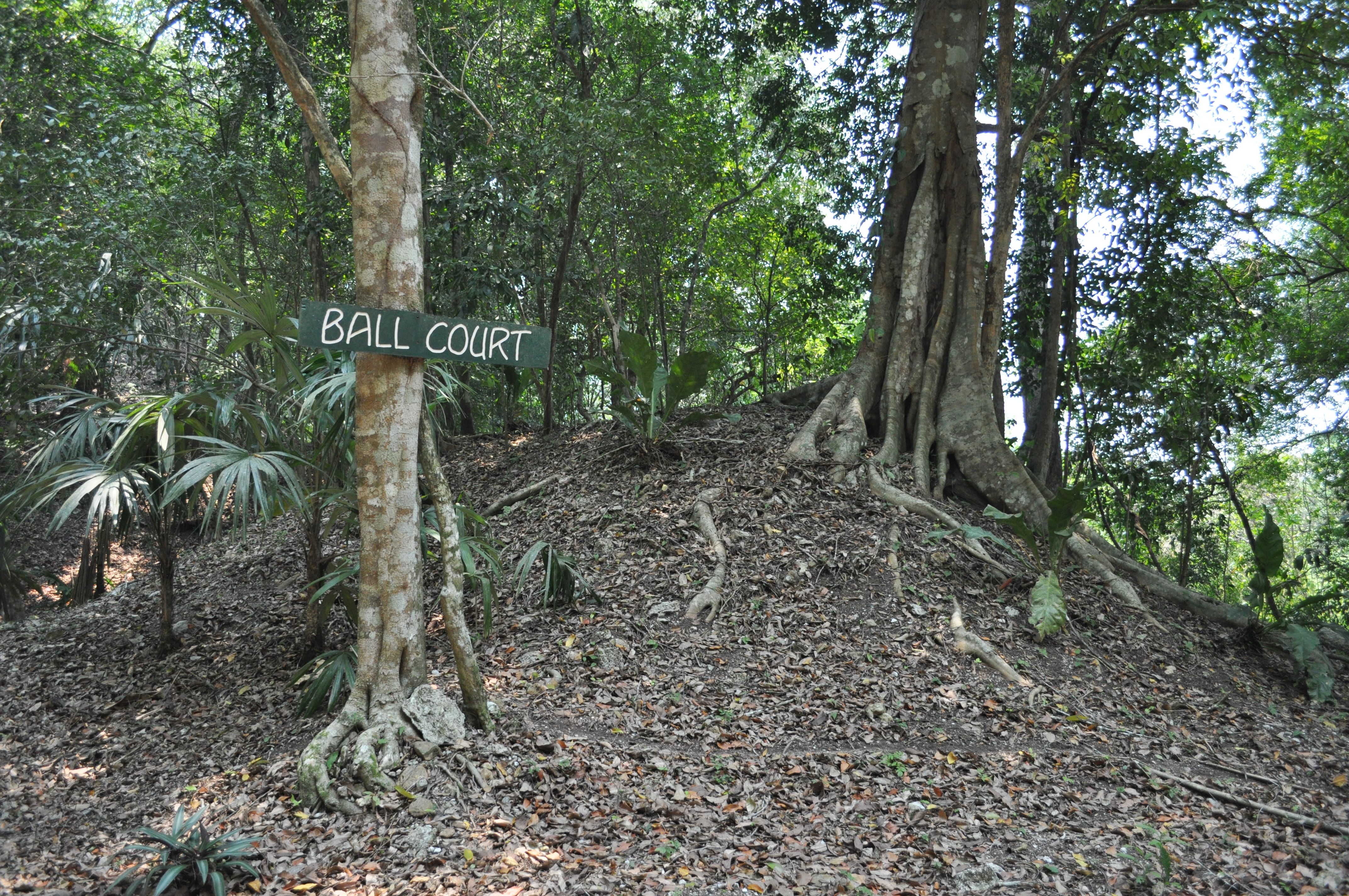 In fact, most of the ancient structures still lie in shade under the forest canopy protected by vegetation, because El Pilar is the subject of a whole new kind of archaeological presentation. It will prove to be a model for projects to come, informing future solutions for how humanity can sustain itself and flourish by cooperating with nature instead of dominating and destroying it.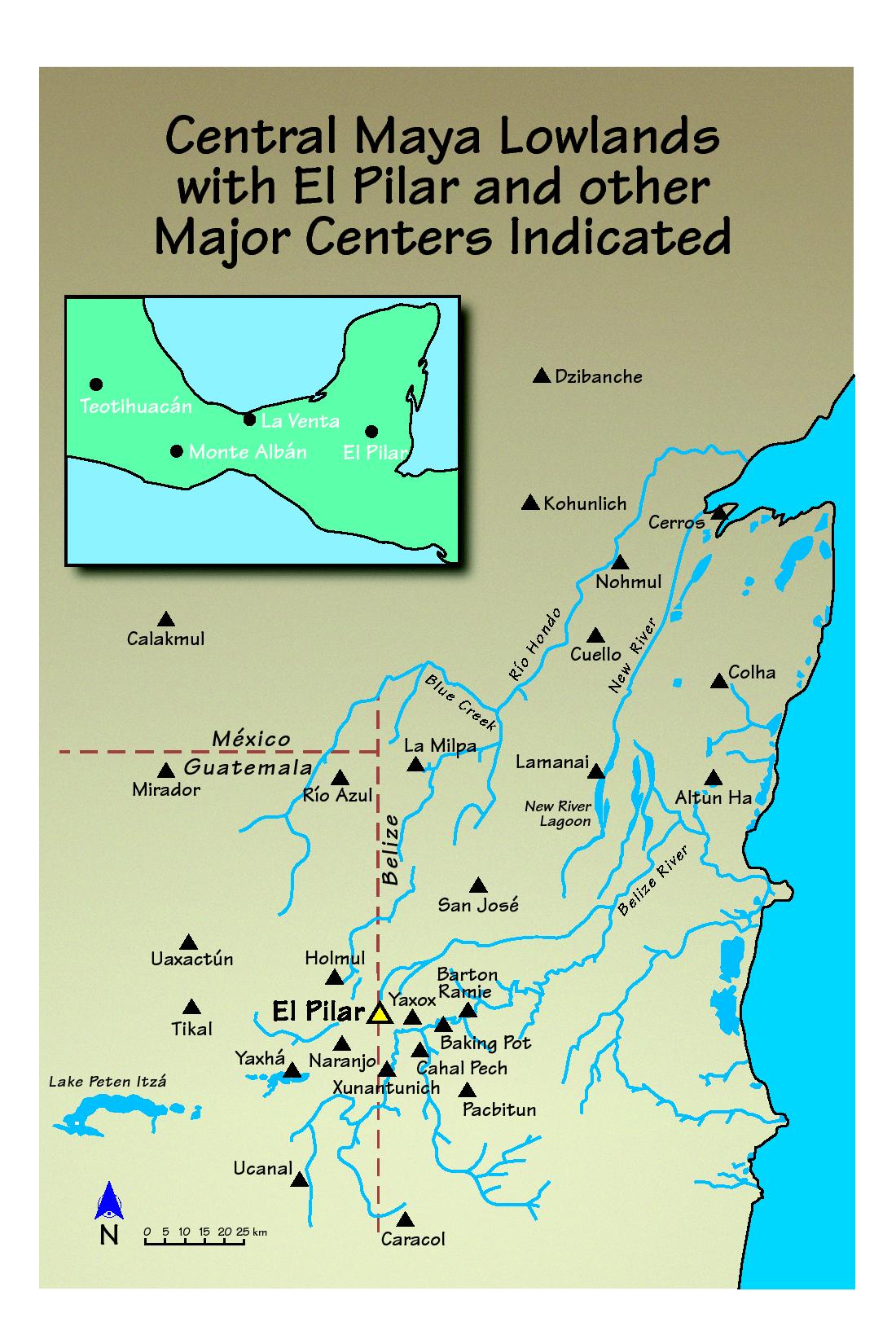
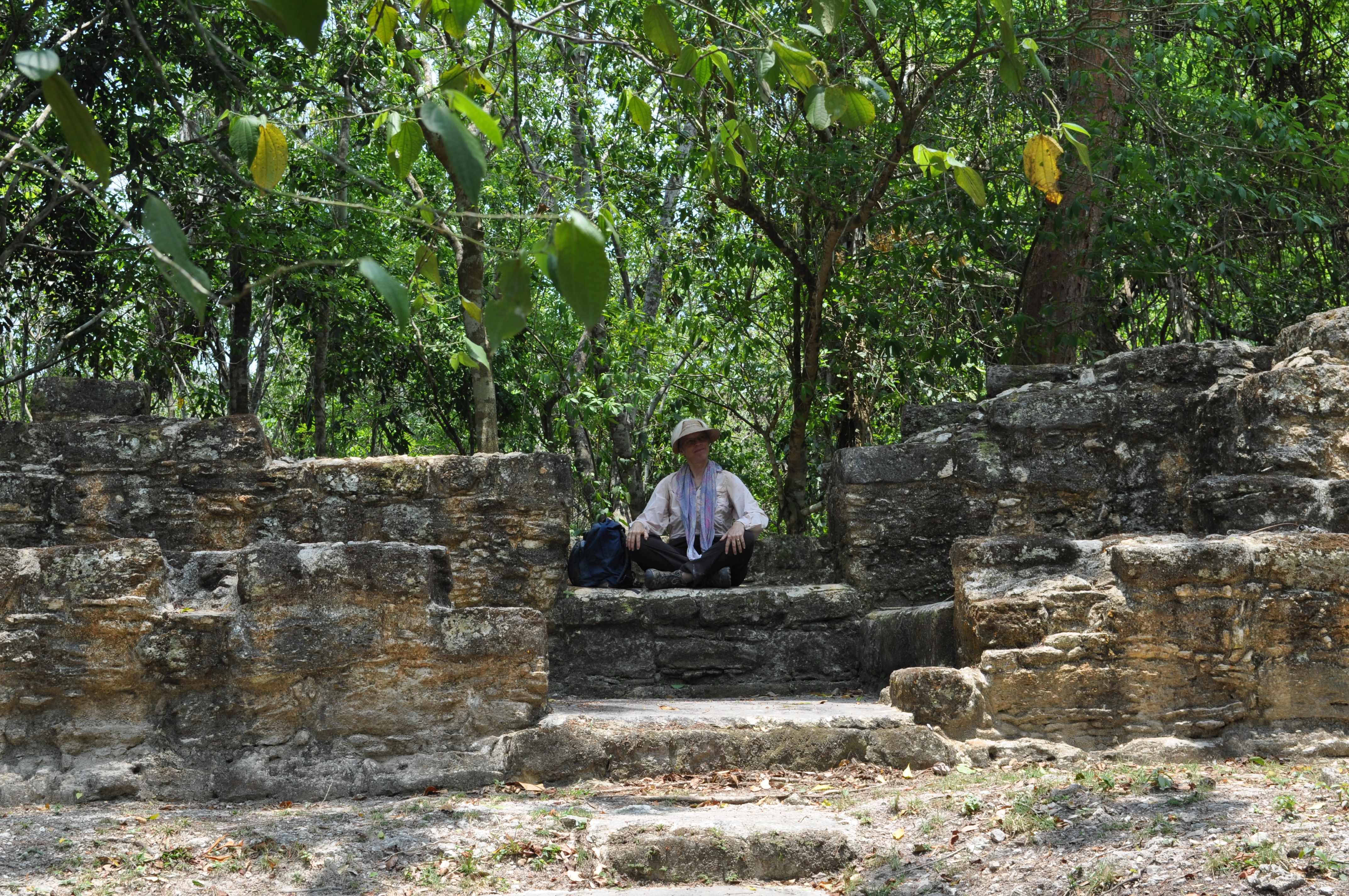
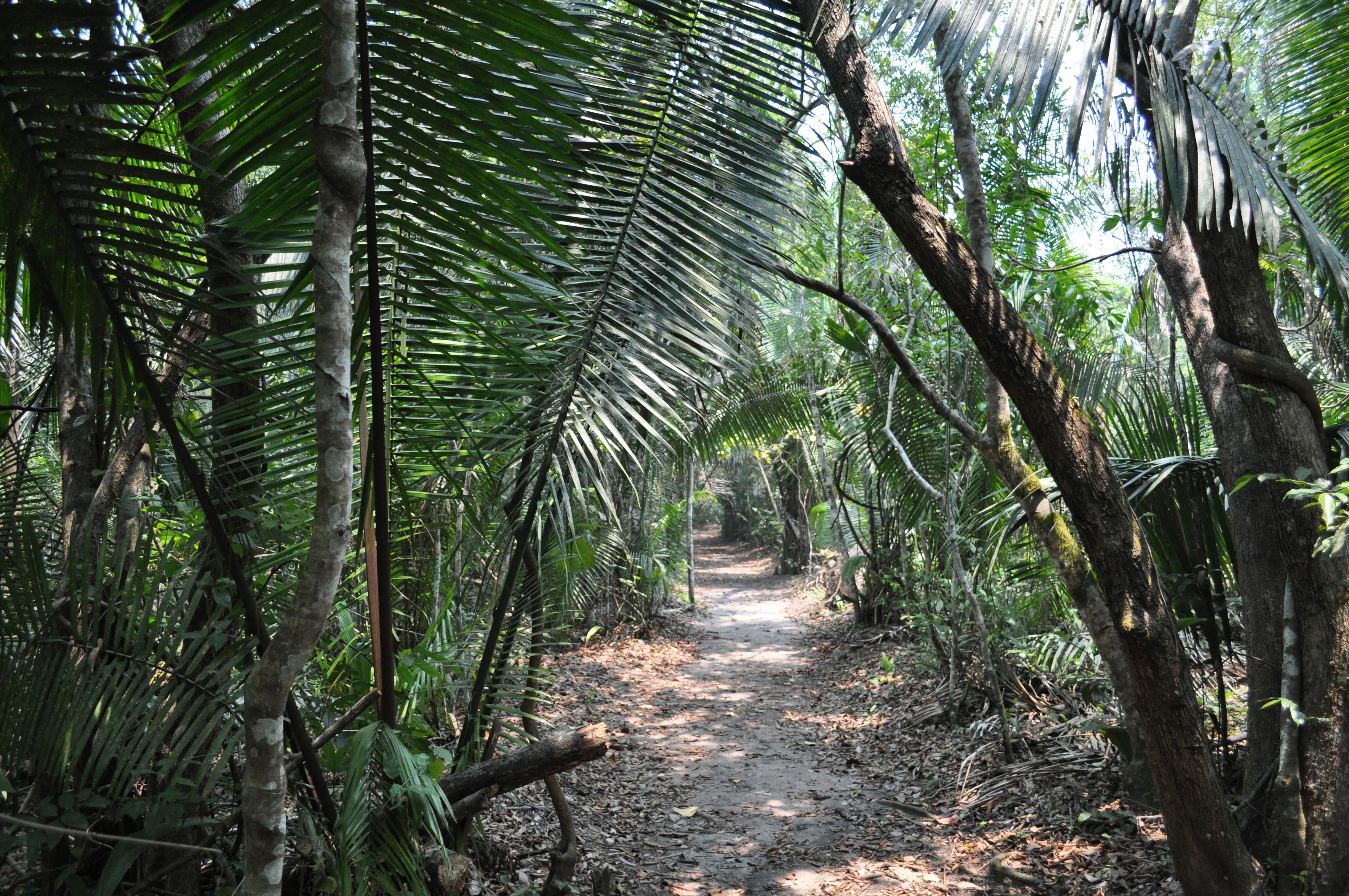
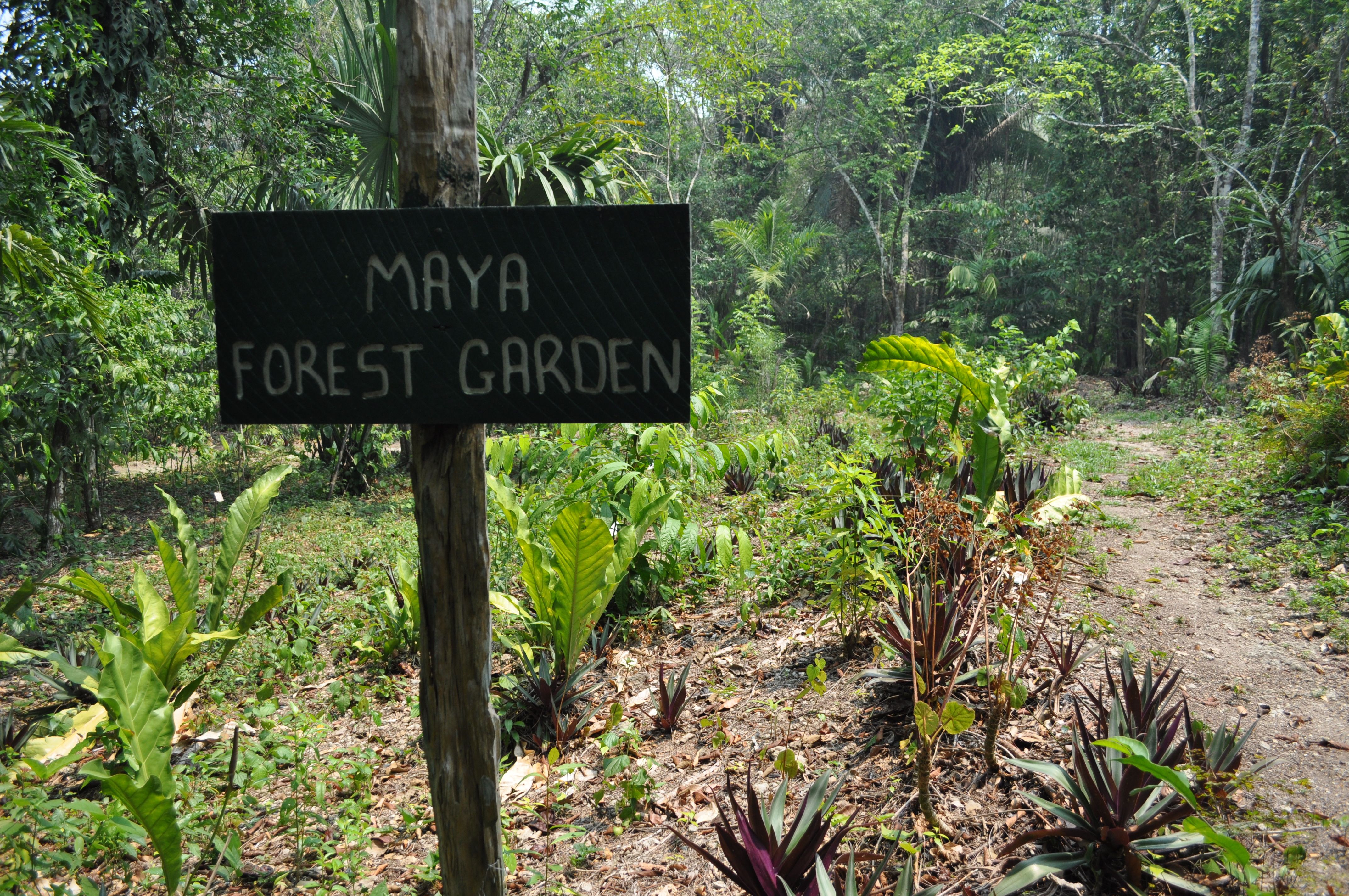


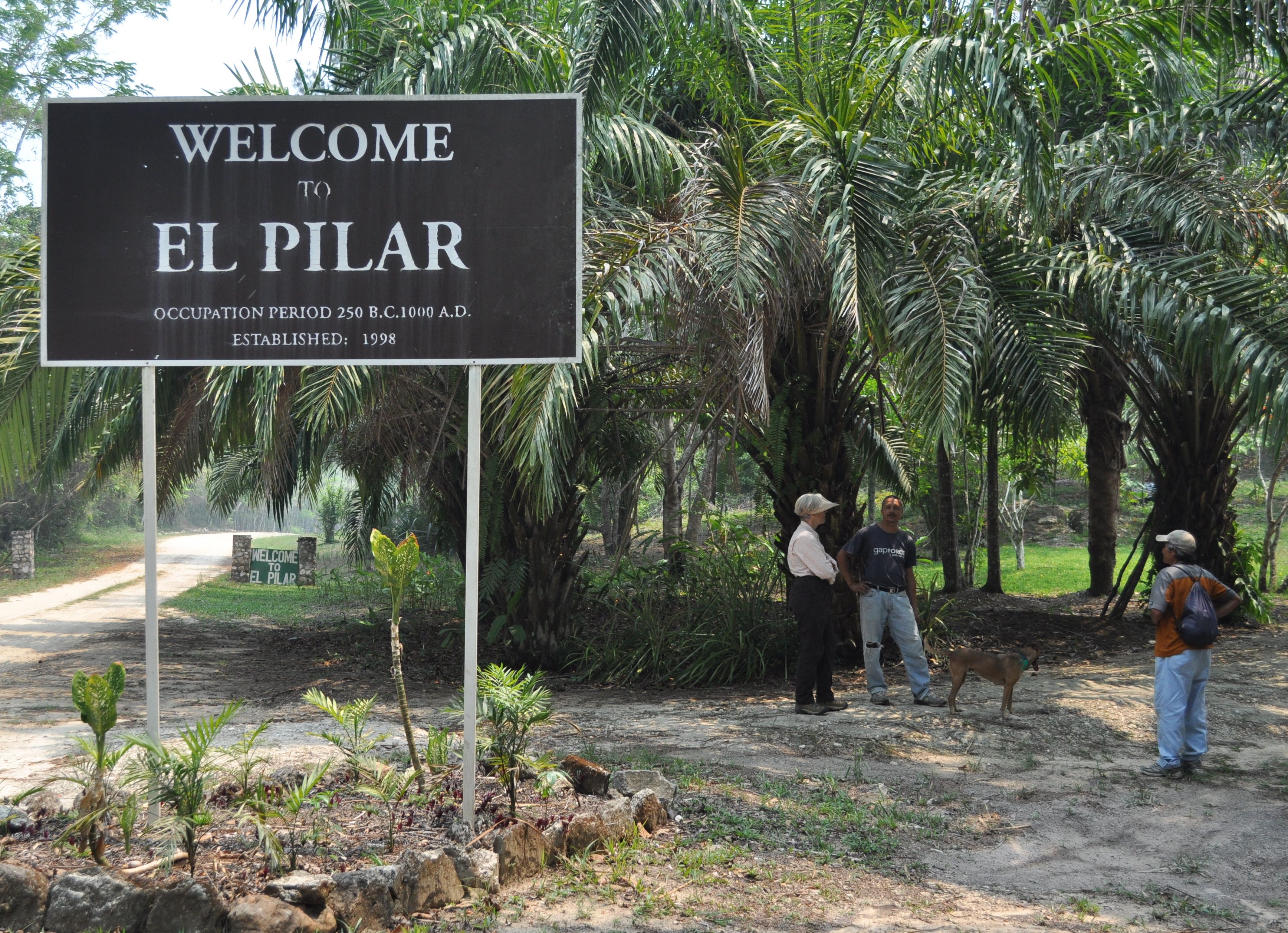 Tourism today has a unique opportunity to acknowledge lost societies and civilizations such as those of the Maya. We also have the chance to embrace the gifts of the present-day communities of Maya descendants, who not only inform our understanding of how these ancient peoples lived, but how they have continued to thrive in their immensely rich and biodiverse habit. Tourism is a central means by which this unique population and their legacy can enter the world economy, featuring their historical, cultural, and environmental heritage. The success of the El Pilar model is dependent upon the results of integrated, collaborative, and multi-disciplinary programs and adaptive management strategies with full participation of the officials, the community, and the experts that are involved in maintaining the reserve on a long-term basis. The overarching vision for El Pilar is a responsibly managed site that benefits local populations, regional governments, and international tourists while promoting sustainable stewardship of the land for posterity. No one goal can be attained at the expense or neglect of another, and we can hardly pursue our objectives without weighing the demands of all parties who have a stake in history’s treasures.
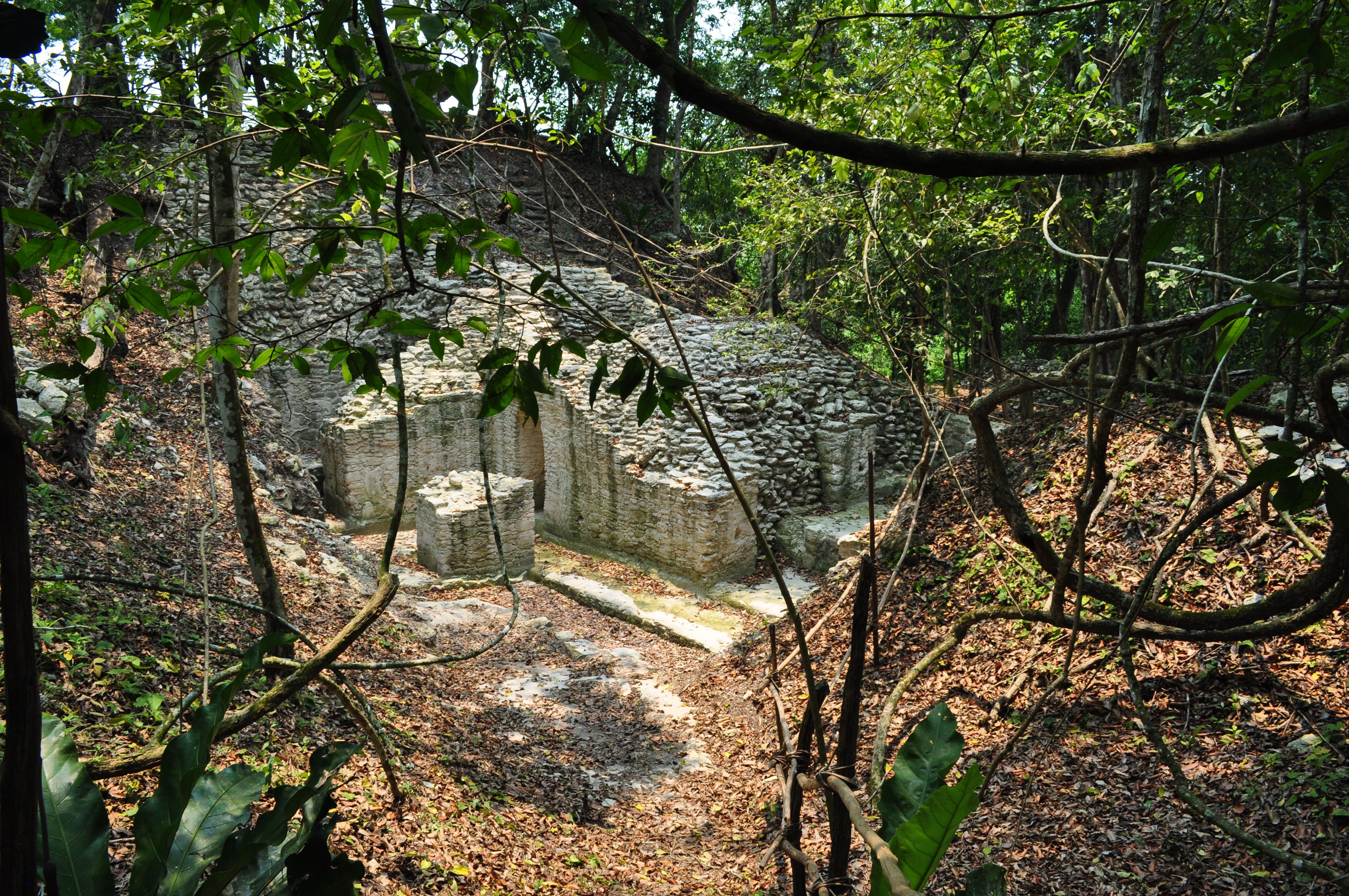 Tourism is the only product where the consumer must journey to the source to appreciate it, and the most recent statistics demonstrate that tourism accounts for a growing proportion of income in the Central American region. Tourists are becoming ever more conscious of the unity of human values and coming to regard ancient monuments as part of our common cultural and human heritage. With this post-national appreciation will come the recognition of our common responsibility to safeguard these monuments for future generations (according to the 1964 ICOMOS Venice Charter). It is with these aims in mind that we see the El Pilar project as an opportunity to explore alternative strategies that can provide a unique educational experience for the visitor and a long-term solution to conservation. The model of Archaeology Under the Canopy practiced at El Pilar has attracted local involvement, student class visits, regional university interns, international permaculture enthusiasts, and worldwide environmental educators. With effective models based on the inherent value of a traditional people’s conservation strategies like those of the Maya, we see increasing acknowledgement that the preservation of living cultures and regional economic development are mutually dependent elements of sustainability. Cultural heritage is thus an asset that is indispensable to the achievement of a sustainable future.
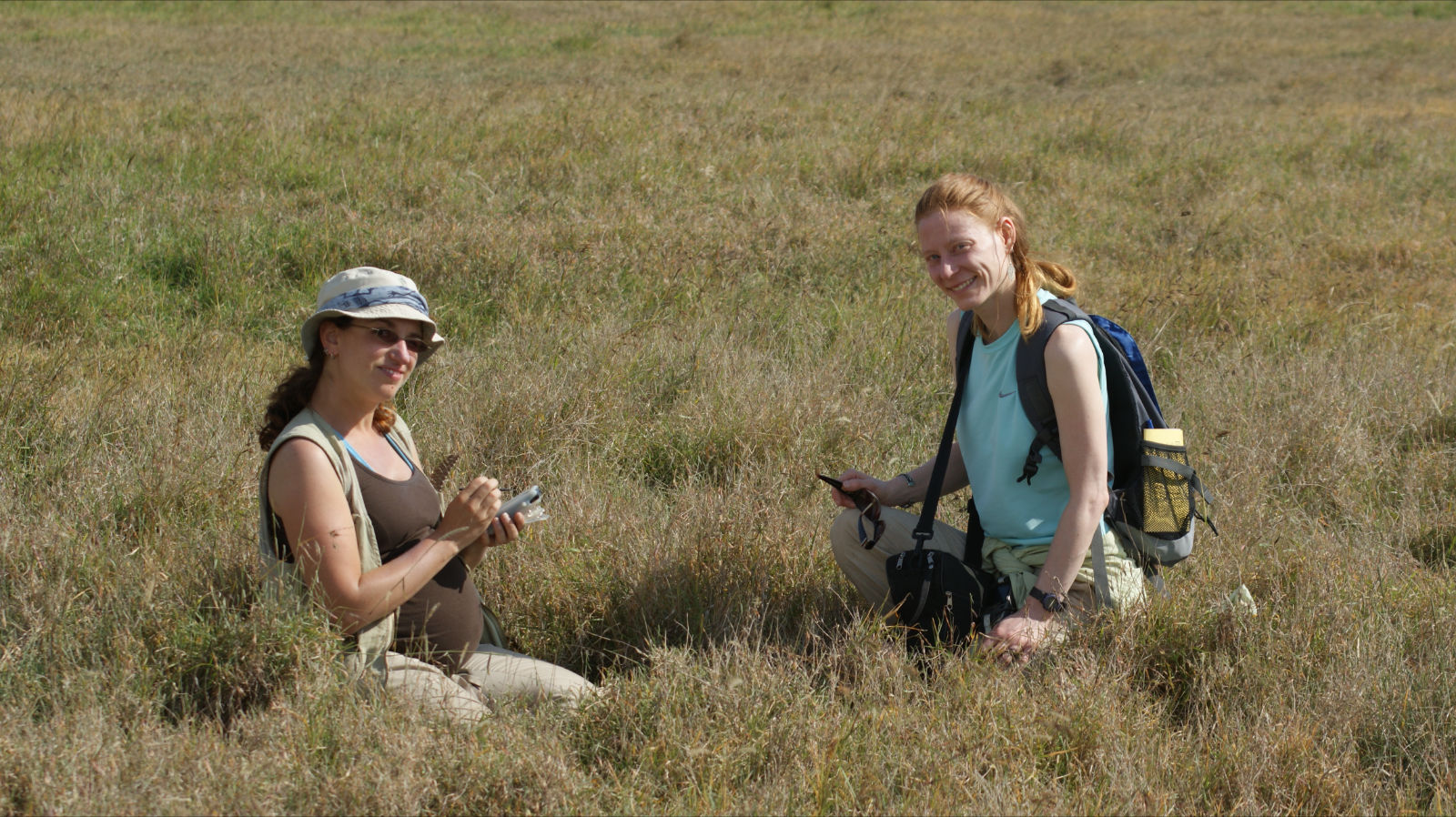 Briana Pobiner, the Science Outreach & Education Program Specialist for the Smithsonian’s Human Origins Program, has a BA in Evolutionary Studies from Bryn Mawr College, where she created her own major, and an MA and PhD in Anthropology from Rutgers University. Her research centers on the evolution of human diet (with a focus on meat-eating), but has included topics as diverse as cannibalism in the Cook Islands and chimpanzee carnivory. She has done fieldwork in Kenya, Tanzania, South Africa, and Indonesia and has been supported in her research by the Fulbright-Hays program, the Leakey Foundation, the National Geographic Society, the National Science Foundation, Rutgers University, the Society for American Archaeology, the Smithsonian Institution, and the Wenner-Gren Foundation. Her favorite field moments include falling asleep in a tent in the Serengeti in Tanzania while listening to the distant whoops of hyenas, watching a pride of lions eat a zebra carcass on the Kenyan equator, and discovering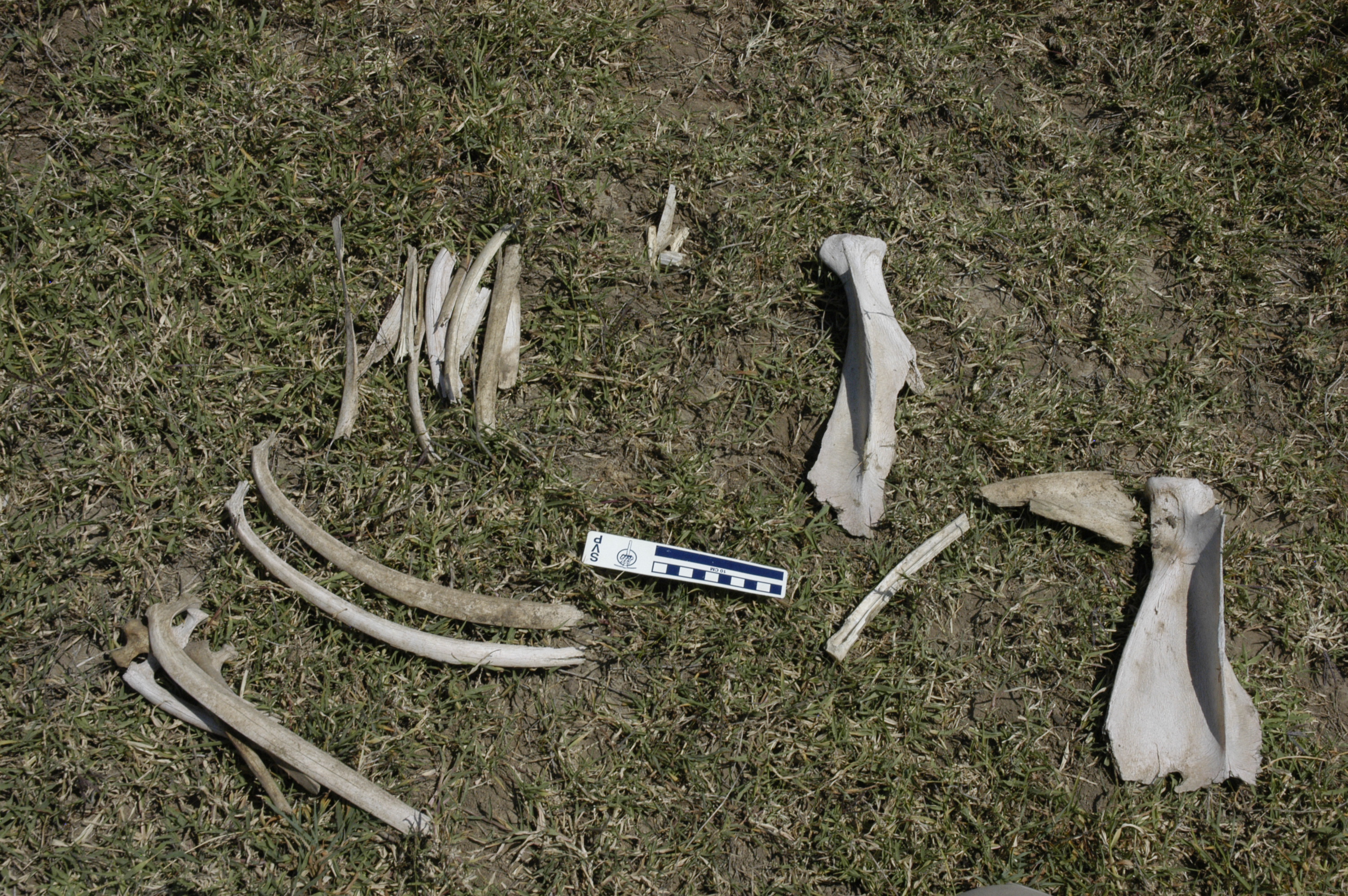


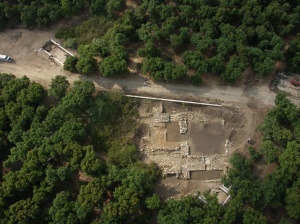
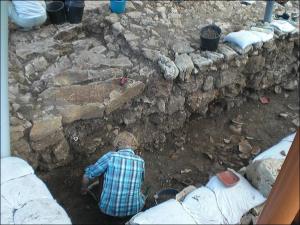 In the side of the corridor, hidden in the wall, was at least one entrance and perhaps as many as three entrances. One of the entrances had a cracked block that, had we been excavating in Greece, I would have said it was the lintel block to the entrance to a tomb. So we could see this cracked block with soil beneath it, in what was otherwise a solid stone wall. Next to it was another faint outline where the stones looked like they were horizontal and vertical, indicating the possibility of a blocked opening in the wall, and then another one [blocked opening] on the other side, as well. We didn’t know what this was. But it was in the middle of the palace, it was a hidden entrance in a wall, which one could not have seen unless one was actually in there. This was interesting because at the site of Qatna in Syria they had just found similar openings in their palace. Those openings led to a royal tomb.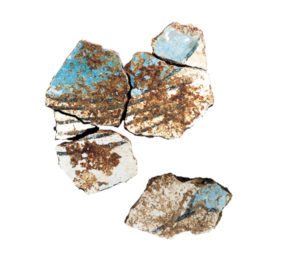
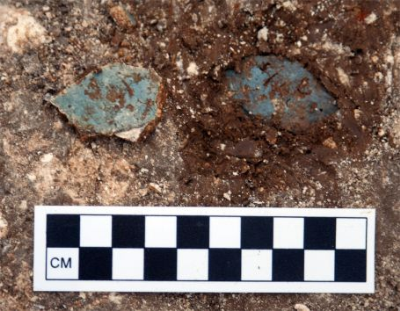
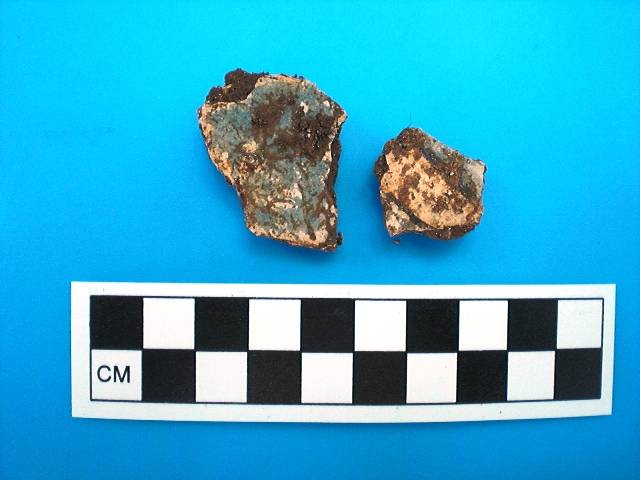
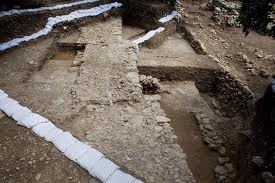 It zigzags, which is usually seen on Crete. It is either a walkway or the bottom of a wall. If it is a wall, then it is a protective wall going around the palace. I think it is a roadway and that the road may well be extending around the palace. A similar roadway can be found at Knossos and elsewhere. If it is a roadway, and this is the northern perimeter of the palace, and the entrance is on the west, then what we see may indeed be turning a corner and headed to the entrance. So if we continue to excavate in that direction this coming season, it may lead us to the missing entrance to the palace.
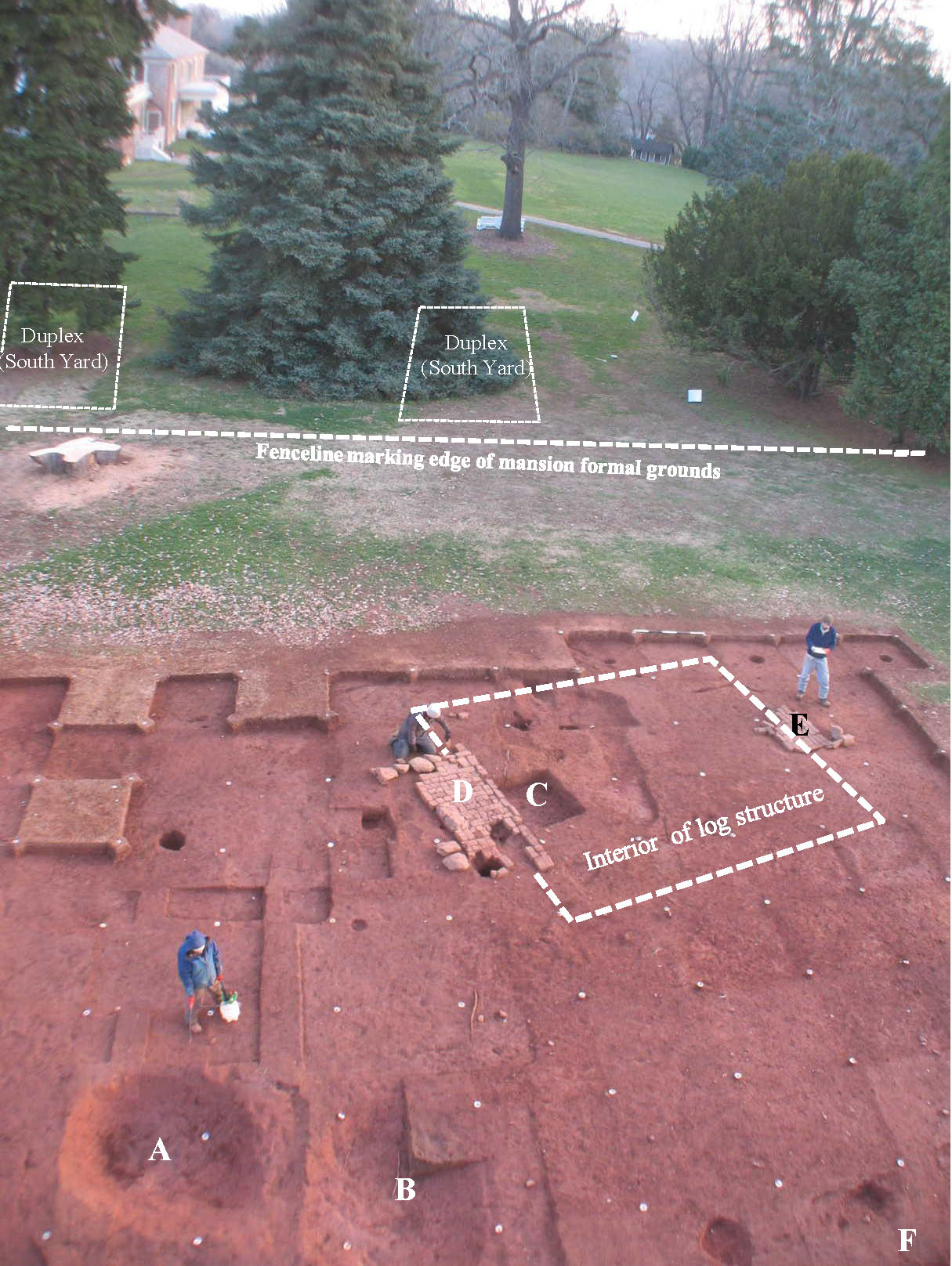
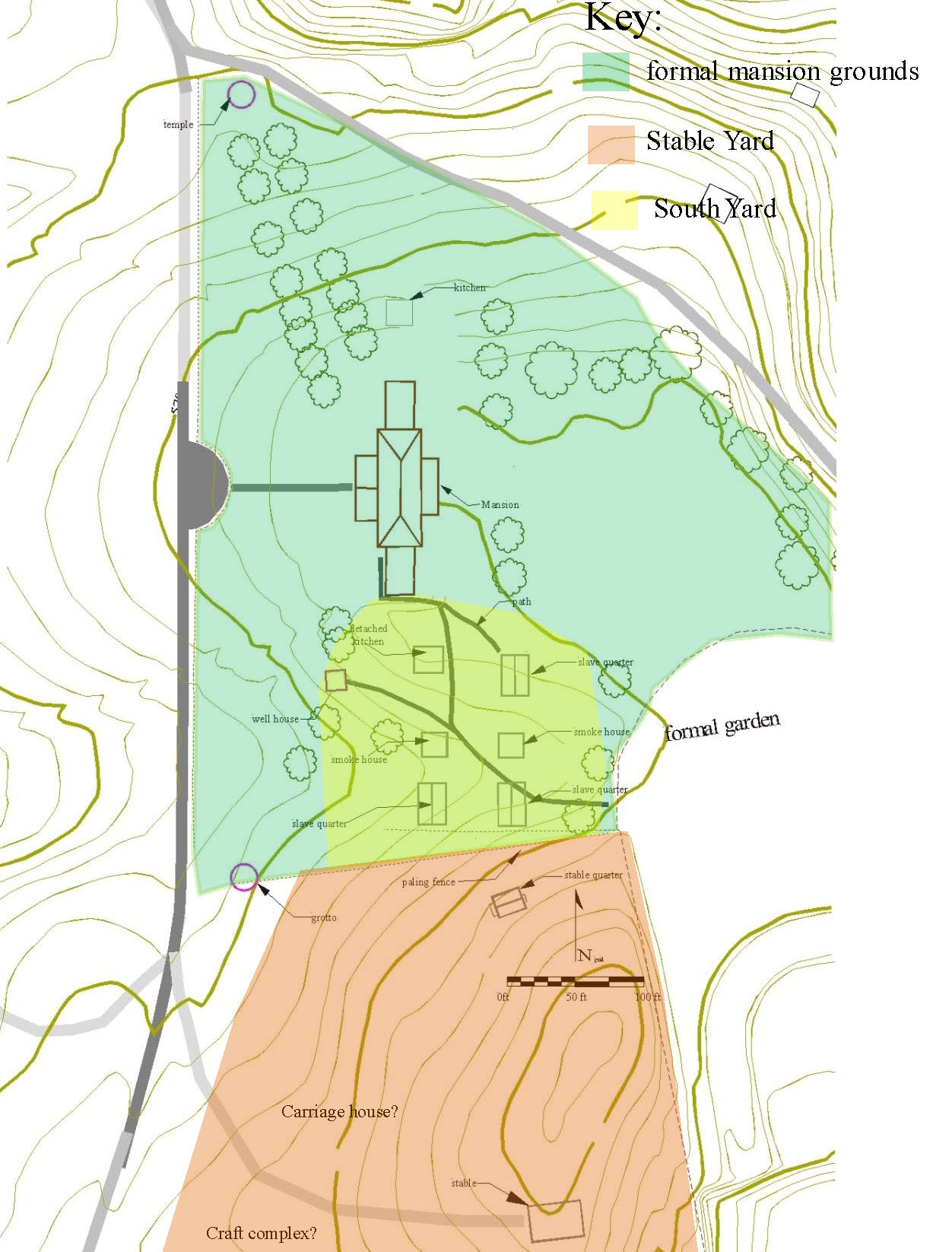 Figure 2. Early 19th century appearance of mansion grounds. The area shown in light green is the formal boundary of the mansion grounds (curtilage) as defined from archaeological features and period descriptions. The area of the South Yard shown in yellow while the Stable Yard is in orange.